

Introduction
In the precision metal manufacturing and die-casting industries, achieving a flawless, burr-free surface finish remains a critical benchmark for quality control. For decades, facilities have relied heavily on traditional vibratory grinding and tumbling methods. However, these legacy systems frequently introduce systemic inefficiencies: severe impingement damage on delicate workpieces, media lodging in intricate internal geometries, and notoriously low throughput.
For modern manufacturing enterprises looking to optimize their workflow, continuing with outdated grinding setups is no longer viable. The market now demands a highly efficient, sustainable alternative. This article explores how a state-of-the-art plasma polishing machine provides an eco-friendly, automated, and all-in-one technical solution that transforms metal finishing from a production bottleneck into a competitive financial advantage.
Section 1: The Technical Core of Modern Metal Surface Treatment
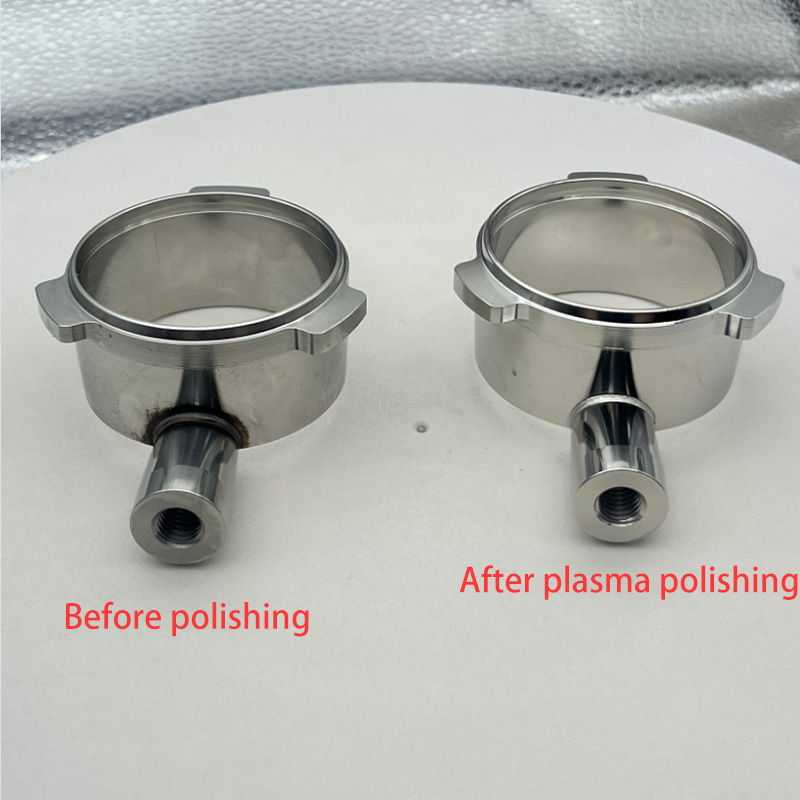
To achieve repeatable, high-tolerance results on metal components, upgrading to a professional polishing machine that utilizes plasma technology is essential. Unlike mechanical abrasion, plasma polishing operates via an advanced electrochemical plasma process. When a metal part is submerged into a specialized, environmentally safe electrolyte bath and subjected to controlled electrical currents, a stable gas-liquid plasma envelope forms around the workpiece. This envelope enables micro-machining of surface asperities at a molecular level.
The true operational value of this setup lies in its multi-step synergy. Instead of routing parts through separate cleaning tanks, deburring stations, and final buffing lines, this specialized metal polishing machine integrates cleaning, polishing, and deburring into a single, seamless cycle. By consolidating these three distinct manufacturing steps into one automated process, factory managers can drastically shorten cycle times, reduce floor space requirements, and eliminate the risk of contamination between handling stages.
Section 2: Solving the Pain Points of Die-Casting and Aluminum Manufacturing
Die-cast and aluminum components often present severe challenges during post-processing due to their complex geometries and material softness. Traditional vibratory grinding setups frequently cause parts to bump against each other, leading to surface dents and rejected batches. Furthermore, the small stones and abrasive media used in tumbling often become tightly wedged inside small holes and slots, requiring manual inspection and tedious extraction, which drives up labor overhead.
Deploying a high-performance aluminium polishing machine built on plasma tech eliminates these liabilities entirely. Because the process relies on a fluid plasma layer rather than rigid abrasive media, there is zero physical impact on the components, ensuring absolutely no impingement marks or structural distortion. The chemical-physical action uniformly targets hidden internal recesses, ensuring that complex die-cast parts emerge perfectly smooth and 100% free of burrs without any media entrapment risks.
Section 3: Maximizing ROI through Advanced Automation Features
Engineered to deliver predictable processing outcomes, next-generation polishing machine units feature sophisticated automation frameworks designed for continuous industrial operations. Key integrations include intelligent automatic flipping and multi-angle adjustment mechanisms. These systems automatically rotate the workpieces within the processing zone, ensuring that every facet receives equal plasma exposure. Additionally, built-in pre-heating functions stabilize the electrolyte chemistry prior to cycle initiation, optimizing electricity usage and reducing processing times right from the start.
This level of automation significantly lowers the barrier to entry for factory personnel. Traditional manual buffering or complex grinding setups require highly skilled operators to maintain quality consistency. In contrast, this automated plasma system can be effortlessly operated by general shop-floor workers after minimal training. The equipment consistently delivers high-precision, mirror-like surfaces with zero defects, allowing manufacturers to reduce dependency on specialized labor while simultaneously scales up hourly output.
Section 4: Choosing the Right Industrial Partner for Your Production Line
When scaling up production capacity, sourcing equipment requires evaluating the credentials of your machinery provider. Industrial buyers must look beyond initial hardware costs and assess the research and development capabilities of a polishing machine manufacturer. A reputable manufacturer does not just sell generic catalog items; they offer robust engineering support, comprehensive chemical analysis for your specific alloys, and responsive after-sales service to keep your production lines running with maximum uptime.
Procuring equipment directly from a certified polishing machine factory provides substantial strategic benefits. It eliminates intermediary markups, ensuring direct access to cost-effective scaling and customized technical adjustments. More importantly, factory-direct partnership guarantees a reliable supply of tailored electrolytes and genuine replacement parts, giving engineering managers the long-term operational stability needed to maintain strict quality control standards.
Section 5: Comprehensive B2B Solution: The Bayi Plasma Polishing Integration Blueprint
For enterprises targeting a complete overhaul of their metal finishing department, Bayi provides a fully integrated, turnkey technical solution tailored explicitly for high-volume B2B manufacturing. Recognizing that every alloy composition exhibits unique electrical and chemical properties, the Bayi engineering protocol bypasses generic "one-size-fits-all" approaches in favor of a data-driven, systematic deployment:
● Step 1: Alloy-Specific Diagnostics: Bayi’s technical laboratory conducts detailed surface chemistry analysis on your specific die-cast aluminum, stainless steel, or copper alloys to determine optimal voltage ranges and current densities.
● Step 2: Custom Electrolyte Formulation: Unlike systems utilizing hazardous acids, Bayi engineers specialized, eco-friendly, low-concentration salt solutions that comply fully with local environmental discharge regulations while maximizing material removal efficiency.
● Step 3: Equipment Customization & Integration: Configuring the plasma system with automated multi-axis jigging, automatic flipping modules, and pre-heating units tailored to your existing factory floor plan and workflow.
● Step 4: Operator Empowerment & Training: Delivering onsite technical onboarding that enables non-specialized personnel to confidently execute production runs via programmable logic controller (PLC) touch panels.
By replacing unpredictable vibratory grinding lines with this clean, automated plasma blueprint, your facility can expect up to a 400% increase in finishing throughput, a 95% reduction in post-processing rejection rates, and complete elimination of manual deburring labor expenses.

FAQs
● How does a plasma metal polishing machine improve environmental compliance? Traditional chemical polishing often relies on highly toxic, concentrated acids that generate volatile fumes and hazardous waste handling liabilities. In contrast, modern plasma systems utilize highly diluted, eco-friendly neutral salt solutions. This drastically simplifies wastewater neutralization, protects operator respiratory health, and helps manufacturing facilities effortlessly pass stringent environmental audits.
● Can an aluminium polishing machine handle complex, multi-faceted die-cast geometries? Yes. Because the plasma phenomenon occurs wherever the fluid electrolyte wets the metal surface, the polishing, deburring, and cleaning actions are applied uniformly across the entire component. This includes internal threads, deep blind holes, and complex lattice structures that are entirely inaccessible to traditional mechanical grinding wheels or vibratory media.
● What is the average payback period when switching from vibratory systems to plasma automation? Most B2B industrial manufacturing facilities report a full return on investment (ROI) within 8 to 14 months. This rapid payback is driven by the immediate elimination of workpiece impingement scrap costs, the removal of manual labor required to dig out stuck stones, shorter cycle times, and reduced power consumption per processed batch.