

1. Introduction: The Productivity Crisis in Traditional Metal Finishing
For manufacturing decision-makers in the hardware, automotive components, and medical instrument sectors, production bottlenecks rarely occur in raw machining—they happen during surface finishing. Traditional manual polishing relies heavily on skilled labor, utilizing a standard metal polishing machine equipped with cloth wheels or wire brushes. However, as product geometries become increasingly complex and market demands shift toward rapid delivery, manual processing creates a massive drag on scalability. Recently, many manufacturing plants have discovered an incredible shift: replacing manual setups with an advanced plasma polishing machine has boosted comprehensive production efficiency by over 10 times, with ultra-precise components experiencing up to a 20-fold throughput surge. This is not a marketing exaggeration; it is a fundamental shift in processing technology that completely rewrites factory economics.
2. Core Mechanism: Why Plasma Technology Outperforms Traditional Metal Polishing Machines
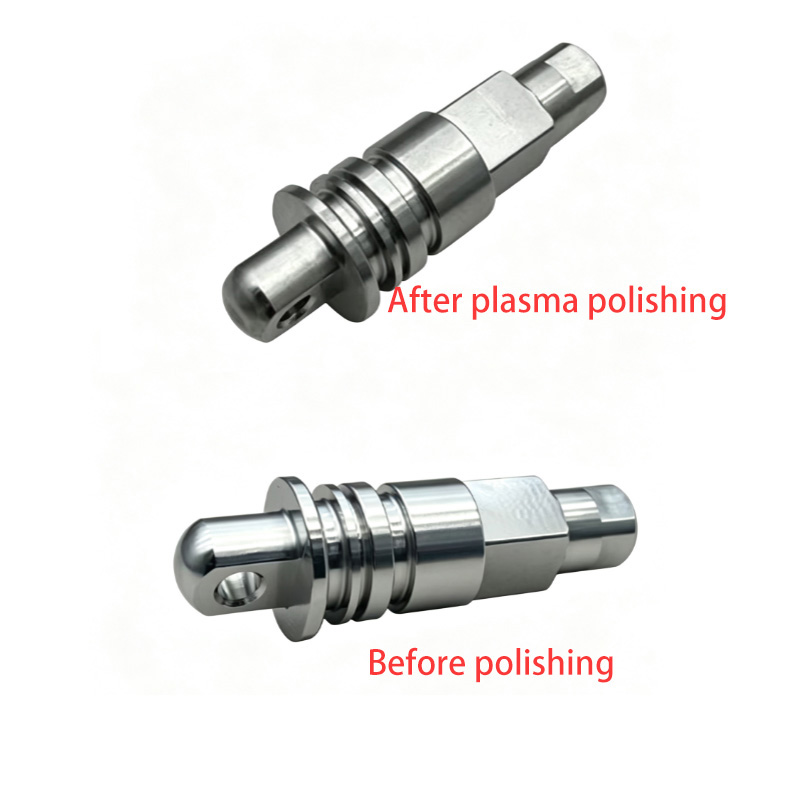
To understand this efficiency leap, one must look at the science behind the equipment. A standard mechanical polishing machine achieves smooth surfaces through physical abrasion, which is inherently linear and limited by contact area. In contrast, a professional plasma polishing machine operates via an electrochemical plasma reaction. When metal workpieces are immersed into a specialized eco-friendly electrolyte bath under high voltage, a thin, insulating gaseous envelope forms around the component. The plasma gas layer concentrates electrical currents onto the microscopic peaks and rough burrs of the metal surface, instantly vaporizing micro-burrs and leveling tool marks without damaging the core dimensions of the part. This multi-dimensional reaction happens uniformly across all surfaces simultaneously, making it the preferred setup for any modern polishing machine factory seeking high-throughput automation.
3. Reason 1: Batch Synchronous Processing vs. Single-Piece Manual Polishing
Manual surface finishing is strictly a one-piece-at-a-time operation. A worker must hold a single component against a spinning wheel, carefully shifting angles to polish external faces, tight corners, and interior holes sequentially. For complex industrial parts like valve bodies, a highly skilled worker can rarely finish more than 200 pieces per day. The plasma alternative introduces a comprehensive batch-tank processing blueprint. Utilizing heavy-duty 300A or 500A configurations, a factory can load dozens to hundreds of pieces onto a single fixture. The entire batch is submerged and processed simultaneously, achieving flawless surface quality across internal blind holes, narrow slots, and outer faces within 1.5 to 8 minutes. For instance, in small 3C electronic hardware production, hourly output easily hits 1,300 pieces, pushing daily capacities past 10,000 units and instantly introducing a 10X efficiency advantage.
4. Reason 2: Multi-Functional Single Process Replaces Multi-Step Procedures
Traditional manual buffing requires a tedious multi-stage pipeline: rough grinding for heavy burr removal, chemical washing for welding oxided spots, fine grinding to smooth out tool marks, and final compound buffing for mirror reflectivity. Moving parts between different workstations and constantly swapping consumables wastes an enormous amount of overhead time. As a leading polishing machine manufacturer, Bayi has re-engineered this process entirely. A single plasma immersion synchronizes five critical finishing steps into one step: heavy deburring, heat-tint oxide layer removal, micro-surface leveling, mirror-bright polishing, and anti-corrosion metal passivation. By compressing a traditional 30-minute multi-station routine into a single automated cycle lasting just a few minutes, mid-production logistics and material handling times are cut by over 50%.
5. Reason 3: Zero-Dead-Angle Processing Eliminates Rework and Inspection Overhead
Physical limitations plague conventional abrasive wheels. They simply cannot reach into internal cross-drilled channels, deep blind holes, or micro-threaded cavities. As a result, factories using legacy systems suffer from an average rework rate of 10% to 30% due to incomplete internal deburring, which severely stalls overall manufacturing velocity. Plasma polishing utilizes a liquid electrolyte barrier that fully envelops every square millimeter of the metal workpiece. As long as the liquid can flow into a crevice, channel, or micro-pore, the plasma reaction occurs perfectly. This ensures complete uniformity across complex industrial components, reducing product defect and rework rates by up to 90%. By cutting out the labor-intensive reinspection and repeat-polishing cycles, effective factory throughput rises significantly.
6. Reason 4: 24/7 Continuous Mass Production vs. Human Fatigue Limitations
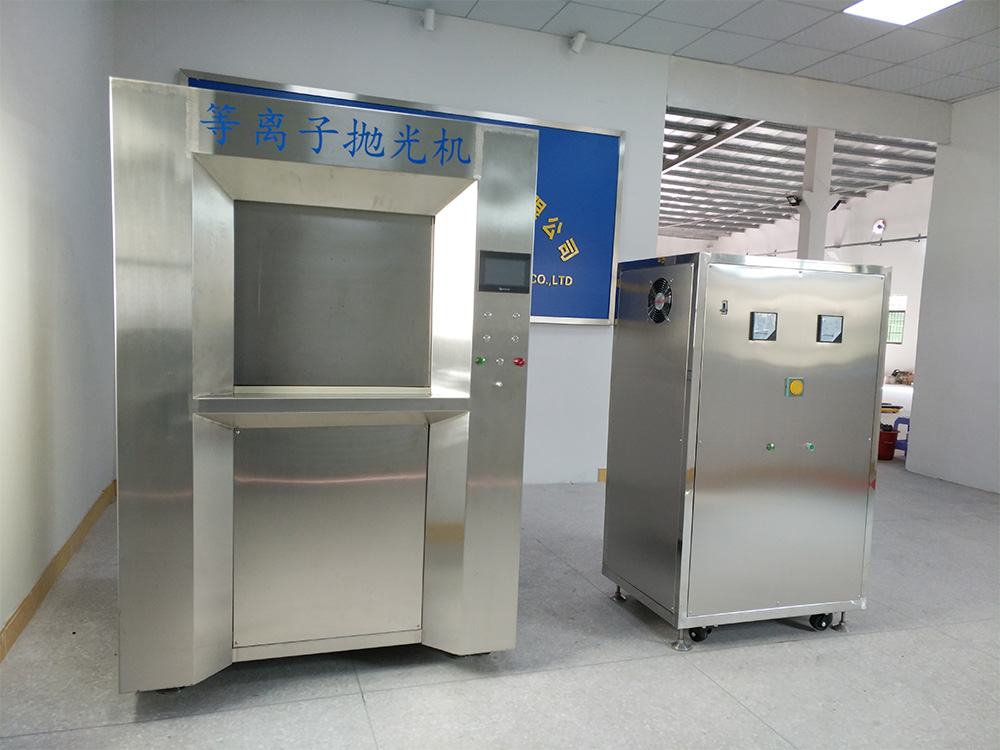
Human operators are subject to physical fatigue, emotional shifts, and focus degradation. In high-intensity grinding environments, an active worker's real productive output is capped at 6 to 7 hours per shift. As physical fatigue sets in, polishing consistency drops, leading to higher scrap rates toward the end of the day, not to mention the extreme difficulty of staffing night shifts for hazardous grinding positions. Modern machinery from a top-tier polishing machine factory eliminates human dependency. Equipped with automatic constant-temperature circulation filtration and intelligent voltage stabilization systems, these machines support uninterrupted 24/7 continuous mass production. A single unskilled operator can manage two to three machines simultaneously. The per-capita labor output increases tenfold, and upgrading to a fully automated pipeline model can boost throughput by an additional 70%.
7. Reason 5: Eliminating Post-Processing Cleaning and Material Sorting Workloads
A frequently overlooked production drag in mechanical finishing is downstream cleaning. Vibratory tumbling and manual wheel buffing leave heavy coatings of polishing waxes, embedded abrasive compounds, and metallic dust in tight crevices. Factories are forced to install multi-stage chemical ultrasonic cleaning lines and dedicated manual sorting stations just to prepare parts for packaging or plating. The plasma method relies entirely on water-soluble salts without any solid abrasives or sticky binders. Once the cycle finishes, a quick rinse with clean water washes away all surface residues, leaving internal micro-holes and slots perfectly clean. This eliminates the need for expensive wax-remover chemicals and manual sorting labor, accelerating pipeline flow and boosting hidden plant-wide efficiency.
8. Hard Data: Real-World Mass Production ROI Case Studies from Bayi
To demonstrate the concrete financial benefits, let us examine real-world production metrics compiled across thousands of volume manufacturing deployments by Bayi:
● Case Study 1: Luxury Jewelry Components
Manual Grinding: A skilled artisan finishes approximately 800 pieces per 8-hour shift.
Plasma 100A Setup: Processes 8,000 to 12,000 pieces per 8-hour shift.
Net Improvement: 10X to 15X efficiency growth.
● Case Study 2: Stainless Steel Hydraulic Valve Bodies (With Cross-Drilled Holes)
Manual Grinding: Yields roughly 180 pieces per 8 hours using wire brushes, with a 30% rework rate.
Plasma 300A Setup: Yields 2,000 pieces per 8 hours with virtually zero rework.
Net Improvement: Over 10X effective capacity expansion.
● Case Study 3: Stainless Steel Watch Cases & High-End Plumbing Hardware
Manual Grinding: Multi-stage rough-to-fine buffing takes 3 minutes per individual piece.
Plasma Batch Process: The average processing time drops below 0.3 minutes per individual piece.
Net Improvement: A direct 10X acceleration in manufacturing velocity.
9. Scenario Analysis: When Does Efficiency Exceed 10X or Adapt to Standard Fields?
While a 10X improvement is the baseline average, actual efficiency gains vary depending on part geometry and material composition:
● The 10X to 30X Surge: Achieved with ultra-small precision components, intricate openwork jewelry, thin-walled aerospace parts, and complex hydraulic manifolds. Manual intervention on these parts is slow and leads to high scrap rates, making the automated plasma approach highly effective.
● The 5X to 8X Return: Seen on standard flat hardware, simple large stamping blocks, and solid thick-walled plates. Because traditional operators face minimal difficulty polishing large flat surfaces, the automated efficiency gap narrows slightly but still delivers strong cost savings.
● The 15X+ Automated Pipeline: By pairing a professional system with automated robotic arms for loading, unloading, rinsing, and forced-air drying, plants achieve true lights-out manufacturing with efficiency scaling past 15 times.