

1. Introduction: The Crisis of Manual Finishing in Modern Industry
For decades, the backbone of the hardware, sanitary ware, automotive parts, and luxury jewelry manufacturing sectors has relied heavily on the manual dexterity of polishing workers. However, this traditional reliance has reached a critical breaking point. Modern manufacturing facilities face a severe multi-pronged crisis: escalating labor wages, an aging workforce unwilling to engage in high-dust environments, high worker turnover, and highly volatile product quality. For any forward-thinking factory owner, the urgency to transition from manual intervention to automation is palpable. This is precisely where the state-of-the-art plasma polishing machine steps in, acting not just as a tool upgrade, but as an absolute paradigm shift that outclasses traditional hand-buffing across every measurable operational metric.
2. Efficiency Showdown: How a Single Machine Outperforms Multiple Workers
When evaluating a polishing machine, production throughput is the primary metric for business survival. Manual polishing is inherently restrictive; it is a strict "one piece at a time" process. A worker must meticulously hold a single component, orienting it against a spinning wheel to grind the outer surfaces, edges, and apertures sequentially. This painstaking process can consume anywhere from several minutes to a quarter of an hour per part.
In sharp contrast, an advanced metal polishing machine operating on plasma technology utilizes a batch-processing electrolyte immersion method. Instead of individual handling, an operator can load dozens or even hundreds of small workpieces onto a custom fixture and submerge them simultaneously. The entire electrochemical reaction cycle takes a mere 1 to 8 minutes to complete. Inner cavities, intricate crevices, and outer surfaces are leveled and brightened synchronously in a single shot. When integrated into fully automated production lines, these systems achieve uninterrupted 24/7 production, driving overall throughput to 3 to 8 times that of manual stations and substantially compressing order delivery lead times.

3. Eliminating the Human Error: Achieving 100% Quality Consistency
Quality consistency is a persistent headache for production managers relying on manual labor. The finished look of a hand-buffed metal component depends entirely on the subjective tactile feel, applied pressure, and fatigue level of the technician. A minor deviation results in chromatic aberrations, localized missing polishes, or over-ground edges that ruin dimensional tolerances. Furthermore, rookie workers produce high scrap rates, while veteran masters are exceptionally rare and highly mobile.
A leading polishing machine manufacturer solves this systemic volatility through precise digital automation. Once the optimal voltage, electrolyte temperature, and cycle time parameters are dialed in, they are locked into the system's PLC memory. Every single workpiece processed inside the batch undergoes an identical closed-loop electrochemical reaction. The degree of deburring, surface specular gloss, and microscopic material removal are perfectly uniform across thousands of components. For precision parts featuring complex micro-threads or delicate profiles, pulse-width modulation models deliver micrometer-level control, safeguarding critical assembly datums. Consequently, customer rejection and rework rates drop by more than 90%, allowing factories to comfortably pass the most stringent international QA inspections.
4. Financial Deep Dive: Long-Term ROI and Consumable Savings
From a financial perspective, investing in an industrial professional polishing machine yields a highly compelling Return on Investment (ROI) curve. The financial drain of manual operations stems from two major pillars: skyrocketing direct labor costs (including specialized wages, social security, and benefits) and the non-stop procurement of consumable media. Hand polishing demands a perpetual supply of buffing wheels, abrasive compounds, premium sandpapers, and grinding heads, which accumulate into staggering operational expenses over a fiscal year.
Deploying automation engineered by a tier-one polishing machine factory drastically alters this equation. A single un-skilled employee can easily monitor multiple automated units simultaneously, completely eliminating the need to pay exorbitant premiums for rare artisan pollshers. On the consumables front, the plasma process replaces physical friction media with an eco-friendly electrolyte solution. This liquid bath only requires minor periodic replenishment; with standard filtration practices, a single batch of electrolyte remains fully operational for 3 to 6 months. The calculated consumable cost per processed component breaks down to just a fraction of a cent. Additionally, because the non-contact process avoids mechanical impact, it eliminates accidental part warping or decorative pattern damage, wiping out material scrap overheads.
5. Breaking Through Visual Blind Spots: Zero Dead-Angle Processing
Physical constraints represent an insurmountable barrier for traditional abrasive setups. Standard wire brushes, flap wheels, and buffing bits have rigid dimensional profiles. When faced with complex modern geometries—such as internal fluid pathways inside an aluminium polishing machine setup, deep intersecting blind holes in stainless valves, miniature internal screw threads, or multi-layered hollow filigree—human hands simply cannot guide the tool into the recess. Leaving these hidden burrs untouched causes severe downstream failures, including assembly mechanical binding and hydraulic seal leaks.
The plasma finishing method bypasses mechanical restrictions completely by utilizing advanced fluid dynamics. The workpiece is completely enveloped by the electrolyte bath. Under the influence of a high-voltage electrical field, a highly uniform, microscopic plasma gas layer forms across every square millimeter of the submerged metal surface. Wherever the fluid is capable of flowing, the plasma field actively vaporizes burrs and levels surface roughness. Internal chambers, complex undercuts, and blind hole bottoms are stripped of imperfections and brought to a high gleam simultaneously, solving geometric challenges that manual shops have deemed un-machinable for decades.
6. Protecting Delicate Workpieces: Zero-Stress and Deformation-Free Excellence
When dealing with ultra-thin or high-precision components—such as 0.08mm stainless steel medical shims, titanium alloy capillary tubes, thin-walled aerospace connectors, or intricate hollowed-out luxury jewelry—manual buffing is highly hazardous. The severe mechanical friction, directional shear forces, and localized heat generated by high-speed buffing wheels instantly induce warpage, micro-cracking, structural bending, and severe loss of crisp decorative details.
The electrochemical principle utilized by top-tier plasma systems treats the metal substrate with extreme delicacy. Because the technique relies on micro-level electrochemical erosion rather than sheer physical force, there is absolutely zero mechanical contact and zero physical pressure exerted on the part. The bulk temperature of the workpiece remains low, preventing thermal distortion. Delicate floral patterns, ultra-thin profiles, and micro-machined dimensional tolerances are perfectly preserved, making plasma finishing the premier viable solution for the mass production of ultra-delicate and sensitive components.
7. Process Consolidation: 5 Essential Finishing Steps in a Single Cycle
In a standard manual manufacturing workflow, an individual metal component must undergo a highly fragmented, multi-step progression. It is routed to Station A for aggressive deburring, transferred to Station B for scratch removal, moved to Station C for pre-polishing, routed to Station D for final high-gloss mirroring, and finally sent to a chemical bath for cleaning and passivation. This multi-station logistics loop inflates material handling times, floor space requirements, and tracking complexity.
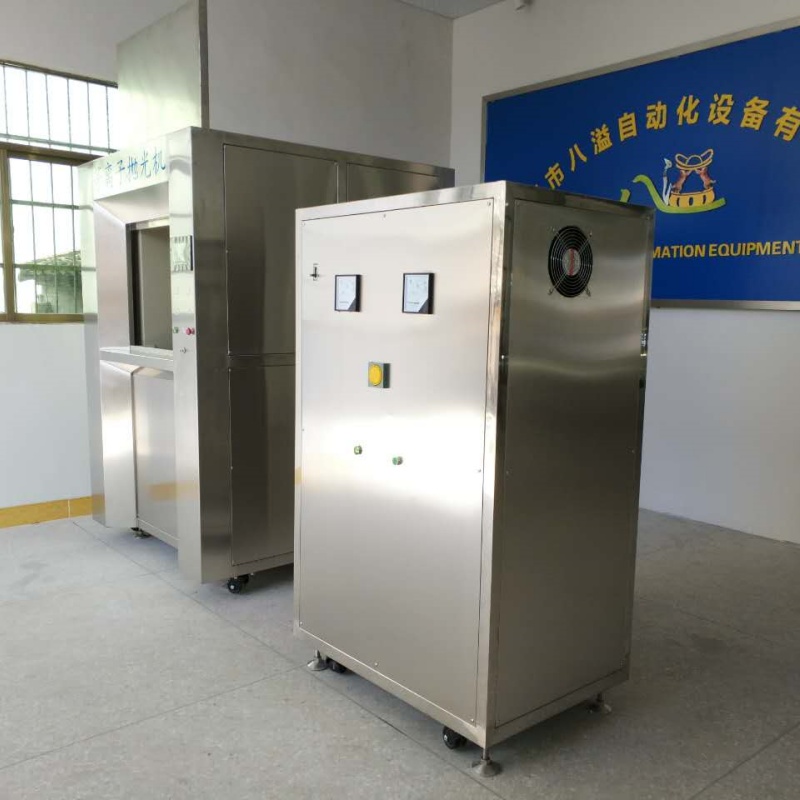
A professional polishing machine running a plasma cycle consolidates this entire chain into a single processing station. During the brief 1-to-8 minute cycle, five distinct metallurgical enhancements happen concurrently:
① Micro-Deburring: High-energy ionization targets and vaporizes microscopic burrs instantly.
② Oxide & Weld Stain Removal: Scale, discoloration, and heat-affected zones are thoroughly stripped clean.
③ Tool Mark Leveling: Micro-ridges left behind by CNC milling or turning are leveled out.
④ Specular Mirror Brightening: The surface profile achieves a brilliant, mirror-like reflectivity.
⑤ Anodic Passivation: A dense, highly stable protective oxide film is generated on the metal surface, significantly boosting its native corrosion and rust resistance.
By merging five separate processes into one, factories dramatically trim in-process inventory, optimize workshop floor layout, and simplify production workflows.
8. Environmental Compliance and Workshop Safety Optimization
The traditional hand-buffing shop is notorious for being an environmental and occupational hazard nightmare. The constant grinding flings toxic metal dust and greasy polishing wax particles into the air, creating a hazardous workspace where workers face chronic respiratory illnesses like silicosis. Furthermore, the massive accumulation of flammable dust brings strict regulatory scrutiny, catastrophic fire risks, and impending environmental enforcement penalties.
Shifting to a system designed by a modern polishing machine factory immediately cleans up the enterprise's regulatory profile. The plasma methodology uses a completely neutral, eco-friendly electrolyte solution containing zero harsh acids or volatile toxic chemicals. The entire process takes place inside an enclosed chamber; there is zero airborne metal dust and zero pungent odors. The minor trace amounts of ozone generated during high-voltage breakdown are easily neutralized with a simple ventilation exhaust fan. The used electrolyte fluid requires nothing more than basic sedimentation and neutralization before meeting strict local water management standards for safe discharge. Transforming the plant into a clean, modern facility drastically minimizes occupational illness liabilities and protects the company from costly environmental shutdown risks.
9. Bayi's Complete Implementation Blueprint: A Turnkey Solution for Enterprises
Transitioning away from an established reliance on manual labor can feel daunting for industrial decision-makers. To ensure a seamless integration that guarantees rapid profitability, Bayi, as an elite specialist in plasma metal finishing technology, provides a comprehensive, ironclad turnkey solution designed to systematically upgrade your production floor:
Step 1: Engineering Assessment & Sample Proofing: Send your challenging metal components (stainless steel, brass, aluminum, titanium) to our labs. Bayi’s technical staff will conduct thorough processing tests and provide free sample proofing alongside certified surface roughness (Ra) reports.
Step 2: Tailored Electrolyte Chemistry Matching: Our chemical engineers formulate the ideal, specific electrolyte chemistry to perfectly suit your specific alloy types, ensuring maximum brightness and anti-corrosion properties.
Step 3: Custom Machine Customization: Based on your exact daily throughput requirements, we build customized semi-automated or fully automated robotic plasma polishing systems tailored to fit your existing plant layout.
Step 4: Comprehensive Technical Training & Optimization: We deploy expert field technicians to your factory floor to oversee installation and run extensive hands-on training for your operators, covering setup, fixture maintenance, and PLC adjustments.
Step 5: Environmental & Regulatory Compliance Guidance: Bayi supplies complete SDS documentation and coordinates the layout of auxiliary filtration systems, ensuring your upgraded line effortlessly satisfies local environmental impact assessments (EIA).