

1. Introduction: The Evolution of Industrial Metal Polishing
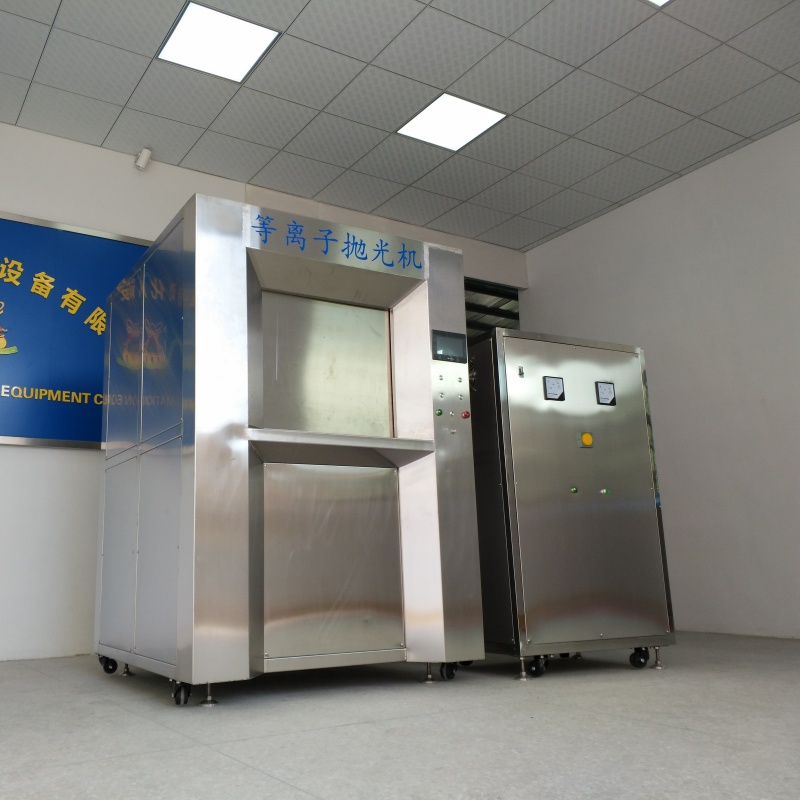
In the contemporary manufacturing landscape, the requirements for surface quality have surpassed mere visual aesthetics. Global procurement standards demand structural integrity, flawless micron-level precision, and long-term environmental sustainability. Traditional manual mechanical buffing, while historically vital, introduces human error, high reject rates, and severe labor dependency. To bridge this operational gap, Bayi, a premier polishing machine manufacturer, has engineered advanced automated solutions utilizing proprietary plasma technology. By replacing abrasive contact with a controlled gas-liquid plasma environment, our modern plasma polishing machine systems redefine what high-precision industrial sectors can achieve in surface refinement.
2. Absolute Deburring and Flash Removal: Precision Without Compromise
One of the most persistent bottlenecks in precision manufacturing is the presence of micro-burrs and flash layers resulting from CNC milling, high-pressure die casting, stamping, and automated welding. These imperfections, if left unresolved, threaten internal fluid dynamics and physical assembly tolerances. Implementing a high-performance metal polishing machine from an established polishing machine factory ensures complete eradication of micro-burrs across complex structures. This includes cross-holes, blind holes, internal thread networks, and deep, enclosed tubular channels. For example, during thread deburring, the plasma process strictly isolates and eliminates edge burrs without altering the original tooth profile or eroding dimensional datum points. This results in incredibly smooth screw engagement, eliminating potential assembly failures or cross-threading risks. Furthermore, in hydraulic and pneumatic valves, the flawless cleanup of intersecting oil pathways optimizes hydraulic sealing parameters and entirely eliminates the risk of systemic blockages caused by detached metal debris.

3. Complete Surface Eradication: Removing Oxides, Welding Spots, and Carbonized Layers
High-temperature post-processing treatments, such as atmospheric heat treating and structural tempering, often coat valuable metal alloys with dense, dark carbonized layers and brittle oxides. Additionally, welding processes leave behind localized yellow and black slag spots. A professional polishing machine using plasma electrolysis dissolves these high-temperature oxides, scale formations, and surface rust on a molecular level. It entirely bypasses the need for hazardous chemical acid-pickling baths, seamlessly peeling away stubborn industrial grease, oxidation films, and embedded mold-release agents. The post-processed workpieces emerge from the system with an incredibly uniform, pristine metallic substrate color, eliminating localized yellowing, dark splotches, or patchy color variations that ruin premium consumer-facing and industrial components.
4. Micro-Level Leveling: Microscopic Smoothing of Tool Marks and Scratches
Surface roughness profiles directly impact the mechanical wear, friction coefficients, and aesthetic validation of metal parts. Whether dealing with an aluminium polishing machine handling softer automotive grades or specialized setups for hardened stainless steels, plasma texturing effectively erases CNC car-milling micro-grooves, drawing lines, stamping impact marks, and microscopic abrasions. The chemical-physical leveling mechanism targets high microscopic peaks across the metal topography, filling in micro-voids and pitting defects. For Metal Injection Molding (MIM) powder metallurgy parts, the plasma flux successfully densifies the typically porous surface layer, smoothing out loose microscopic voids into a dense, continuous tactile finish. This flattening effect within tube interiors and valve cavities directly decreases fluid resistance coefficients, maximizing throughput efficiency in critical fluid-handling networks.
5. Adjustable Aesthetics: Achieving Uniform Matte Textures or High-Gloss Mirror Finishes
Modern component buyers demand dynamic aesthetic options tailored to precise functional deployments. Bayi plasma technology delivers adjustable finishes based on automated parameter manipulation. By reducing the operating voltage thresholds and compressing processing cycle times, the system produces a beautifully uniform, desaturated, and anti-glare matte finish. This is highly valued for surgical medical instruments, specialized optical housings, and high-end industrial control dashboards. Conversely, by combining specialized mirror-finish electrolytes with optimized processing algorithms, the system generates an ultra-brilliant, high-gloss mirror shine that matches or exceeds manual cloth-wheel buffing. This automated mirror finish provides complete omnidirectional consistency across every batch, completely eliminating waves, orange-peel artifacts, and dark-to-light chromatic deviations.
6. Advanced Passivation Layering: Enhancing Anti-Rust and Corrosion Resistance
Beyond optical and geometric refinement, plasma finishing acts as a structural defense mechanism. During the plasma ionization cycle on stainless steel components, the process drives rapid chromium enrichment on the surface, synthesizing a dense, self-healing oxide passivation layer. This structural shift multiplies the component's performance in standard salt-spray test durations, offering superb protection against environmental rust. For complex titanium alloys and precision copper parts, this unified passivation barrier delivers strong resistance against sweat, acidic compounds, and alkaline exposure, expanding product lifecycles in punishing offshore, chemical, or medical environments. It even allows short-term storage without anti-rust oils, saving processing costs.
7. Pristine Pre-Treatment Optimization: Ensuring Perfect Adhesion for Electroplating and PVD Coating
Subsequent surface finishing steps, such as Physical Vapor Deposition (PVD) coating, vacuum metallization, and electroplating, fail primarily due to sub-surface contamination. Traditional buffing leaves persistent compounds like polishing waxes, embedded abrasive stones, and micronized grit in the microscopic metal crevices. Because plasma technology relies purely on eco-friendly gas-liquid chemical dissolution, there are zero abrasive particles or wax matrices involved. Deep internal holes, tightly aligned channels, and tight crevices remain completely free of residual dust, turning the final cleaning cycle into a brief rinsing step. Consequently, subsequent PVD or electroplating coatings show remarkable adhesion stability, entirely eliminating blistering, peeling, and pinhole failures, which dramatically boosts downstream factory yield rates.
8. Unmatched Dimensional Stability: Zero Deformation for Ultra-Thin and Complex Workpieces
Maintaining geometric tolerances during high-volume surface finishing remains a critical challenge for mechanical copying systems. Traditional abrasive forces cause thin-walled materials to warp, buckle, and bend. The non-contact nature of the plasma processing bath solves this mechanical limitation. Thin-gauge components as thin as 0.08mm, microscopic metal foils, and ultra-fragile capillary tubes undergo uniform polishing without experiencing edge collapses, tool impacts, or structural stress warping. With a single-sided material removal rate precisely controlled between 1 and 8 microns, the processing cycle does not expand precision hole diameters or damage critical assembly datums. Filigree designs, complex jewelry patterns, and thin-walled industrial components preserve their detailed geometries and crisp lines perfectly.
9. High-Yield Consistency: Minimizing Rejection Rates in Mass Production
For procurement operations, piece-to-piece consistency directly determines operational profitability. Traditional polishing relies on the manual skills and concentration levels of individual operators, creating a risky variable in the supply chain. Plasma processing fixtures allow tens to hundreds of workpieces to undergo parallel treatment within a single processing bath. Every component experiences identical voltage pressures, thermal gradients, and electrolyte flux densities. This standardized process guarantees that deburring depth, specular gloss, and dimensional reduction remain uniform across millions of parts. This automation eliminates human variability, lowers rework rates, and meets the strict quality expectations of global tier-one supply chains.
10. Case Studies and Industry-Specific Solutions
Bayi plasma systems have successfully delivered verifiable structural upgrades across multiple industrial sectors:
● Medical Devices: Bone screws, surgical forceps, and diagnostic implants receive sterile, micro-leveled matte finishes that prevent tissue adhesion and eliminate microbial trapping hazards.
● Automotive Fluid Control: Transmission valve spools, common-rail injection fittings, and high-pressure fuel lines undergo specialized deburring to achieve perfect seal contacts and prevent fuel flow cavitation.
● Aerospace & Semiconductor Components: Thin-walled sensor housings and copper lead frames achieve high-purity surface finishes with absolute dimensional control.