

Introduction: Why Sharp Reference Edges Matter More Than Surface Brightness
In modern precision manufacturing, the true value of a component is no longer judged only by how shiny the surface looks. For aerospace parts, medical implants, semiconductor structures, precision molds, and high-end mechanical assemblies, the most critical feature is often the integrity of the reference edge.
A perfectly polished surface becomes meaningless if the datum edge collapses by even a few microns.
Traditional polishing machines usually focus on visual smoothness. Whether using a buffing polisher machine, abrasive wheel, or ordinary metal polishing machine, the process relies heavily on physical contact. That contact creates pressure, friction, heat, and uncontrolled cutting forces. Over time, these forces slowly round corners, soften edges, and destroy positioning geometry.
This is why many manufacturers face a hidden contradiction:
They want smoother surfaces, but they cannot sacrifice dimensional accuracy.
Plasma polishing technology changes this logic completely.
Instead of mechanically grinding the metal surface, plasma polishing works through controlled electrochemical energy interactions. The process behaves less like sanding and more like microscopic surface stabilization. Unstable structures such as burrs, spikes, and micro-protrusions naturally absorb higher energy and dissolve first, while stable geometric edges remain largely unaffected.
This is the revolutionary difference between plasma polishing and conventional machine polishing.
The real goal of advanced plasma polish systems is not to “remove metal aggressively,” but to selectively eliminate unstable microscopic defects while preserving engineered structures. In other words, plasma polishing does not attack precision — it protects it.
That is why more high-end polishing machine manufacturers are replacing traditional polishing machines with intelligent plasma polishing machine systems, especially in industries where edge accuracy directly determines product performance.
Today, the competition among China polishing machine suppliers is no longer about who can create the brightest surface. The real challenge is who can polish without destroying geometry.
And this is exactly where plasma polishing becomes transformative.
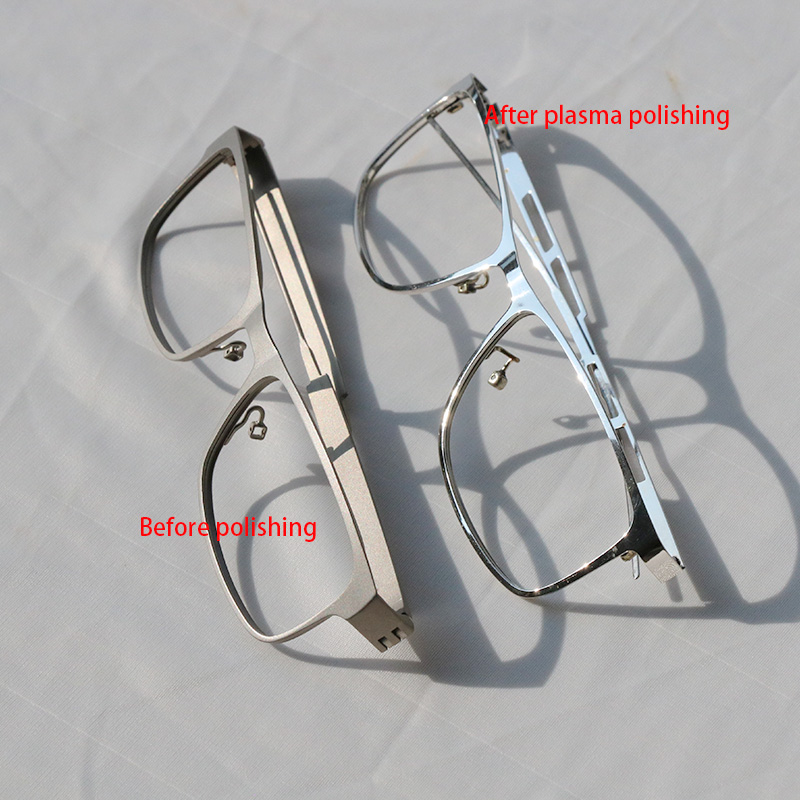
Traditional Polishing's Hidden Problem: “Over-Polishing Geometry”
For decades, manufacturers believed that smoother surfaces automatically meant better quality. This idea shaped the entire development direction of traditional polishing machines, including abrasive systems, buffing polisher machine equipment, and standard metal polishing machines.
But in ultra-precision manufacturing, this philosophy slowly revealed a serious flaw:
traditional polishing removes not only defects, but also geometry itself.
Most conventional machine polishing methods rely on physical force. Abrasive wheels, polishing cloths, grinding belts, and polishing compounds continuously contact the metal surface. During this process, material removal becomes difficult to localize accurately.
The problem becomes especially dangerous at corners and datum edges.
Why?
Because sharp edges naturally receive higher contact pressure during mechanical polishing. The polishing wheel cannot distinguish between a harmful burr and an intentionally designed reference edge. To the machine, both are simply “raised areas” waiting to be flattened.
This creates what many engineers call “geometry erosion.”
At first, the changes are microscopic:
● edges become slightly rounded
● positioning corners lose sharpness
● assembly surfaces shift by several microns
● dimensional consistency begins to drift
However, in industries such as aerospace and medical manufacturing, even tiny geometric deformation can lead to:
● assembly instability
● sealing failure
● inaccurate positioning
● stress concentration issues
● reduced lifespan
This is why many precision factories started questioning traditional polishing logic.
The old generation of polishing machines pursued brightness.
The new generation of plasma polishing technology pursues structural preservation.
This difference is fundamental.
Traditional polishing behaves like sanding wood with increasing smoothness but decreasing shape accuracy. Plasma polish technology behaves more like intelligent microscopic balancing — removing instability while respecting the original engineered structure.
That is why advanced polishing machine manufacturers increasingly integrate plasma polishing machine systems into high-end production lines.
The goal is no longer “maximum removal.”
The goal is “minimum disturbance.”
Modern China polishing machine suppliers now compete based on how precisely their systems preserve edges, tolerances, and reference geometry during polishing.
And this shift is redefining the future of metal finishing.
Plasma Polishing Is Not “Grinding” — It Is Controlled Energy Redistribution
One of the biggest misunderstandings about plasma polishing is that people assume it works like an advanced grinding process.
In reality, plasma polishing technology operates according to a completely different physical philosophy.
Traditional polishing machines remove material through direct mechanical destruction:
● friction
● abrasion
● cutting
● scraping
Plasma polishing, however, works through controlled electrochemical energy redistribution.
This distinction changes everything.
Instead of forcing material away through physical contact, a plasma polishing machine creates a highly energized electrochemical environment around the workpiece surface. Under specific voltage, temperature, and electrolyte conditions, microscopic surface areas begin reacting selectively.
But the process is not random.
The system naturally seeks out unstable energy points on the metal surface.
This means:
● burrs react faster
● spikes dissolve first
● microscopic protrusions disappear earlier
● unstable structures absorb more energy
Meanwhile, stable geometric structures remain relatively calm.
This is why plasma polish technology can remove micro-defects without aggressively consuming the core geometry of the component.
A useful analogy is urban engineering.
Traditional machine polishing acts like a bulldozer flattening an entire landscape.
Plasma polishing behaves more like intelligent traffic optimization — it selectively removes congestion points without destroying the city structure itself.
This is also why plasma polishing machines are increasingly used for:
● turbine blades
● precision medical devices
● semiconductor components
● optical molds
● aerospace assemblies
These industries cannot tolerate uncontrolled material removal.
Another critical advantage is heat distribution.
Conventional buffing polisher machine systems often generate uneven friction heat, especially near edges. Local overheating softens the metal structure and accelerates edge rounding.
Plasma polishing technology distributes energy far more uniformly at the microscopic level, greatly reducing thermal deformation.
As a result, advanced polishing machine manufacturers now focus less on “aggressive polishing force” and more on “controlled microscopic reaction balance.”
This marks a major technological shift in the evolution of modern metal polishing machines.
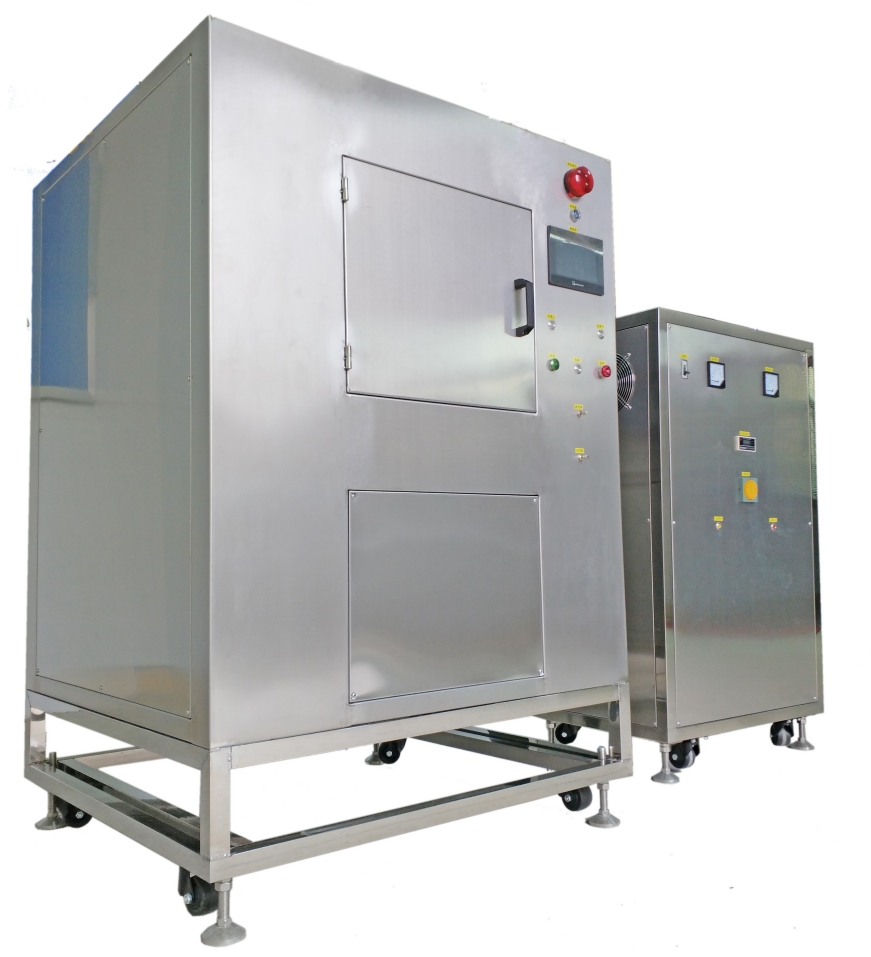
Why Burrs Disappear First: The Physics of Electric Field Concentration
At the microscopic level, a burr is not just a small metal fragment.
It is actually an extremely unstable energy structure.
This is the secret behind why plasma polishing removes burrs so efficiently without destroying reference edges.
When a plasma polishing machine energizes the metal surface, electrical fields begin distributing across the geometry of the workpiece. However, electric fields do not spread evenly everywhere.
They naturally concentrate at the sharpest microscopic points.
This phenomenon is known as electric field concentration.
Tiny burrs created during machining usually have:
● ultra-small curvature radius
● needle-like geometry
● irregular microscopic peaks
● extremely unstable surface energy
Because of this shape, electric field lines crowd aggressively around the burr tip.
The smaller and sharper the structure becomes, the stronger the localized current density becomes.
As a result:
● burrs absorb more energy
● electrochemical dissolution accelerates
● microscopic peaks melt away rapidly
This selective behavior is one of the greatest advantages of plasma polishing technology.
A conventional polishing machine cannot distinguish a burr from a datum edge because it only relies on physical contact.
But plasma polishing operates through field behavior.
And electric fields are highly selective.
An engineered reference edge is fundamentally different from a burr.
Although both may appear “sharp” visually, their microscopic geometry is completely different.
A standard datum edge usually has:
● stable curvature
● uniform geometry
● continuous structural transition
● balanced field distribution
Therefore, current density remains relatively stable and material removal becomes extremely slow.
This creates a remarkable effect:
plasma polish systems aggressively remove unstable micro-defects while preserving intentionally engineered structures.
In advanced manufacturing, this selective removal capability is extremely valuable.
It allows polishing machine manufacturers to achieve:
● burr removal
● edge retention
● dimensional consistency
● surface smoothing
● micro-level precision finishing
all within the same process.
That is why modern China polishing machine suppliers increasingly market plasma polishing machine systems as “precision stabilization systems” rather than ordinary polishing machines.