

The Invisible Guardian: Plasma Gas Film Protection Mechanism
One of the most fascinating aspects of plasma polishing technology is that the metal surface develops its own self-protective behavior during processing.
This protection comes from the plasma gas film.
Inside a plasma polishing machine, the workpiece surface becomes surrounded by a thin vapor-plasma layer generated by electrochemical heating and electrolyte interaction.
Although invisible to the naked eye, this layer completely changes how material removal occurs.
The plasma gas film acts like an intelligent microscopic shield.
However, it does not protect all areas equally.
Stable surfaces and datum edges form thicker, more continuous gas films.
Microscopic burrs form thinner, unstable gas films that are easily penetrated.
This difference is critical.
On flat surfaces and engineered edges:
● the gas layer remains stable
● energy transfer becomes controlled
● excessive corrosion is suppressed
● geometry remains protected
But on burr tips:
● the gas film becomes extremely thin
● plasma discharge easily penetrates the surface
● localized reaction intensity increases sharply
● unstable protrusions dissolve rapidly
This creates a remarkable self-balancing effect.
The process naturally focuses energy where instability exists while reducing reaction intensity where geometry is stable.
Unlike traditional machine polishing, no mechanical force is required to “protect” edges manually.
The physics itself performs the protection.
This is why plasma polishing machine systems can achieve:
● selective deburring
● micro-level smoothing
● edge preservation
● ultra-low deformation
● high dimensional stability
all simultaneously.
Conventional buffing polisher machine systems cannot achieve this because they rely entirely on mechanical contact.
A polishing wheel cannot create intelligent self-shielding behavior.
But plasma polishing technology can.
This is one reason why advanced polishing machine manufacturers increasingly position plasma polishing as a “smart surface engineering process” rather than a simple finishing technology.
In high-end manufacturing, the future belongs to controlled energy — not uncontrolled force.
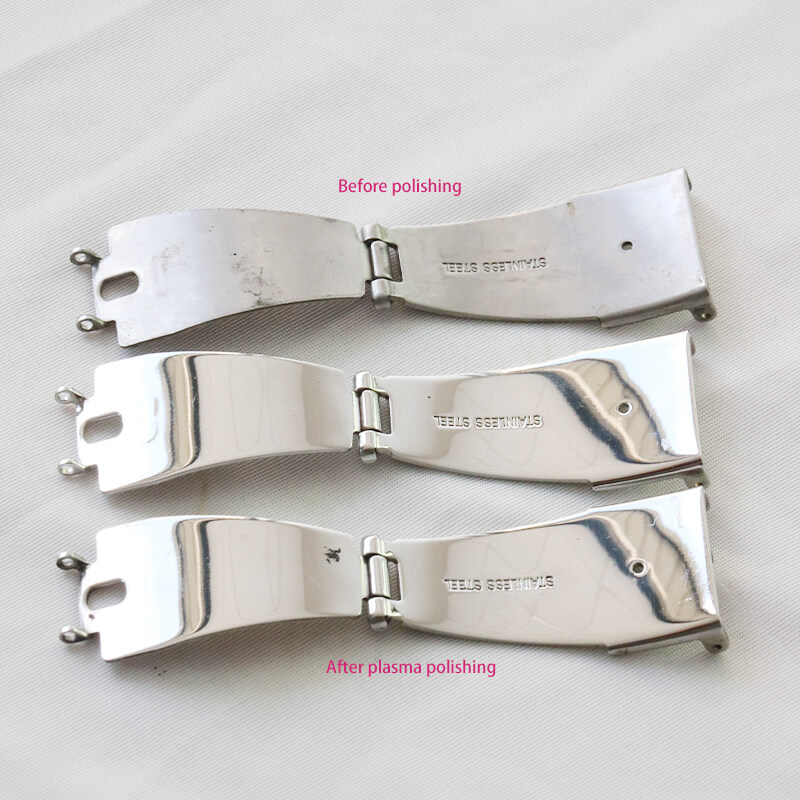
Micron-Level Removal: Why Plasma Polish Is Extremely Gentle
Traditional polishing removes material in visible layers.
Plasma polishing removes material in nearly invisible quantities.
This is one of the most important reasons why plasma polishing technology can preserve sharp datum edges while improving surface quality.
Inside a modern plasma polishing machine, material removal is controlled at the micron and even sub-micron level.
Instead of aggressive cutting, the process performs highly uniform anodic dissolution across microscopic surface irregularities.
The amount removed during each reaction cycle is extremely small.
This creates several major advantages:
● minimal dimensional change
● low thermal distortion
● excellent edge retention
● stable surface consistency
● reduced internal stress
Conventional machine polishing often removes far more material than necessary because mechanical systems struggle to control contact pressure uniformly.
A traditional buffing polisher machine may accidentally remove dozens of microns from an edge during extended polishing.
But plasma polish systems behave differently.
Once process parameters are stabilized:
● voltage remains controlled
● electrolyte reaction becomes predictable
● current density stays balanced
● material removal becomes highly repeatable
This allows polishing machine manufacturers to create ultra-precision finishing systems capable of maintaining extremely tight tolerances.
For industries such as:
● semiconductor manufacturing
● aerospace engineering
● optical mold production
● surgical implant fabrication
micron-level stability is essential.
Even tiny uncontrolled edge loss may cause:
● assembly deviation
● sealing leakage
● optical distortion
● positioning failure
This is why advanced china polishing machine suppliers emphasize “micro-removal capability” as a core advantage of plasma polishing machine technology.
The future of precision finishing is not about polishing harder.
It is about polishing smarter — with microscopic control.
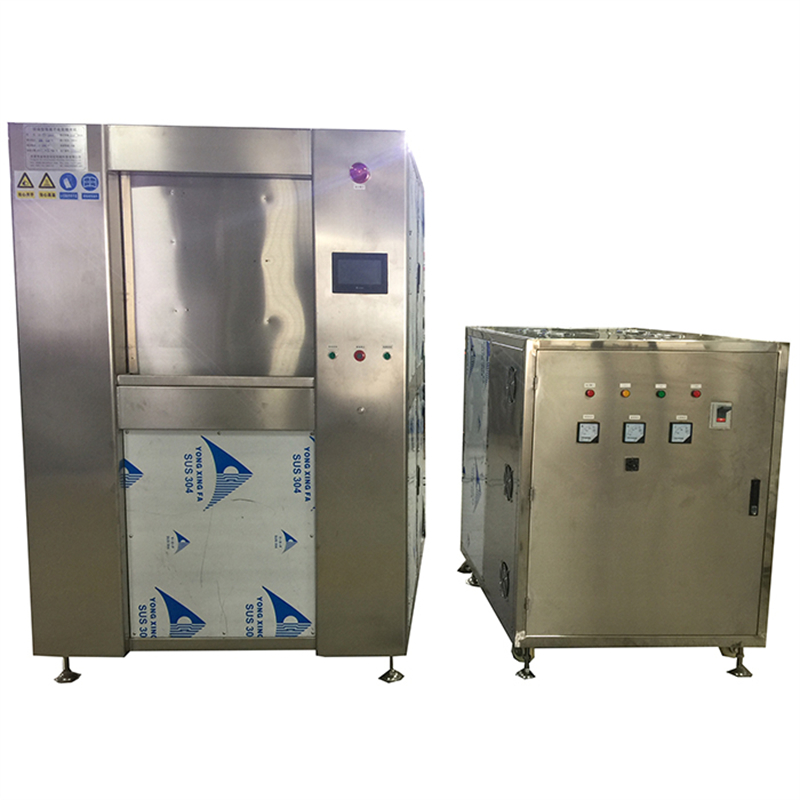
Why Aerospace and Medical Industries Prefer Plasma Polishing Technology
In ordinary consumer products, a slightly rounded edge may not matter.
But in aerospace and medical engineering, edge precision can determine life or death.
This is one reason plasma polishing technology has become increasingly important in high-end manufacturing.
Aerospace components operate under:
● extreme temperature
● high rotational stress
● intense vibration
● long-term fatigue loading
Even microscopic defects may become crack initiation points.
Traditional polishing machines sometimes introduce hidden risks by mechanically damaging edge geometry during finishing.
A rounded turbine blade edge may alter airflow behavior.
A distorted positioning surface may affect assembly precision.
A weakened microstructure may shorten component lifespan.
Plasma polishing machine systems reduce these risks dramatically.
Because plasma polish selectively removes unstable microscopic defects while preserving designed geometry, aerospace manufacturers gain both:
● smoother surfaces
and
● safer structural integrity
The same logic applies to medical manufacturing.
Medical implants require:
● ultra-clean surfaces
● stable geometry
● burr-free edges
● biocompatible finishing
Conventional machine polishing may leave embedded abrasives, mechanical scratches, or inconsistent edge rounding.
Plasma polishing technology produces much cleaner microscopic surfaces with minimal mechanical damage.
This is especially important for:
● orthopedic implants
● surgical instruments
● cardiovascular devices
● dental components
where surface consistency directly affects biological compatibility.
Modern polishing machine manufacturers increasingly design specialized plasma polishing machine systems for these industries because the demand for precision preservation continues growing.
Today, many china polishing machine suppliers no longer target only decorative finishing markets.
They now compete in high-end engineering applications where geometry preservation matters more than appearance alone.
Plasma Polishing vs Buffing Polisher Machine: Structural Accuracy Comparison
Although both technologies improve surface finish, plasma polishing and buffing polisher machine systems operate according to completely different principles.
A buffing polisher machine relies on:
● friction
● abrasive compounds
● physical pressure
● mechanical contact
This makes the process highly dependent on operator skill, polishing angle, pressure consistency, and polishing duration.
Even experienced technicians may accidentally over-polish critical edges.
Plasma polishing technology removes this uncertainty.
A plasma polishing machine works through controlled electrochemical reactions rather than direct cutting force.
Because there is little physical contact:
● edge wear becomes minimal
● deformation risk decreases
● dimensional consistency improves
● surface uniformity increases
Traditional polishing machines often create uneven results on complex parts because contact pressure changes across curved surfaces.
Plasma polish systems behave much more uniformly, especially on:
● internal channels
● micro-holes
● precision grooves
● irregular geometries
Another major difference is heat generation.
Mechanical polishing generates localized friction heat that may:
● soften metal
● distort geometry
● increase edge rounding
● create residual stress
Plasma polishing technology distributes energy more evenly and avoids aggressive thermal concentration.
This is why advanced polishing machine manufacturers increasingly position plasma systems as precision engineering equipment rather than ordinary polishing machines.
For high-end manufacturing, preserving structure is more valuable than simply increasing shine.