

Introduction — Plasma Polishing Is Not “Grinding,” It Is Intelligent Surface Reconstruction
Traditional surface finishing methods often rely on mechanical abrasion. A conventional metal polishing machine or buffing polisher machine removes material by force, friction, and repeated contact. While these methods can improve brightness, they frequently leave behind secondary scratches, directional polishing marks, heat damage, or inconsistent textures.
By contrast, plasma polishing technology works in an entirely different way.
Instead of physically grinding the metal surface, plasma polishing performs controlled micro-level surface dissolution. It selectively removes microscopic peaks while preserving valleys, gradually transforming a rough machined surface into a highly uniform reflective layer.
This is why modern aerospace, medical, semiconductor, and precision manufacturing industries increasingly prefer advanced plasma polishing machines over conventional machine polishing systems.
In this article, we will explore:
● Why microscopic scratches exist after machining
● Why traditional polishing struggles to eliminate them completely
● How plasma polishing creates automatic micro-level surface leveling
● Why plasma technology can improve both gloss and corrosion resistance simultaneously
● Why leading polishing machine manufacturers are investing heavily in plasma-based systems
Chapter 1 — Machining Scratches Are Actually “Microscopic Mountains”
When people see machining marks, they usually think of them as shallow lines on metal.
But under a microscope, those scratches are not flat lines at all.
They are complex three-dimensional structures made of:
● Sharp ridges
● Torn metal edges
● Micro valleys
● Stress-deformed grain structures
● Irregular height differences
Even a high-end machine polisher cannot completely eliminate these microscopic height variations because traditional polishing mainly cuts surfaces mechanically and uniformly.
This creates a critical limitation:
Mechanical polishing removes both peaks and valleys simultaneously.
As a result:
● Some scratches remain visible
● Surface texture becomes inconsistent
● Excessive polishing may damage dimensional accuracy
● Thin parts become vulnerable to deformation
This explains why many precision industries are moving away from aggressive abrasive polishing and toward controlled plasma polish processes.
Unlike traditional polishing machines, plasma systems recognize microscopic energy distribution across the metal surface itself.
The surface effectively “guides” the polishing process automatically.
That is one of the revolutionary aspects of modern plasma polishing technology.
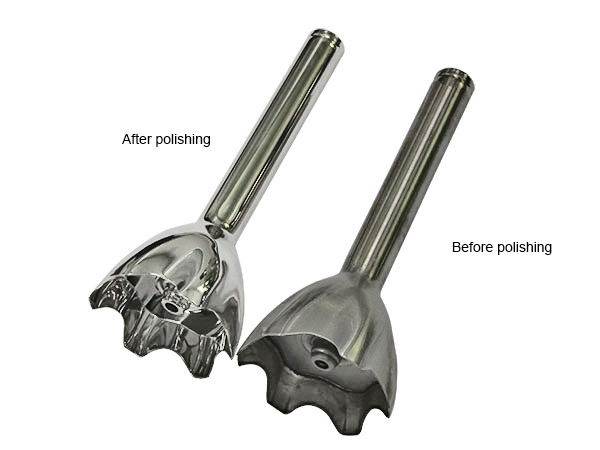
Chapter 2 — Plasma Polishing Removes Energy Peaks Instead of Simply Removing Metal
The biggest misconception about plasma polishing is that it is merely another polishing technique.
In reality, it behaves more like intelligent surface energy correction.
A machined surface contains uneven electrical activity at the microscopic level.
Areas with sharp geometry naturally concentrate energy.
This means:
● Micro ridges become high-energy zones
● Valleys become low-energy zones
● Surface reactions become self-selective
A modern plasma polishing machine does not attack the entire surface equally.
Instead, it automatically targets unstable microscopic peaks first.
This creates a fascinating effect:
The surface gradually smooths itself without aggressive grinding.
Traditional metal polishing machines rely on external force.
Plasma systems rely on microscopic energy imbalance.
That difference changes everything.
It enables:
● Ultra-uniform surface leveling
● Reduced material loss
● Preservation of precision geometry
● Elimination of directional polishing marks
● Better consistency across complex shapes
This is why advanced polishing machine manufacturers increasingly market plasma systems as “non-contact intelligent finishing.”
Because in many ways, the metal surface participates in its own optimization.
Chapter 3 — The Gas Layer Functions Like an Automatic Surface-Leveling AI
One of the least understood aspects of plasma polishing technology is the dynamic plasma gas layer formed around the workpiece.
This layer is not static.
It constantly adapts to microscopic surface geometry.
On protruding areas:
● The gas layer becomes thinner
● Energy transfer becomes easier
● Surface dissolution accelerates
Inside microscopic valleys:
● The gas layer becomes thicker
● Electrical shielding increases
● Reaction intensity decreases
The result is astonishing.
The process naturally removes peaks faster than valleys.
This creates an automatic “peak-cutting” mechanism across the entire metal surface.
Traditional machine polishing requires operators to constantly adjust:
● Pressure
● Wheel angle
● Abrasive strength
● Polishing duration
But a properly designed plasma polishing machine self-regulates through plasma physics itself.
This is why plasma systems excel at:
● Complex geometries
● Internal channels
● Medical implants
● Precision molds
● Aerospace components
Many advanced China polishing machine suppliers are now integrating AI-controlled power systems with plasma polishing to achieve even finer adaptive leveling.
The future of polishing is no longer brute force.
It is intelligent microscopic control.
Chapter 4 — Plasma Polishing Does Not Destroy Precision Dimensions
One major problem with conventional polisher machines is uncontrollable material removal.
Especially when processing:
● Thin-wall components
● Precision medical parts
● Semiconductor hardware
● Optical components
Mechanical polishing can easily overcut surfaces.
However, plasma polish operates at the micron level.
Material removal is:
● Uniform
● Controlled
● Extremely shallow
● Highly repeatable
This enables manufacturers to improve surface finish without sacrificing dimensional accuracy.
For industries demanding ultra-high precision, this is revolutionary.
A modern metal polishing machine may improve appearance.
But plasma systems improve both appearance and engineering performance simultaneously.
This is why many premium polishing machine manufacturers position plasma finishing as a “surface engineering” technology rather than merely a polishing process.
The distinction matters.
Because the future of manufacturing is no longer about making parts look shiny.
It is about engineering functional surfaces at microscopic scales.
Chapter 5 — Plasma Polishing Rebuilds the Surface Instead of Simply Smoothing It
Perhaps the most overlooked advantage of plasma polishing technology is that it does more than remove scratches.
It actually reconstructs the surface condition of the metal.
During plasma finishing:
● Surface contaminants are removed
● Damaged layers are dissolved
● Oxidized irregularities disappear
● Surface energy becomes more uniform
Then something even more important happens.
A dense and stable passive layer reforms across the metal surface.
For stainless steel, this means:
● Improved chromium-rich passivation
● Better corrosion resistance
● Higher salt spray performance
● Reduced contamination retention
● Enhanced cleanability
Traditional buffing polisher machines can create shine.
But they often smear metal plastically across the surface.
That shiny appearance may still hide:
● Embedded abrasives
● Surface stress
● Micro tearing
● Residual deformation
Plasma systems fundamentally avoid many of these issues.
This is why pharmaceutical, food-grade, and medical industries increasingly specify plasma-finished surfaces instead of mechanically polished ones.
Many leading polishing machine china suppliers are now designing systems specifically for ultra-clean industries.
Because in modern manufacturing, surface chemistry matters just as much as surface brightness.
FAQ
1. Can plasma polishing completely remove machining marks?
Yes. Advanced plasma polishing machines can gradually level microscopic machining marks, tool lines, and grinding scratches through controlled micro-level dissolution.
2. Is plasma polishing better than traditional machine polishing?
For precision applications, yes. Plasma polishing offers superior surface uniformity, reduced deformation risk, and improved corrosion resistance compared with conventional machine polishing.
3. Why are polishing machine manufacturers investing in plasma systems?
Because plasma finishing represents the future of precision surface engineering, especially for high-end manufacturing demanding ultra-clean and ultra-smooth surfaces.
4. Can China polishing machine suppliers provide advanced plasma systems?
Yes. Many modern China polishing machine suppliers now manufacture highly advanced plasma polishing equipment for global industrial markets.