

Why Complex Holes and Hidden Areas Can Still Be Deburred
One of the biggest limitations of traditional polishing machines is accessibility.
A grinding wheel, abrasive brush, or buffer polisher machine can only polish areas it can physically touch. Once a component contains deep channels, intersecting holes, narrow grooves, or hidden cavities, the polishing difficulty rises dramatically. In many industries, this has become one of the largest manufacturing bottlenecks.
Modern precision components are becoming increasingly complex. Aerospace fuel systems, medical implants, hydraulic valves, semiconductor cooling plates, and high-end automotive components often contain internal structures that are almost impossible for conventional polishing machine for metal systems to reach.
This is where plasma polishing technology completely changes the game.
Unlike mechanical polishing, plasma polishing does not depend on tool accessibility. The electrical field and electrolyte reaction naturally spread throughout conductive pathways inside the workpiece. As long as the electrolyte can enter the structure, the plasma reaction can occur.
This creates a huge advantage:
The process can deburr areas that polishing heads cannot physically enter.
For example, inside intersecting holes, traditional polishing machines may leave hidden burrs because abrasive tools lose contact pressure at difficult angles. However, plasma polishing machine systems do not care about tool angle. Electrical energy automatically redistributes itself according to geometry and resistance conditions.
Sharp internal burrs still become energetic hotspots.
Micro-plasma reactions still intensify at unstable edges.
The same physical laws continue operating everywhere inside the part.
This makes plasma polish especially valuable for high-end manufacturing industries where internal cleanliness directly affects performance.
In medical implants, hidden burrs can cause contamination risks.
In hydraulic systems, microscopic debris may damage fluid flow stability.
In semiconductor cooling systems, rough internal channels can reduce thermal efficiency.
Traditional metal polishing machines struggle to guarantee consistent finishing quality inside these hidden structures.
Plasma polishing technology solves this by allowing the entire surface — including invisible regions — to participate in the same self-selective finishing process.
Another major advantage is uniformity.
A conventional polishing machine manufacturer often needs multiple customized tools for different geometries. But plasma systems rely more on electrical behavior than physical tool shape. This significantly reduces setup complexity while improving repeatability.
That is why many advanced polishing machine manufacturers now position plasma systems as the future solution for next-generation precision parts.
As component geometry becomes more complicated, physical polishing tools become less effective.
But energy-based finishing becomes more powerful.
Why Plasma Polishing Does Not Easily Damage Dimensions
One of the greatest fears in precision manufacturing is over-processing.
In traditional polishing operations, removing burrs often means risking dimensional damage. Operators may successfully eliminate sharp edges, but at the same time unintentionally destroy critical tolerances, reference surfaces, or sealing geometry.
This is especially dangerous in industries where tolerances are measured in microns.
Traditional polishing machines remove material through direct mechanical force. Once abrasive pressure becomes excessive, the machine cannot easily distinguish between a defect and a functional surface.
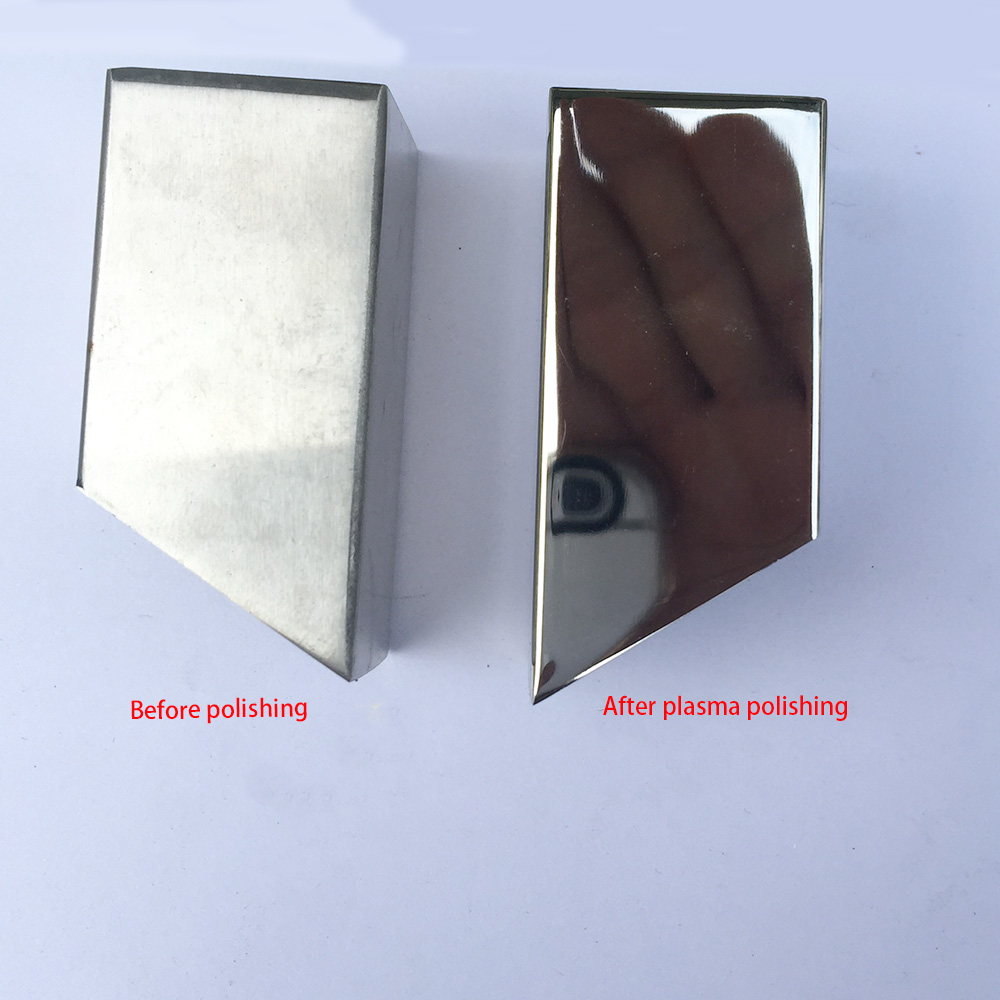
Plasma polishing technology works differently because the process is selective by nature.
A plasma polishing machine does not aggressively attack the entire component equally. Instead, the system naturally focuses on unstable microscopic regions first. Burrs, spikes, and rough protrusions experience dramatically higher reaction intensity than stable flat geometry.
This creates an important effect:
Most material removal occurs exactly where the surface is energetically unstable.
Flat regions are comparatively protected due to:
● Lower current density
● More stable vapor film formation
● Reduced plasma discharge intensity
● Lower localized heat concentration
As a result, the main body of the component experiences much slower dissolution rates.
This is one reason why plasma polish is often described as “micro-corrective finishing” rather than traditional cutting or grinding.
Instead of reshaping the entire part, the process selectively edits microscopic imperfections.
For industries such as aerospace and medical manufacturing, this is extremely valuable.
Aerospace turbine components require both smooth surfaces and highly accurate geometry.
Medical implants require burr-free edges without damaging biological fit precision.
Semiconductor hardware demands ultra-clean surfaces without dimensional distortion.
Traditional metal polishing machines often require multiple finishing stages to balance these conflicting goals.
But plasma polishing technology naturally aligns surface improvement with dimensional preservation.
Another important factor is repeatability.
In manual polishing, final dimensions often depend heavily on operator skill. Small differences in pressure or polishing time can create large dimensional variation.
Modern plasma polishing machine systems reduce this uncertainty because the process follows predictable electrical and thermal behavior instead of inconsistent human contact pressure.
This is why advanced polishing machine manufacturers increasingly market plasma systems toward high-precision industries rather than only decorative polishing applications.
The future of precision finishing is no longer about removing more material.
It is about removing only the material that truly needs to disappear.
How Modern Plasma Polishing Machines Improve Batch Consistency
In large-scale manufacturing, consistency is often more important than absolute polishing speed.
A factory may produce thousands of parts per day, and even tiny differences between batches can create serious quality risks. Traditional polishing machines frequently struggle with this problem because mechanical polishing depends heavily on variables such as:
● Operator skill
● Tool wear
● Pressure fluctuation
● Abrasive condition
● Contact angle changes
Even experienced technicians cannot maintain perfectly identical polishing conditions for every part.
Plasma polishing technology changes this manufacturing equation.
A plasma polishing machine relies far more on stable electrical and thermal behavior than on manual mechanical interaction. Once process parameters are optimized, the system naturally repeats similar energy distribution patterns across all components inside the same electrolyte environment.
This creates extremely high process repeatability.
Every workpiece experiences:
● Similar electric field exposure
● Similar plasma discharge behavior
● Similar vapor layer dynamics
● Similar selective deburring mechanisms
As a result, batch variation becomes much smaller compared with traditional polishing machines.
Modern polishing machine manufacturers are now integrating advanced automation technologies into plasma systems to push consistency even further.
For example:
● Intelligent power regulation stabilizes discharge intensity
● Temperature monitoring maintains electrolyte stability
● Automated timing systems reduce human error
● AI-assisted process monitoring improves repeatability
● Smart electrolyte circulation improves reaction uniformity
Many China polishing machine suppliers are rapidly investing in these intelligent upgrades because global manufacturing increasingly demands stable micron-level quality control.
This is particularly important in industries such as:
● Medical device manufacturing
● Semiconductor production
● Precision automotive components
● Aerospace systems
● Optical equipment
In these sectors, even microscopic surface inconsistencies can affect product performance or certification approval.
Another advantage is scalability.
Traditional metal polishing machines often require more labor as production volume increases. Plasma systems can process large numbers of parts simultaneously inside one electrolyte tank while maintaining highly consistent results.
This dramatically improves manufacturing efficiency while reducing dependence on manual polishing skill.
In the future, the competition between polishing machine manufacturers may no longer focus only on polishing quality itself.
The real competition may become:
Who can create the most stable and intelligent surface finishing ecosystem?
Plasma Polishing vs Traditional Buffer Polisher Machine
When engineers compare plasma polishing with traditional finishing methods, the most obvious difference is not just “efficiency,” but the fundamental way material is removed.
A traditional buffer polisher machine or any mechanical metal polishing machine relies on direct contact. Abrasive pads, buffing wheels, or polishing compounds physically shear away surface material. This means the process is inherently uniform in force application but not selective in effect.
Plasma polishing technology operates on a completely different principle.
Instead of applying force through contact, a plasma polishing machine uses electrical energy, electrolyte reactions, and controlled plasma discharge to modify the surface at a microscopic level. This creates a non-contact, energy-driven finishing environment.
1. Efficiency Difference
Traditional polishing machines often require multiple passes to remove burrs, especially in complex geometries. Tool wear and manual adjustments further slow production.
In contrast, plasma polish naturally targets high-energy regions first. Burrs and sharp edges dissolve faster without requiring repeated tool contact. This reduces processing steps and overall cycle time.
2. Surface Quality Difference
Mechanical polishing tends to produce directional scratches due to tool motion. Even high-end buffer polisher machine systems may leave micro-patterns or uneven gloss depending on operator control.
Plasma polishing produces a more isotropic surface. Since material removal is driven by electrical and chemical energy rather than directional abrasion, the final surface appears more uniform and consistent under magnification.
3. Complexity Handling Capability
Traditional polishing machine for metal systems struggle with:
● Deep internal holes
● Cross channels
● Micro cavities
● Irregular 3D geometries
Tool access becomes a limiting factor.
Plasma polishing technology removes this limitation because energy fields penetrate accessible electrolyte regions rather than relying on physical tool reach. This allows even hidden burrs to be treated effectively.
4. Risk of Over-Polishing
Mechanical systems inherently carry a higher risk of over-polishing. If contact time is too long, base geometry may be damaged.
A plasma polishing machine reduces this risk because flat and stable surfaces experience lower reaction intensity. Only unstable micro-features are aggressively removed.
5. Labor and Automation
Traditional polishing machines require skilled operators for:
● Pressure control
● Angle adjustment
● Tool replacement
● Process monitoring
Plasma systems, on the other hand, are more parameter-driven. Once set, they maintain stable behavior across batches, reducing labor dependency significantly.
6. Industrial Shift
Because of these advantages, many polishing machine manufacturers are shifting toward plasma-based solutions. In regions such as China, the demand for china polishing machine systems with plasma capabilities is rapidly increasing due to export-driven precision manufacturing needs.
Conclusion
The difference between the two technologies is not just mechanical vs electrical — it is control philosophy.
● Traditional polishing machines control force
● Plasma polishing controls energy behavior
This shift is why plasma systems are increasingly seen as the future of precision metal finishing.