

1. Introduction: The Real Concern Behind Deburring Quality
In modern manufacturing, the question is no longer “Can burrs be removed?” but rather “How clean is the result?”
Industries such as aerospace, medical devices, and precision electronics demand not only burr removal but also absolute surface integrity. Even microscopic burrs or hidden residues can lead to assembly failure, electrical instability, or reduced product lifespan.
This is where the plasma deburring machine is redefining expectations. Unlike traditional methods, it promises not just efficiency—but near-perfect cleanliness.
2. What Does “Clean Deburring” Actually Mean?
“Clean deburring” is not just about appearance—it is about performance reliability.
A truly clean result includes:
● No visible burrs or sharp edges
● No micro-burrs under magnification
● No impact on product assembly or function
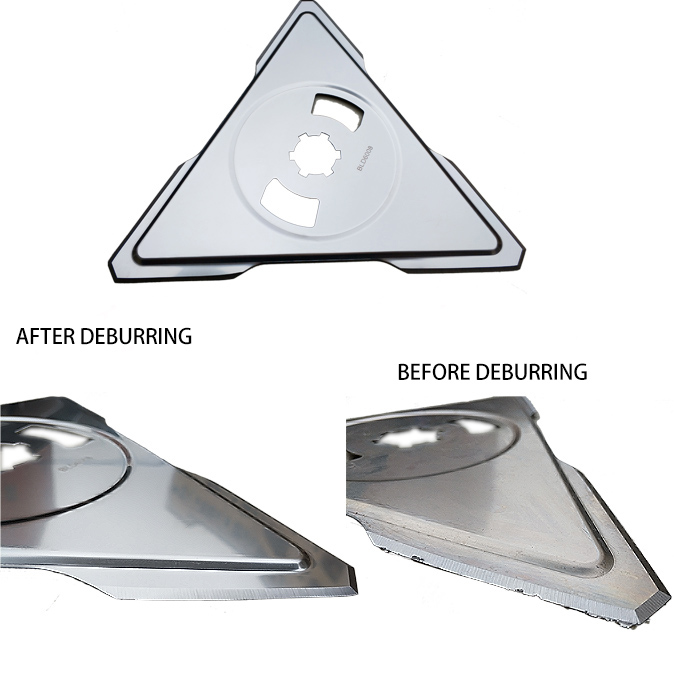
Traditional metal deburring machine solutions often stop at visual improvement. In contrast, plasma deburring ensures both macro and micro-level cleanliness, making it ideal for high-end manufacturing.
3. How Plasma Deburring Works Differently
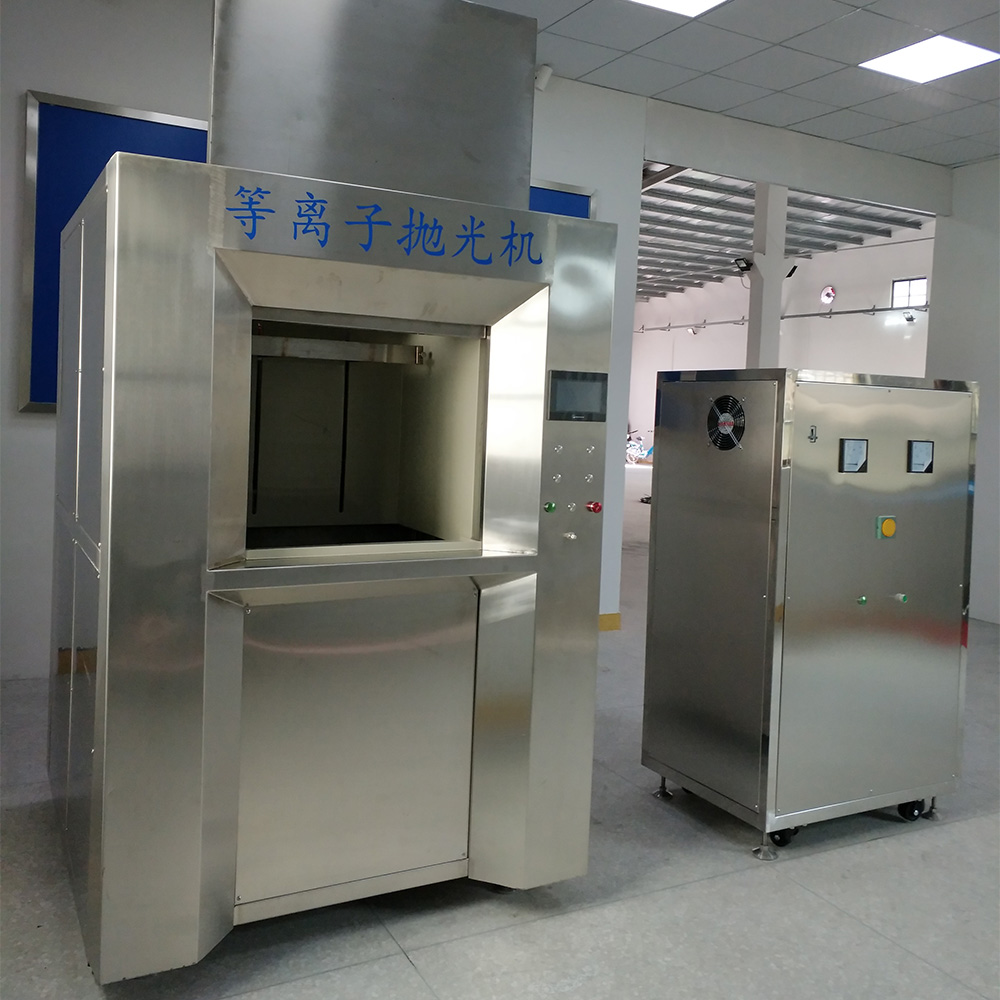
A plasma deburring machine operates through a controlled electrochemical reaction that generates a plasma layer around the workpiece.
This creates a non-contact, uniform material removal process that reaches every exposed surface—including internal structures.
Unlike mechanical friction or abrasive contact, plasma deburring removes material at a microscopic level, ensuring consistency. That’s why many advanced polishing machine manufacturers are shifting toward this technology.
4. Can Plasma Deburring Remove Burrs Completely?
Yes—but the answer becomes clearer when we break it down by burr type:
● Machining & stamping burrs: Easily removed in one cycle, leaving smooth and rounded edges
● Internal burrs (holes, threads, blind areas): Fully eliminated due to all-surface exposure
● Micro burrs (precision parts): Dissolved at micron level without altering geometry
Even experienced deburring machine manufacturers acknowledge that traditional processes struggle to achieve this level of completeness.
5. The Truth About Residue: Myth vs Reality
The idea that deburring leaves “residue” often comes from traditional processes.
Mechanical methods may leave:
● Abrasive particles
● Embedded debris
● Uneven surface layers
However, plasma deburring is fundamentally different. It removes material through controlled electrochemical reactions rather than physical abrasion.
As a result, under proper conditions, it leaves virtually no physical residue, making it a highly attractive option for companies searching for a reliable deburring machine for sale.
6. When Residue Appears: Not a Machine Problem
In rare cases, what appears as “residue” is usually a process issue rather than a technology limitation:
● Insufficient processing time for thick or hardened burrs
● Improper fixturing, causing uneven current distribution
● Aging electrolyte or low temperature, reducing reaction efficiency
These issues are easily resolved through parameter optimization—something any experienced polishing machine factory can support.
7. Plasma vs Traditional Deburring: A Cleanliness Benchmark
Let's compare cleanliness levels:
● Manual deburring: Inconsistent, operator-dependent
● Vibratory finishing: Limited access to internal structures
● Electrolytic polishing: Effective but less precise in burr targeting
● Plasma deburring: Full coverage, micro-level precision, no contact
This makes plasma the new benchmark for clean deburring.
8. Industry Applications That Demand Zero Residue
Certain industries cannot tolerate even the slightest residue:
● Medical devices: Safety-critical surfaces
● Aerospace components: Fatigue-sensitive structures
● 3C electronics: Precision connectors and micro parts
For these sectors, plasma deburring is not just an option—it is a necessity.
9. How to Ensure 100% Clean Deburring Results
To achieve optimal results:
● Optimize processing parameters (time, voltage, temperature)
● Design proper fixtures for uniform conductivity
● Work with experienced deburring machine manufacturers
● Choose a high-quality plasma deburring machine
Consistency comes from both technology and execution.
10. Conclusion: Is Plasma Deburring Truly Residue-Free?
Under proper conditions, plasma deburring delivers extremely clean, residue-free results.
What sets it apart is not just its ability to remove burrs—but its ability to do so uniformly, completely, and reliably, even in complex geometries.
For manufacturers seeking precision, consistency, and efficiency, plasma technology is no longer the future—it is the present.
11. FAQ Section
Q1: Does plasma deburring damage edges?
No, it creates smooth, rounded edges without mechanical stress.
Q2: How long does the process take?
Typically seconds to a few minutes depending on burr size.
Q3: Is it suitable for all metals?
Most conductive metals are compatible.
Q4: How to choose a deburring machine for sale?
Focus on stability, manufacturer experience, and application support.
Q5: What affects consistency?
Process parameters, fixturing, and electrolyte condition.