

1. Introduction: The Hidden Cost of Traditional Deburring
In today's precision manufacturing landscape, surface finishing is no longer a secondary process—it directly determines product quality, performance, and market competitiveness. However, many factories still rely on outdated metal deburring machine solutions that introduce inconsistency, high labor costs, and limited accuracy.
Traditional methods such as manual polishing or mechanical grinding often fail when dealing with complex geometries, leading to incomplete burr removal or even surface damage. These hidden inefficiencies accumulate into significant production losses.
This is where the plasma deburring machine emerges as a transformative solution. By leveraging advanced plasma technology, manufacturers can achieve cleaner surfaces, higher efficiency, and unmatched consistency.
2. Beyond Deburring: Redefining Surface Engineering
Unlike conventional methods, plasma deburring is not just about removing burrs—it is about optimizing the entire surface at a microscopic level. Instead of physical contact, plasma technology selectively removes material through controlled ion reactions.
This non-contact approach eliminates mechanical stress, preventing deformation or scratches. As a result, manufacturers can achieve smoother finishes and improved corrosion resistance.
Forward-thinking companies are increasingly moving away from traditional deburring machine manufacturers and adopting plasma-based solutions to stay competitive in high-precision industries.
3. The Bayi Advantage: Not Just a Machine, But a System
Choosing Bayi is not simply about buying a deburring machine for sale—it is about investing in a complete surface finishing system. As an experienced polishing machine manufacturer, Bayi integrates deburring, polishing, and cleaning into a unified process.
This integration eliminates multiple handling steps, reduces human error, and significantly improves production flow. Unlike conventional polishing machine factory setups, Bayi focuses on intelligent, modular solutions tailored to modern manufacturing needs.
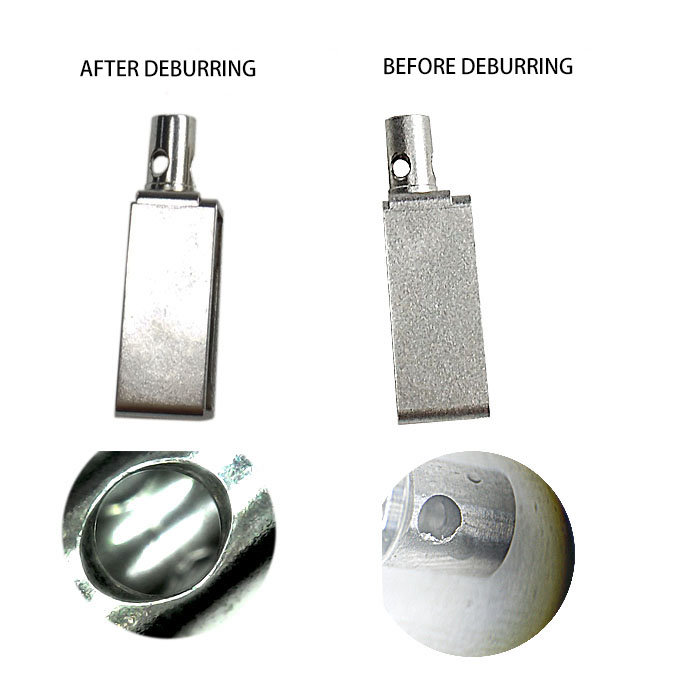
4. Precision Without Compromise: Full-Surface Processing
One of the biggest limitations of traditional finishing methods is their inability to handle complex geometries. Deep holes, blind cavities, micro-slots, and intersecting channels are often left partially untreated.
A high-performance plasma deburring machine solves this problem through uniform plasma coverage. The process reaches every conductive surface, ensuring consistent results even in the most intricate structures.
Because it is a non-contact process, there is no risk of tool marks, deformation, or micro-cracks. Manufacturers can achieve ultra-smooth finishes with surface roughness reaching near mirror-level standards—something conventional metal deburring machine systems struggle to deliver.
5. Smart Manufacturing Starts Here
Modern manufacturing is rapidly moving toward automation, and Bayi is designed to fit seamlessly into this trend. Unlike many traditional deburring machine manufacturers, Bayi integrates intelligent features that reduce reliance on manual operation.
Automated clamping, programmable processing cycles, and multi-angle handling enable consistent production with minimal human intervention. These features not only improve efficiency but also ensure repeatability across large production batches.
For factories planning to upgrade, choosing a smart polishing machine manufacturer is no longer optional—it is essential for long-term competitiveness.
6. Efficiency Revolution: Time is Profit
Time is one of the most valuable resources in manufacturing. Traditional workflows often require multiple steps—deburring, polishing, cleaning, and inspection—each adding time and cost.
Bayi's integrated plasma deburring solution combines multiple processes into one. This significantly reduces production cycles and increases throughput.
For businesses evaluating a deburring machine for sale, the real value lies not just in the machine price, but in the long-term productivity gains. Many manufacturers report efficiency improvements of several times compared to conventional processes.
7. Material Versatility: One Machine, Multiple Applications
Manufacturers today work with a wide range of materials, each with unique finishing challenges. A key strength of Bayi is its ability to handle diverse metals with a single plasma deburring machine.
From stainless steel and aluminum to titanium and specialty alloys, the system adapts easily without compromising quality. Even difficult-to-machine materials can achieve excellent surface finishes.
This versatility allows businesses to expand their capabilities without investing in multiple metal deburring machine systems.
8. Stability & Process Control: Consistency at Scale
In mass production, consistency is everything. Even small variations in temperature or current can lead to defects.
Bayi's system emphasizes precise control, ensuring stable processing conditions throughout the entire cycle. This minimizes risks such as over-polishing, uneven surfaces, or material damage.
Compared to conventional equipment from many deburring machine manufacturers, this level of stability significantly improves yield rates and reduces waste.
9. Cost Efficiency & Sustainability
Cost control is a major concern for any manufacturer. Bayi addresses this through both operational efficiency and environmental sustainability.
The process uses neutral electrolytes, reducing the need for hazardous chemicals. Energy consumption is optimized, and consumables are minimized.
As a result, companies can lower operating costs while meeting increasingly strict environmental regulations—something many traditional polishing machine factory setups struggle to achieve.
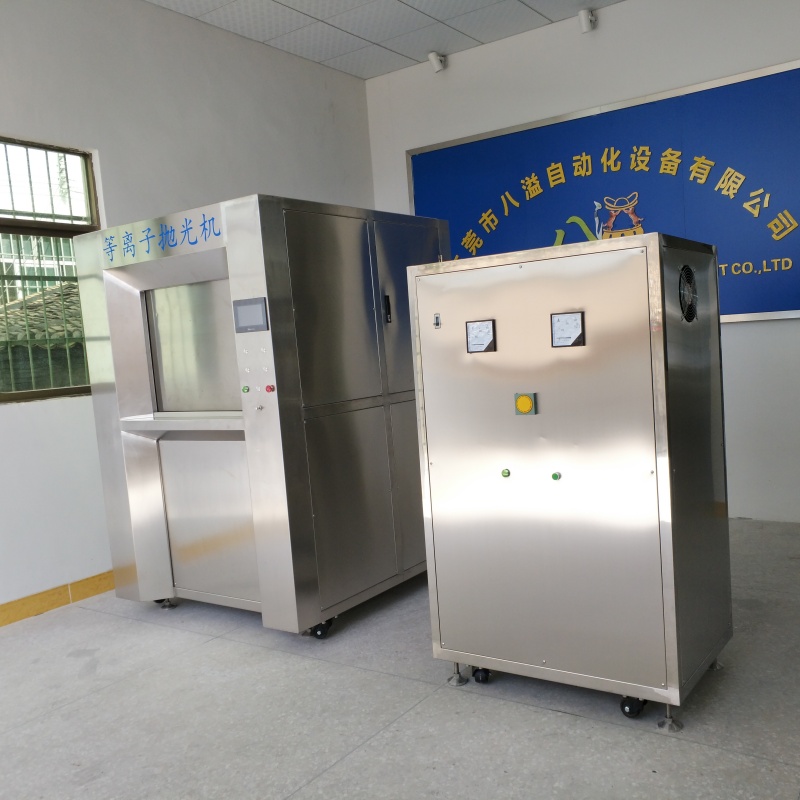
10. Real-World Applications: Where Bayi Excels
Bayi machines are widely used across industries that demand high precision and surface quality.
In 3C electronics, they ensure smooth connectors and components. In medical manufacturing, they help produce safe and polished implants. In aerospace and precision hardware, they deliver consistent, high-quality finishes.
These real-world applications demonstrate why advanced plasma deburring machine solutions are becoming the preferred choice across industries.
11. How to Choose the Right Plasma Deburring Machine
Selecting the right equipment requires careful evaluation. Key factors include process capability, automation level, material compatibility, and after-sales support.
When comparing different deburring machine manufacturers, buyers should look beyond price and focus on long-term performance and reliability.
Bayi stands out as a trusted polishing machine manufacturer by offering advanced technology, stable performance, and comprehensive service support.
12. Conclusion: Future-Proof Your Production Line
The shift toward advanced surface finishing technologies is inevitable. Companies that adopt plasma deburring early gain a significant competitive edge in quality, efficiency, and cost control.
Choosing Bayi is not just about upgrading equipment—it is about transforming your entire production process for the future.
13. FAQ Section
Q1: What is the difference between plasma deburring and traditional deburring?
Plasma deburring uses ionized energy to remove material without contact, while traditional methods rely on mechanical force.
Q2: Is plasma deburring safe for delicate parts?
Yes, because it is non-contact, it does not cause deformation or scratches.
Q3: How much efficiency improvement can be expected?
Most manufacturers experience several times higher efficiency compared to traditional processes.
Q4: What industries benefit most from plasma polishing?
Industries like electronics, medical, aerospace, and precision hardware benefit the most.
Q5: How to evaluate a reliable polishing machine manufacturer?
Look for technological capability, real-world applications, stability, and service support.