

1. Why Traditional Jewelry Polishing Thinking Is Outdated
For decades, jewelry finishing relied on vibration polishing, barrel tumbling, and manual buffing. These methods were originally designed for durability removal—not precision shine creation.
But jewelry today is no longer “just metal products.” It is micro-engineered, aesthetic-driven, and brand-sensitive.
Traditional polishing systems rely on impact + friction, which creates three unavoidable problems:
● Loss of sharp edges in fine jewelry
● Uneven brightness due to random collision paths
● Micro-scratches that reduce mirror quality
In contrast, a modern plasma polishing machine works through controlled ion energy interaction rather than physical force.
This shift is not just technical—it is philosophical:
From “breaking and smoothing” to “intelligently refining surfaces”
That is why leading manufacturers are replacing mechanical polishing with plasma polishing technology.
2. What Makes Jewelry Polishing So Special? (The Real Challenge Behind Shine)
Jewelry is fundamentally different from industrial metal parts.
It is:
● Small and high-density in value
● Highly decorative with fine geometry
● Thin-walled and deformation-sensitive
● Extremely sensitive to visual defects
Unlike structural parts, jewelry is evaluated instantly by the human eye.
Even microscopic defects such as:
● haze
● uneven reflection
● tiny pits
can drastically reduce perceived quality.
This is why selecting a jewelry polishing machine is not about power—it is about visual physics control.
The real goal is:
How light behaves on the surface after polishing
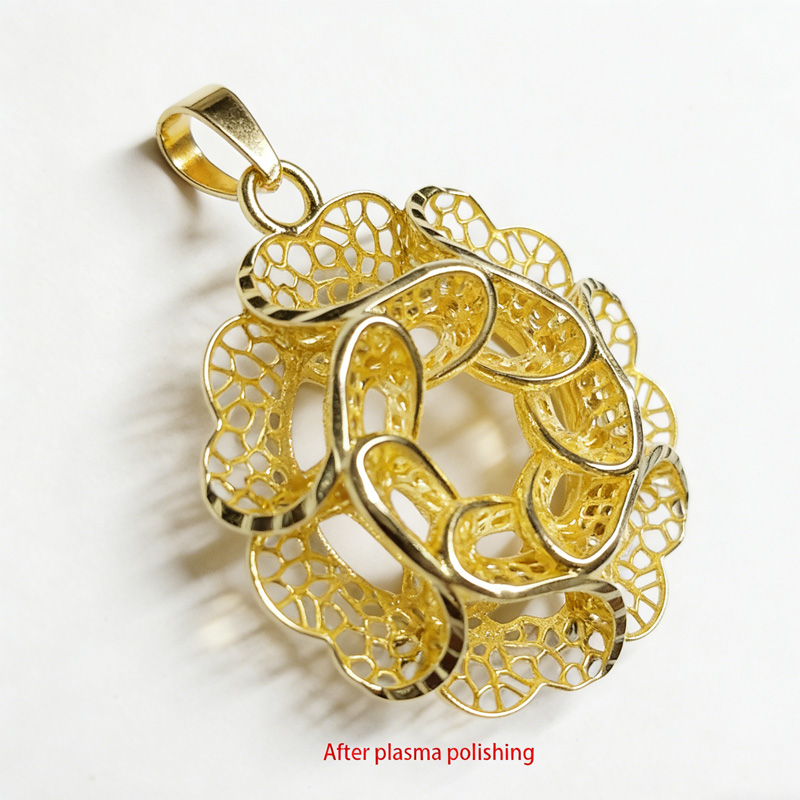
3. The New Logic of Choosing a Jewelry Polishing Machine
Most buyers still ask:
● “How powerful is the machine?”
● “How big is the tank?”
● “How fast is the cycle?”
But in modern jewelry finishing, these are secondary questions.
The new selection logic is:
1. Surface sensitivity control
Can the machine gently refine without over-processing?
2. Energy precision
Is the plasma output stable at micro-level intensity?
3. Repeatability
Can 100 pieces look identical in shine quality?
4. Thermal neutrality
Does the process avoid heat-induced discoloration?
A professional jewelry polishing machine must behave like a “precision surface editor,” not a “metal grinder.”
4. Why Compact 20L–60L Systems Dominate Jewelry Production
One of the biggest misunderstandings is that bigger machines are better.
For jewelry, the opposite is true.
Most jewelry pieces are:
● Rings
● Earrings
● Pendants
● Small chains
● Clasps
These require compact processing environments.
A 20L–60L plasma polishing machine offers:
● Faster energy concentration
● Better process stability
● Lower chemical consumption
● Easier batch control
Large tanks often introduce:
● energy dispersion
● unstable plasma distribution
● inconsistent finishing results
In jewelry polishing, precision beats capacity.
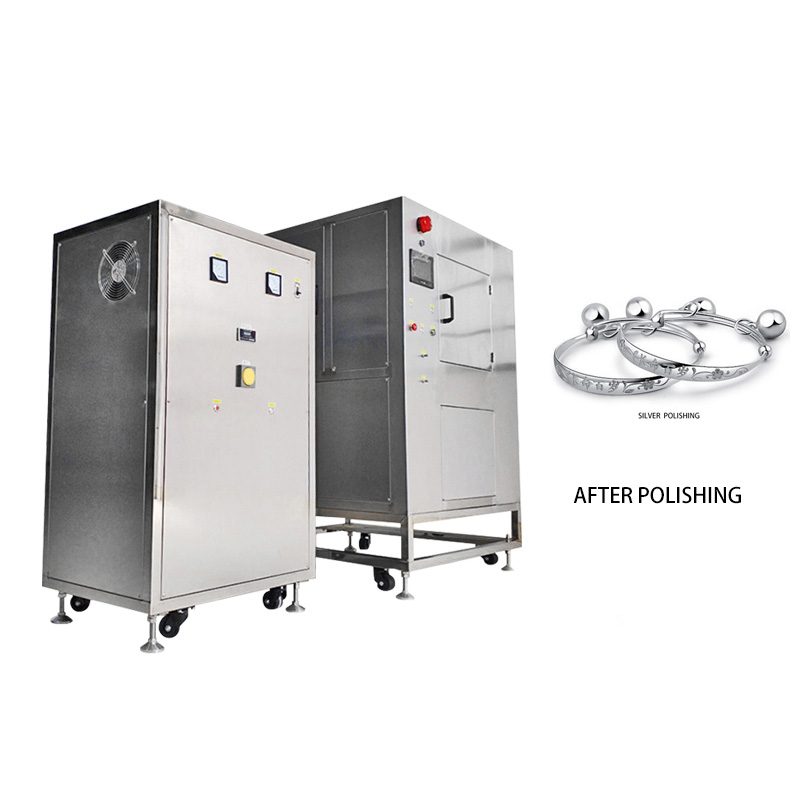
5. The Hidden Key: Fixture Design Determines Final Shine
Many buyers wrongly assume polishing performance depends only on the machine.
In reality, fixture design is equally important.
Jewelry fixtures determine:
● Electrical conductivity consistency
● Contact point stability
● Hanging density
● Surface exposure uniformity
Poor fixtures cause:
● uneven brightness
● dark spots
● clamp marks
High-quality systems use:
● titanium hooks
● multi-point suspension
● anti-arc design
The fixture is the “hidden engine” of polishing quality.
6. Material Compatibility Matters More Than Power
Jewelry materials vary widely:
● Silver
● Gold plating
● Copper alloys
● Zinc alloys
● Stainless steel
Each material reacts differently under plasma polishing.
Soft metals can:
● over-polish easily
● darken quickly
● lose thickness if energy is too aggressive
That is why a professional jewelry polishing machine must support:
● soft waveform control
● adjustable intensity curves
● fine tuning cycles
7. Why Manufacturer Selection Matters More Than Machine Specs
Two machines with identical specs can produce completely different results.
Why?
Because the real difference lies in the polishing machine manufacturer and its process engineering capability.
A strong polishing machine factory provides:
● stable plasma calibration systems
● tested jewelry-specific programs
● material-specific polishing recipes
● long-term consistency tuning
Buying only hardware is not enough—you are buying process intelligence.
8. Future Trend: Smart Plasma Jewelry Polishing
The next generation of jewelry finishing is moving toward:
● AI-based surface detection
● adaptive plasma intensity control
● real-time shine monitoring
● automatic defect correction
Future best jewelry polishing machine systems will not rely on operator experience—they will self-adjust based on surface feedback.