

1. The Hidden Productivity Revolution Behind Plasma Polishing
In modern manufacturing, efficiency is no longer just about “working faster.” It is about changing the structure of production itself. This is where the plasma polishing machine introduces a completely different logic compared to traditional polishing equipment.
Traditional metal finishing methods rely on a linear process: one operator, one tool, one workpiece at a time. Whether it is grinding, buffing, or manual deburring, productivity scales only by adding more labor or more machines. This creates a natural ceiling in efficiency.
In contrast, plasma polishing transforms the process into a batch-driven, automated system. Instead of treating each part individually, multiple components are processed simultaneously in a controlled plasma environment. This fundamentally changes how metal polishing equipment performs in industrial settings.
From a manufacturing perspective, this is not just an improvement—it is a restructuring of production logic. A modern professional metal polishing equipment setup can process hundreds or even thousands of parts in a single cycle, reducing what used to take hours into just minutes.
This is why plasma polishing is often described as a “production multiplier,” not just a polishing method.
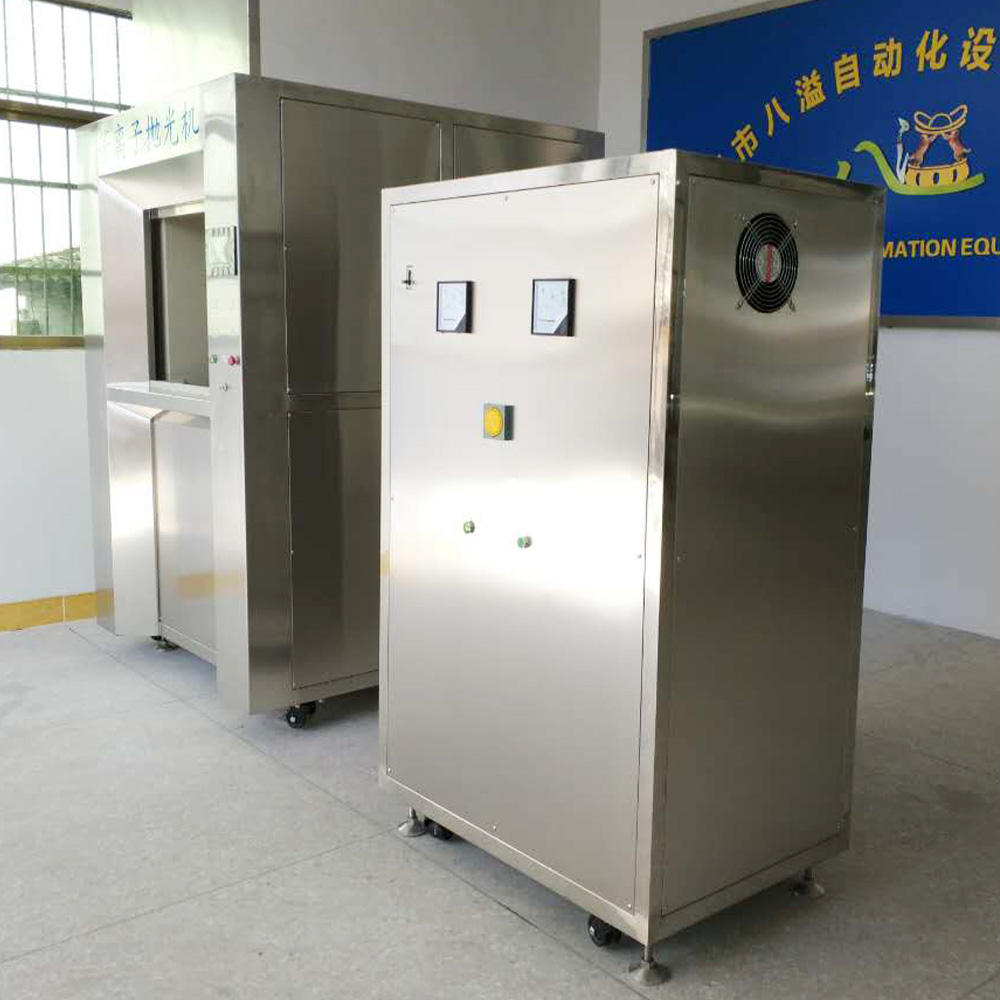
2. From Manual Craft to Industrial Automation: A Paradigm Shift
The evolution of metal polishing equipment has moved through three distinct stages: manual craftsmanship, mechanical assistance, and now plasma-driven automation.
Manual polishing is highly dependent on skill and physical endurance. Each piece requires direct human contact, which limits both speed and consistency. Even highly skilled workers cannot maintain uniform quality over long production runs.
Mechanical systems such as vibration polishing improved throughput, but they still rely on batch tumbling and consumable media. This introduces delays in cleaning, sorting, and secondary processing.
The introduction of the plasma polishing machine marks a true industrial leap. It removes the dependency on abrasive media and replaces mechanical friction with controlled plasma reactions. As a result, the system becomes more stable, faster, and far more scalable.
For any polishing machine manufacturer, this shift represents a move from “tool production” to “process engineering.”
3. Efficiency Benchmark: Plasma Polishing vs Traditional Methods (5×–30× Real Factory Data)
When evaluating industrial performance, the most important question is not “Is it better?” but “How much faster is it in real production conditions?”
Based on real manufacturing data from factories using plasma polishing machine systems, the efficiency improvement compared to traditional polishing equipment is significant and consistent across multiple processes.
Manual Polishing vs Plasma Polishing (10×–30×)
Manual polishing is the slowest and most labor-intensive method. One skilled worker typically processes only a few hundred parts per day.
In contrast, a single plasma polishing machine can handle thousands to tens of thousands of small components per day, while requiring minimal supervision.
● Manual: 1 operator → hundreds of parts/day
● Plasma system: 1 operator → multiple machines → thousands to tens of thousands/day
● Efficiency gain: 10× to 30×
This is especially obvious in small precision parts where batch loading dramatically increases throughput.
Vibration Polishing vs Plasma Polishing (5×–20×)
Vibration finishing relies on abrasive media and long cycle tumbling processes. A single batch can take from 30 minutes to several hours.
By contrast, plasma polishing typically completes a cycle in 1–5 minutes, depending on material and geometry.
● Vibration polishing cycle: 30–180 minutes
● Plasma polishing cycle: 1–5 minutes
● Efficiency gain: 5× to 20×
Additionally, plasma polishing eliminates media cleaning, separation, and secondary sorting, further increasing real-world productivity.
Electrolytic Polishing vs Plasma Polishing (2×–5×)
Electrolytic polishing is widely used in stainless steel finishing, but it comes with process complexity: acid-based solutions, strict parameter control, and risk of over-polishing.
Plasma polishing machines simplify this by using neutral electrolyte systems and automated batch control.
● Electrolytic polishing: complex setup + slower cycle stability
● Plasma polishing: simplified operation + faster batch processing
● Efficiency gain: 2× to 5×
More importantly, plasma systems improve yield rate, reducing rework time and hidden production loss.
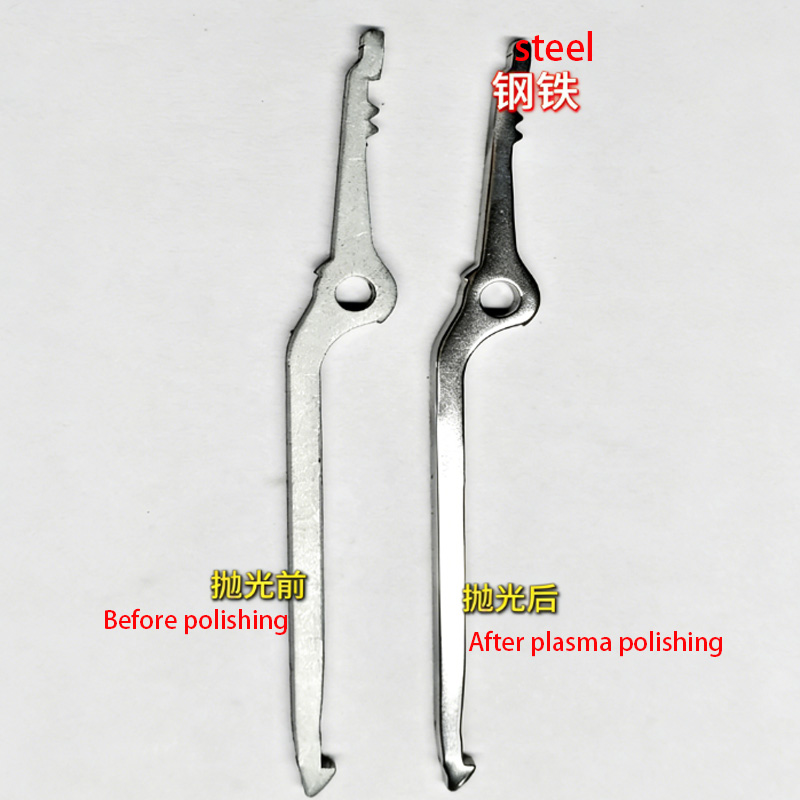
4. Why Plasma Polishing Is So Much Faster (Core Mechanism)
The dramatic efficiency improvement of plasma polishing equipment is not caused by a single factor, but by a combination of structural innovations in the process.
① Multi-process integration
A single plasma polishing machine can complete:
● Deburring
● Surface smoothing
● Micro-edge rounding
● Cleaning
All in one cycle. Traditional systems require multiple machines and steps.
② Batch simultaneous processing
Instead of processing one part at a time, plasma polishing treats dozens or hundreds of parts simultaneously. This creates a true parallel production model.
③ Minimal human intervention
Once parameters are set, the machine runs automatically. Operators are no longer tied to one machine, allowing multi-device supervision.
④ High process stability
Because the process is controlled by plasma reactions rather than mechanical friction, variability is reduced and rework rates drop significantly.
5. The “Time Compression Effect” in Modern Polishing Factories
Modern polishing machine factories are no longer defined by machines alone, but by how efficiently they compress production time.
Traditional workshops suffer from hidden delays:
● Manual handling time
● Cleaning and sorting time
● Machine waiting time
A polishing machine manufacturer designing plasma-based systems focuses on eliminating these invisible time losses.
With plasma polishing machines, factories achieve:
● Shorter cycle time
● Continuous batch flow
● Reduced downtime between processes
This creates what engineers call a “time compression effect”—where multiple production steps collapse into one automated cycle.
6. Production Line Simulation: Traditional vs Plasma Factory
In a traditional polishing workshop, production is fragmented. Each step requires separate labor and handling, creating multiple bottlenecks.
In a plasma polishing-based factory, the workflow changes dramatically:
Traditional Line:
● Manual loading
● Individual polishing
● Cleaning
● Inspection
● Rework loops
Plasma Line:
● Batch loading
● Automated plasma polishing cycle
● Direct unloading
● Minimal inspection needed
This transformation increases machine utilization rate and reduces labor dependency by more than 50%.
7. ROI Analysis: Why Higher Efficiency Means Lower Cost
Higher efficiency in metal polishing equipment directly translates into lower total production cost.
Key savings come from:
● Reduced labor cost
● Lower consumable usage (no abrasive media)
● Reduced rework rate
● Faster production cycles
Although plasma polishing machines may have higher initial investment, the payback period is significantly shorter due to throughput multiplication.
In many cases, factories report ROI improvements within months rather than years.
8. Application Industries That Benefit Most
The efficiency advantage of plasma polishing machines is most valuable in industries requiring precision, cleanliness, and mass production:
● Automotive precision components
● Aerospace parts
● Medical implants
● Electronic connectors and micro parts
In these sectors, consistency and speed are equally important, making plasma polishing a strategic upgrade.
9. Future Trend: Smart Polishing Ecosystems
The future of polishing equipment is not isolated machines, but integrated smart systems.
Next-generation polishing machine factories will include:
● AI process optimization
● Real-time monitoring
● Fully automated material handling
● Predictive maintenance
The plasma polishing machine will become a core node in intelligent manufacturing ecosystems.