

1. Introduction: From Polishing to Surface Engineering Revolution
In modern manufacturing, surface treatment is no longer just a finishing step—it has become a critical factor that defines product performance, reliability, and market competitiveness. Industries such as aerospace, medical devices, precision hardware, and electronics are demanding surfaces that are not only visually smooth but also structurally optimized at a microscopic level.
This shift has exposed the limitations of traditional finishing methods, especially mechanical grinding and abrasive-based mirror polishing machine processes. While these methods can improve appearance, they often struggle with complex geometries, micro-defects, and inconsistent quality in mass production. As a result, manufacturers are increasingly turning toward advanced solutions that go beyond physical abrasion.
This is where the plasma polishing machine represents a true technological breakthrough. Instead of relying on mechanical contact, plasma polishing uses a controlled electrochemical environment that creates a micro-plasma layer around the workpiece surface. This process enables uniform surface modification at a microscopic scale, redefining what a professional polishing machine can achieve in industrial applications.
Unlike conventional polishing methods, plasma polishing is not limited by tool access or surface geometry. It transforms polishing from a physical operation into a controlled engineering process. This is why many engineers now consider it the best polishing machine technology for high-precision manufacturing environments.
More importantly, this technology is not just about achieving a mirror-like finish. It is about improving functional surface quality—reducing micro-defects, enhancing uniformity, and ensuring repeatable results in large-scale production. As global manufacturing standards continue to rise, especially in China's advanced production sector, demand for high-performance china polishing machine solutions is rapidly increasing.
In this context, plasma polishing is no longer an optional upgrade. It is becoming a core enabling technology for next-generation manufacturing systems.
2. How a Plasma Polishing Machine Works in Industrial Production
Unlike conventional finishing systems that rely on friction, abrasives, or direct tool contact, a plasma polishing machine operates through a controlled electrochemical reaction environment. At its core, the process forms a thin plasma layer around the surface of the metal workpiece when high energy is applied in an electrolyte solution.
Within this micro-plasma zone, material removal occurs at the atomic and ionic level rather than through mechanical force. This means the surface is not “scraped” or “ground,” but gently and uniformly modified through energy interaction.
This fundamentally changes what a professional polishing machine can achieve. Instead of depending on operator skill or tool wear, plasma polishing introduces a digitally controllable system where voltage, time, and electrolyte composition determine the final surface quality.
In industrial production, this translates into stable repeatability. Whether processing 10 parts or 10,000 parts, the surface results remain consistent. This is one of the key reasons why manufacturers increasingly classify it as the best polishing machine for high-precision applications.
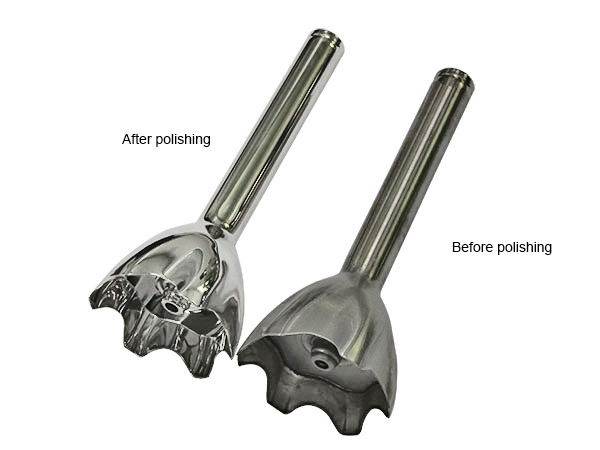
3. The Geometry Freedom Advantage: Complex Structures Become Accessible
One of the most revolutionary advantages of plasma polishing technology is its ability to eliminate geometric limitations entirely.
Traditional mirror polishing machine systems rely on physical contact, which makes it extremely difficult—or even impossible—to reach internal structures such as blind holes, deep channels, micro threads, or intersecting cavities. These areas often remain rough, unfinished, or require secondary manual polishing.
A plasma polishing machine removes this limitation completely. Because the process is non-contact and energy-driven, the plasma effect penetrates uniformly into complex geometries.
This means that even highly intricate parts—such as precision injection molds, aerospace connectors, or medical micro-components—can be polished evenly inside and out.
Blind holes, narrow slots, cross-drilled passages, and irregular surfaces are all treated uniformly without additional tooling. This creates a manufacturing advantage that mechanical polishing simply cannot match.
In real production environments, this capability reduces rework, eliminates manual finishing steps, and significantly shortens production cycles.
4. Digital-Level Precision Control: Turning Polishing into a Measurable Parameter
In traditional polishing systems, surface quality depends heavily on operator experience, pressure control, and consumable wear. This introduces uncertainty into mass production.
A plasma polishing machine eliminates this uncertainty by converting polishing into a measurable and controllable process.
Material removal is primarily determined by time, voltage, and energy density. For example, in stainless steel processing, the removal rate can be precisely controlled at a micro-scale level (typically around 1–5 μm per minute under controlled conditions).
This transforms polishing from a subjective craft into an engineering parameter.
Manufacturers can now define surface results mathematically, ensuring that every batch meets strict tolerance requirements. This level of predictability is why many industries regard plasma polishing as the best polishing machine solution for precision manufacturing.
5. Consistency and Surface Quality: The Key to Mass Production
Mass production requires more than just good surface quality—it requires consistent surface quality.
Traditional mechanical polishing often produces variation due to tool wear, operator differences, and uneven pressure distribution. Even when the first product looks perfect, later batches may show inconsistencies.
A plasma polishing machine solves this problem through uniform energy distribution rather than physical contact.
The result is a surface that is not only smooth but also statistically consistent across large production batches. No scratches, no vibration marks, and no random defects appear due to tool degradation.
This consistency is especially critical in industries such as medical devices and aerospace components, where even microscopic surface variation can affect performance or safety.
6. Sustainability and Clean Manufacturing Advantage
Modern manufacturing is no longer judged only by performance—it is also judged by environmental responsibility.
Compared to traditional polishing methods that rely on strong acids, abrasive dust, or mechanical waste, plasma polishing operates in a significantly cleaner environment.
Most systems use neutral or mild electrolyte solutions, reducing chemical hazards and improving workplace safety. There is no dust, no grinding particles, and no open flame risk.
This makes the process highly suitable for factories aiming to meet strict environmental regulations, especially in regions where compliance costs are increasing.
From a sustainability perspective, plasma polishing is not just a technical upgrade—it is a strategic shift toward green manufacturing.
7. Automation and Smart Manufacturing Integration
One of the most overlooked advantages of plasma polishing technology is its compatibility with automated production systems.
Because the process is parameter-controlled, it can be easily integrated into robotic handling lines and smart factory systems.
Multiple workpieces can be processed simultaneously in a single cycle, significantly improving throughput. Unlike manual polishing, there is no dependency on human skill or fatigue.
This makes it ideal for Industry 4.0 manufacturing environments where automation, traceability, and efficiency are key requirements.
As factories move toward intelligent production systems, the demand for automated polishing machine solutions continues to grow.
8. Material Versatility Across Industrial Applications
A plasma polishing machine is not limited to a single material type. It is widely applicable across conductive metals and alloys.
Common materials include stainless steel, titanium, aluminum, copper, zinc alloys, and powder metallurgy parts. Each material responds differently, but the system parameters can be adjusted to achieve optimal results.
This versatility makes plasma polishing suitable for multiple industries, including electronics, automotive components, precision tooling, and medical devices.
Instead of investing in multiple polishing systems, manufacturers can rely on one flexible solution.
9. Plasma Polishing vs Traditional Polishing Machines
When comparing plasma polishing technology with conventional systems, the differences are not incremental—they are structural.
Mechanical polishing machine systems rely on contact force, abrasives, and operator skill. While effective for basic finishing, they struggle with consistency, complex geometries, and micro-level precision.
Mirror polishing machine systems improve surface brightness but still depend on multi-step processes and manual adjustments.
In contrast, plasma polishing integrates deburring, edge rounding, and mirror finishing into a single controlled process.
This is why many manufacturers now refer to it as the best polishing machine for advanced precision industries.
The efficiency gain is not just in speed, but in eliminating entire production steps.
10. How to Choose the Right Polishing Machine Manufacturer
Selecting a reliable polishing machine manufacturer is critical for achieving stable production results.
A professional polishing machine factory should offer not only equipment but also process support, parameter optimization, and long-term technical service.
When evaluating a china polishing machine supplier, manufacturers should consider:
● Process stability and repeatability
● Customization capability for different materials
● Automation compatibility
● After-sales technical support
● Proven industrial application experience
A strong manufacturer is not just a supplier—it is a process partner that ensures production success.