

Introduction: Why Plasma Polishing Is Becoming a Manufacturing Standard
Surface finishing is no longer just about appearance. In modern manufacturing, polishing directly affects product performance, durability, hygiene, and even regulatory compliance. As components become more complex and quality standards rise, traditional polishing methods are reaching their limits. This is where the plasma polishing machine enters the picture—not as a replacement for all polishing methods, but as a smarter solution for high-value parts.
1. What a Plasma Polishing Machine Really Represents in Manufacturing
For manufacturers, a plasma polishing machine is not simply a new type of equipment—it represents a shift in how surface finishing is approached. Instead of relying on mechanical force, abrasive tools, or heavy manual labor, plasma polishing uses controlled electrochemical reactions to achieve consistent results across complex geometries.
This approach is especially valuable for parts with internal channels, sharp edges, thin walls, or functional surfaces where dimensional accuracy must be preserved.
2. How Plasma Polishing Works from the Surface Perspective
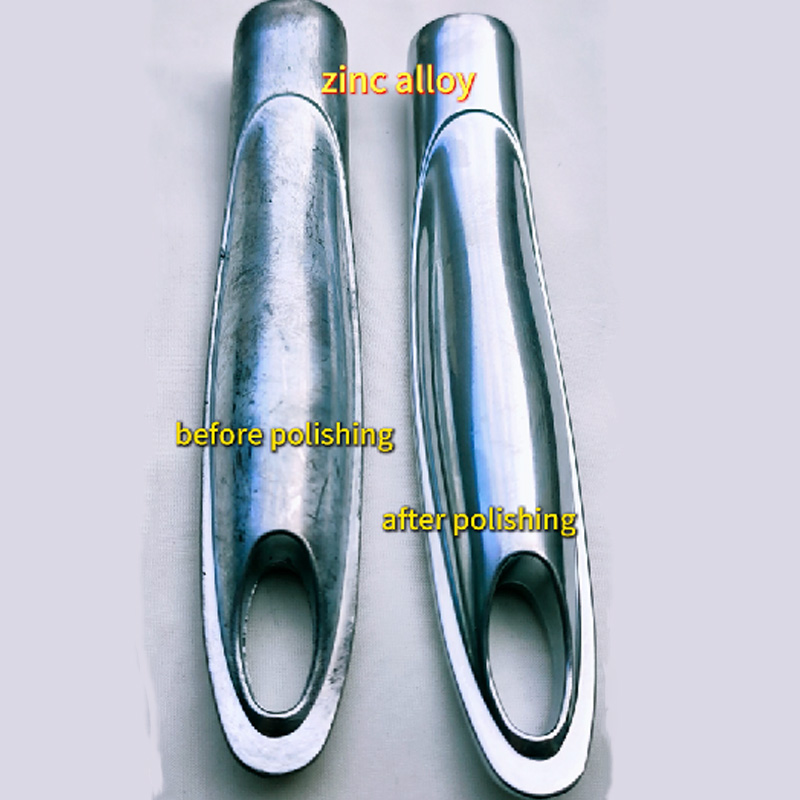
Rather than focusing on machine components, it is more practical to understand plasma polishing by observing what happens on the metal surface. During the process, microscopic surface peaks react more actively in the electrochemical environment than the valleys. As a result, high points are selectively smoothed while the base geometry remains intact.
This selective micro-level smoothing leads to lower surface roughness, improved corrosion resistance, and a uniform, bright finish—without mechanical stress or material deformation.
3. Can Different Materials Be Polished at the Same Time?
This is one of the most important practical questions manufacturers ask. The answer is not a simple yes or no. Because plasma polishing is electrochemical in nature, material composition determines compatibility.
In some cases, composite parts—such as components combining stainless steel and copper—can be polished simultaneously by adjusting the polishing solution formula. The key is developing a polishing salt that reacts appropriately with both materials.
However, many material combinations are not compatible. For example, titanium parts containing copper elements usually cannot be polished together, because the polishing solution cannot effectively balance reactions between titanium and copper. In such cases, simultaneous polishing is not technically feasible.
4. Materials Commonly Processed with Plasma Polishing Machines
Plasma polishing machines are widely used for stainless steel, copper alloys, aluminum, titanium, and precious metals. Some mixed-material components can also be processed, provided their electrochemical behaviors are compatible and the polishing parameters are carefully controlled.
5. Where Plasma Polishing Delivers the Most Value
Industries that benefit most from plasma polishing machines include medical devices, jewelry manufacturing, aerospace components, automotive precision parts, electronic enclosures, and high-end hardware. These sectors demand consistent surface quality, minimal contamination, and repeatable production results.
6. Plasma Polishing Machine Price: Understanding the Real Cost Factors
When evaluating polishing machine price, buyers should look beyond the initial quotation. Machine capacity, automation level, compatible materials, customization requirements, and long-term technical support all play a role in total cost of ownership.
A lower-priced machine may seem attractive, but limited material compatibility or lack of process support can significantly increase operational costs over time.
7. How to Evaluate a Reliable Polishing Machine Manufacturer
A professional polishing machine manufacturer should offer more than equipment. Strong R&D capability, real material testing experience, customized process development, and responsive after-sales support are critical. Manufacturers who understand material compatibility and application-specific challenges provide far greater long-term value.

8. Plasma Polishing vs Traditional Polishing Methods
Compared with mechanical or chemical polishing, plasma polishing offers superior consistency, reduced labor dependency, better environmental performance, and improved control over precision surfaces. For modern manufacturers, it is not just an alternative—it is a strategic upgrade.