

Choosing the right titanium polishing machine is critical if your business needs consistent, high-quality finishes — from reducing burrs to producing a mirror polish titanium surface. For manufacturers, medical device shops, aerospace suppliers, and jewelry makers, the wrong equipment can mean wasted parts, longer lead times, and inconsistent surface quality. Our plasma-polishing titanium machines use advanced plasma polishing (electrochemical + plasma) processes to remove burrs and achieve ultra-smooth, repeatable finishes. Below are six key features to evaluate when selecting a titanium polisher that will meet production demands and deliver the best polish for titanium.
1. Process capability: burr removal + mirror finishing
Not all machines are equal. Some focus only on deburring while others deliver both deburring and final finishing. Because titanium is reactive and hard to polish without distortion mechanically, plasma polishing machines that combine controlled material removal with electrochemical smoothing are ideal. Look for machines that explicitly advertise polishing titanium to mirror finish and fine burr removal — this ensures you get both clean edges and high reflectivity on complex geometries.
Why it matters: A system that integrates burr removal and final finishing saves time, reduces handling, and improves consistency for high-volume runs.

2. Surface control & repeatability
Key specs to check: achievable Ra (surface roughness) values, repeatability across batches, and process parameter logging. Machine controllers that let you fix and recall recipes (time, power, electrolyte flow, plasma gap) produce consistent results — essential for quality systems and ISO audits.
SEO note: If your priority is mirror polish titanium, prioritize machines with documented Ra measurements and before/after data for titanium parts.
3. Fixturing flexibility and fixturing materials
Titanium parts come in many shapes — thin walls, threads, complex pockets. The right titanium polisher will offer modular fixturing, adjustable jigs, and non-conductive or engineered fixtures that won't scratch delicate surfaces. Check if the supplier can customize fixtures for your part family; good fixturing reduces rework and increases throughput.
Practical tip: Ask for case studies showing similar part geometries polished to mirror finish to verify real-world capability.
4. Process speed and throughput
Throughput is a major cost driver. Compare cycle times to reach a specified finish and how many parts per hour a machine can handle under production conditions. Some plasma polishing machines offer multi-part fixtures or automated indexing to boost throughput without sacrificing finish — especially important if you need metal polish for titanium at scale.
End goal: Find the balance between speed and finish quality that meets your production targets.
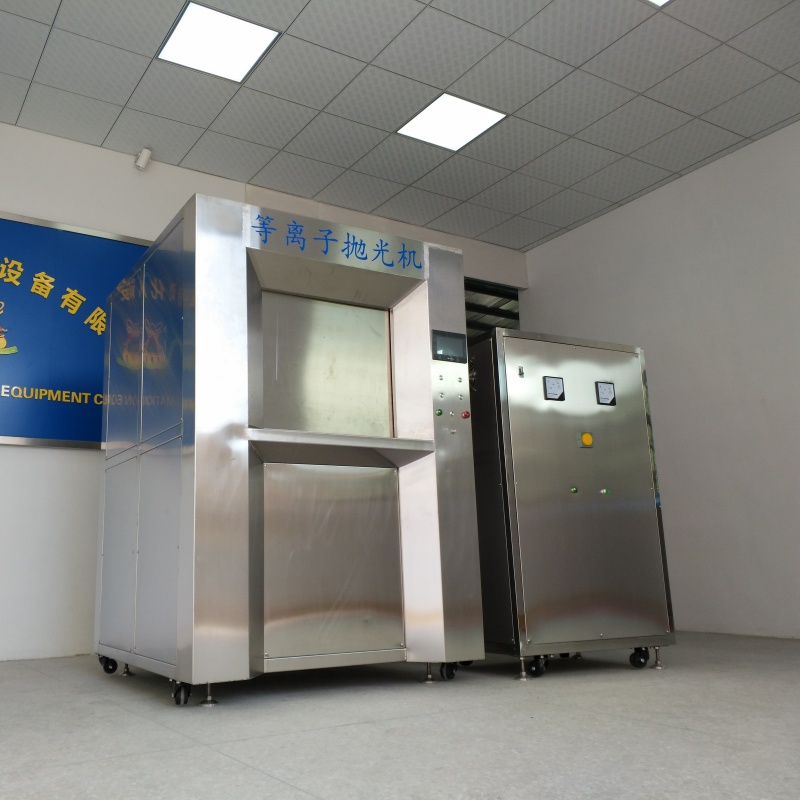
5. Safety, environmental controls, and consumables
Plasma and electrochemical polishing involve process media and controlled emissions. Evaluate exhaust and filtration systems, electrolyte management, and consumable life (electrodes, membranes, filters). Machines with closed-loop electrolyte systems and clear waste-handling procedures minimize environmental impact and operating costs.
Buyer checklist: Confirm regulatory compliance, MSDS for consumables, and spare-part availability in your region.
6. Automation, monitoring & Industry 4.0 readiness
Modern polishing lines benefit from digital controls: real-time process monitoring, remote diagnostics, recipe management, and traceability. A titanium polishing machine equipped with sensors and data logging not only improves first-pass yield but also makes troubleshooting faster when a process drifts.
Future-proofing: Choose machines that support recipe export/import and OPC/REST connectivity if you plan to scale automation or integrate into MES systems.
FAQs
Q: Can plasma polishing discolor titanium?
A: Properly controlled plasma/electrochemical processes minimize heat and surface chemistry changes; choose suppliers with process data for titanium.
Q: Is mechanical polishing better for small runs?
A: For complex parts or high-consistency mirror finishes, plasma polishing often outperforms manual mechanical polishing in speed and repeatability.
Conclusion & next steps
Selecting the right titanium polishing machine means evaluating not just raw power, but process control, fixturing flexibility, environmental safety, and digital readiness. If your goal is polishing titanium to mirror finish with reliable burr removal and scalable throughput, prioritize plasma polishing systems with strong documentation and regional support.
Need help choosing? Contact our sales engineers for a free process review and sample testing. We can demonstrate mirror polish titanium results on your parts and provide an ROI estimate.