In today’s competitive manufacturing landscape, companies face a dual challenge: delivering components with tighter tolerances and flawless surface finishes while maximizing throughput. Traditional deburring methods, including manual filing, tumbling, or chemical treatments, often force a compromise between speed and quality.
This is where plasma deburring redefines production efficiency. Unlike conventional approaches, plasma technology enables precise burr removal at micron-level accuracy without sacrificing cycle time. By integrating advanced Plasma Deburring Machines, manufacturers can reduce defects, minimize secondary finishing, and achieve higher line productivity — a clear competitive advantage in industries where every second counts.
Understanding Plasma Deburring: Principles and Mechanics
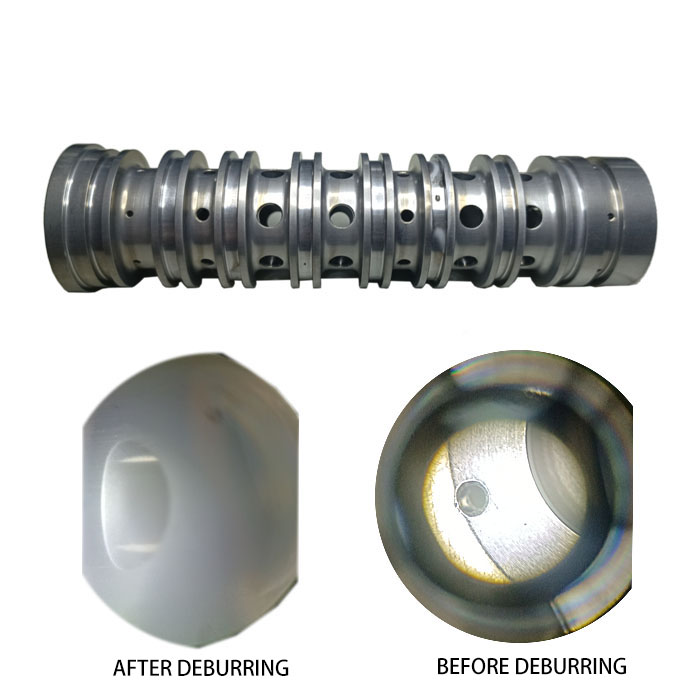
At its core, plasma deburring uses a high-energy, electrically ionized gas — plasma — to remove excess material from metal edges and surfaces. Unlike mechanical scraping or abrasive processes that rely on contact, plasma is a non-contact thermal process, offering multiple benefits:
- Selective material removal: The plasma arc vaporizes or melts burrs and flash while leaving the underlying metal largely untouched.
- Minimal heat-affected zone: Controlled pulse energy and dwell time prevent warping or micro-cracks.
- Complex geometry handling: Undercuts, fine ribs, and internal bores are processed uniformly without damaging delicate features.
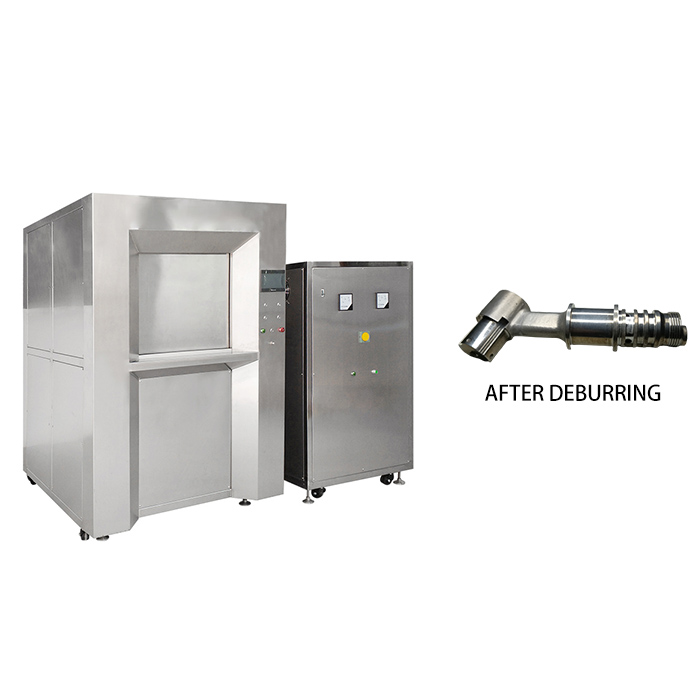
Modern deburring polishing machines incorporate digitally programmable controls, enabling precise regulation of power, speed, and traversal patterns. This ensures consistent results across large production batches and allows Plasma Deburring Machine manufacturers to customize solutions for diverse materials and part geometries.
Advantages Over Traditional Deburring Methods
- Enhanced speed and throughput: Automated plasma cells operate faster than manual or tumbling methods, increasing line capacity.
- Improved surface consistency: Each edge receives uniform treatment, reducing variability and eliminating operator-dependent outcomes.
- Reduced secondary finishing: Minimal burr residue translates into less downstream polishing, saving labor and materials.
- Environmentally friendly: Plasma deburring eliminates the need for aggressive chemical baths, reducing hazardous waste and regulatory burdens.
- Scalable automation: Plasma systems integrate seamlessly with conveyors, robotics, and inspection systems, creating truly automated, inline solutions.
Industry Applications: Where Plasma Deburring Excels
Plasma deburring has proven its value across a range of manufacturing sectors:
- Automotive: Aluminum engine blocks, steel brackets, and safety-critical components benefit from burr-free edges without warping.
- Aerospace: High-strength alloys and intricate geometries in turbine components require precise deburring without compromising structural integrity.
- Medical devices: Surgical instruments, implants, and diagnostic equipment demand micron-level surface quality and repeatable finishes.
- Electronics and connectors: Precision terminals, housings, and contact points need burr-free edges for reliable electrical performance.
- High-precision hardware: Watch components, valves, and aerospace fittings achieve consistent dimensional accuracy and finish quality.
Case studies show that manufacturers switching from manual or chemical deburring to plasma typically achieve a 30–50% reduction in cycle time, with rework rates dropping by 40% — real, measurable benefits to ROI.
Integrating Plasma Deburring into Smart Manufacturing
The latest Deburring Machines are designed for integration into automated and Industry 4.0 environments:
- PLC and MES connectivity: Process parameters, monitoring, and reporting can be centralized.
- Robotic compatibility: Robot-assisted pick-and-place and inline processing minimize operator intervention.
- Vision-guided automation: Barcode or QR-based recipe selection ensures zero variability between parts.
By aligning plasma deburring with polishing equipment and inspection systems, manufacturers achieve both high throughput and stringent quality control, creating a fully connected, traceable production environment.
Material-Specific Optimization: Precision Meets Metallurgy
Different metals respond differently to thermal and mechanical stresses. Leading Plasma Deburring Machine manufacturers tailor process parameters according to material properties:
- Aluminum and magnesium alloys: Gentle pulses prevent surface pitting.
- High-strength steels: Tight control avoids microstructural changes and maintains dimensional tolerances.
- Copper and brass: Short, high-energy pulses minimize oxidation and preserve conductivity.
Cost Analysis: Beyond Equipment Price
A holistic assessment of deburring polishing machines should account for:
- Labor savings: Reduced manual deburring and rework hours.
- Material savings: Less post-processing and secondary finishing.
- Environmental and safety gains: Elimination of chemical baths and associated disposal costs.
- Production predictability: Shorter, consistent cycle times reduce lead times and increase throughput.
When these factors are considered, plasma deburring often delivers a payback period far shorter than anticipated, particularly in high-mix, high-volume operations.
Selection Guide for Plasma Deburring Machines
- Recipe storage and automation compatibility: Multiple programs and automatic selection via barcode or vision systems.
- Retrofit capability: Can the machine be integrated into existing lines without major reconfiguration?
- Material and geometry validation: Has the manufacturer validated the process for your alloys and shapes?
- Service and training: Local support, spare parts, and operator training are critical for smooth implementation.
- Emissions and safety: Proper filtering, shielding, and extraction systems must be in place.
- Process demonstration: Request sample processing and before/after comparisons to validate results.
Emerging Trends and Future Outlook
- Robotic integration: Collaborative robots enable flexible, high-precision handling of delicate components.
- Data-driven process optimization: Sensors and analytics monitor burr removal in real time for predictive maintenance.
- Hybrid finishing systems: Combining plasma deburring with selective polishing or additive surface treatments for ultra-fine finishes.
- Sustainability focus: Reduced chemical use and energy-efficient plasma systems align with green manufacturing goals.
Case Study Snapshot
A European automotive supplier implemented a Bayi Plasma Deburring Machine for aluminum engine brackets:
- Before plasma: Manual deburring required 3 operators per shift, rework rate ~12%, chemical treatments produced 50 liters of waste per week.
- After plasma integration: 1 operator supervises the automated line, rework rate drops to 3%, cycle time per part reduced by 45%, and chemical usage eliminated.
Conclusion: Unlocking Value with Bayi
For modern manufacturers, the choice is clear: prioritize speed without compromising precision. Bayi’s Plasma Deburring Machines combine advanced plasma technology, digital control, materials expertise, and automation readiness. Whether retrofitting existing lines or building smart factories from the ground up, Bayi enables manufacturers to reduce defects, cut costs, and increase throughput.
Request a Sample Trial or Consultation