

Why Valve Body Cross-Hole Deburring Has Become a Critical Manufacturing Challenge
In modern hydraulic systems, automotive components, industrial machinery, and precision fluid control equipment, valve bodies play a critical role in controlling pressure, flow direction, and system stability. As manufacturers continue to improve product performance and reduce component size, valve body structures are becoming increasingly complex, featuring multiple cross holes, deep cavities, micro channels, and threaded internal passages.
Although advanced CNC machining technology can achieve high machining accuracy, it inevitably creates tiny burrs during drilling, milling, and internal hole processing. These burrs are especially difficult to remove when they appear at the intersections of cross holes, inside blind holes, or along complex internal channels. For many manufacturers, achieving complete burr removal while maintaining dimensional accuracy has become one of the biggest challenges in precision metal manufacturing.
Traditional deburring methods, including manual grinding, mechanical polishing, and chemical treatment, often struggle to meet the requirements of modern high-precision valve manufacturing. Manual operations are time-consuming and highly dependent on worker experience. Mechanical tools may not reach hidden internal areas and can easily cause secondary damage, dimensional changes, or surface scratches. Chemical deburring methods may introduce environmental concerns and require strict process control.
These limitations have created an urgent demand for a more efficient, accurate, and environmentally friendly solution. As an advanced Plasma Deburring Machine technology, plasma electrolytic processing provides a new approach to solving complex internal burr problems. By using a high-energy plasma electric field and controlled electrolytic reaction, the equipment can selectively remove microscopic burrs from difficult-to-access areas without damaging the base material.
For valve body manufacturers, a professional metal deburring machine is no longer only expected to remove visible burrs on external surfaces. Modern manufacturing requires a complete solution capable of processing internal cross holes, precision channels, and complex geometries while maintaining micron-level dimensional control.
The new generation of plasma deburring technology developed by professional manufacturers such as Dongguan Bayi Automation Equipment Co., Ltd. is designed specifically for challenging applications including hydraulic valve blocks, automotive oil circuit components, medical micro-tube parts, and other precision metal products. Through high-frequency pulse power systems and optimized electrolyte circulation technology, the machine allows the electrolyte to fully penetrate blind holes, cross holes, and small threaded structures, creating uniform plasma treatment throughout the workpiece.
Compared with conventional processes, the advanced deburring machine for metal provides several important advantages:
● Complete burr removal from complex internal structures
● Controlled material removal at micron level
● No deformation caused by mechanical force
● Improved surface quality and internal cleanliness
● Reduced processing time and labor dependency
● Better consistency for mass production
For companies searching for a reliable automatic deburring machine, plasma technology provides a scalable solution that can be integrated into modern production lines. It not only improves manufacturing efficiency but also helps manufacturers achieve higher product reliability and lower rejection rates.
As a professional deburring machine manufacturer, Bayi focuses on providing customized plasma polishing and deburring solutions for global customers. From sample testing and process development to customized fixtures and automated production integration, the company helps manufacturers overcome complex metal finishing challenges and establish more efficient production processes.
In the following sections, we will explore how Plasma Deburring Machine technology works, why it is becoming the preferred choice for valve body manufacturers, and how this innovative surface deburring machine technology is transforming precision metal manufacturing.
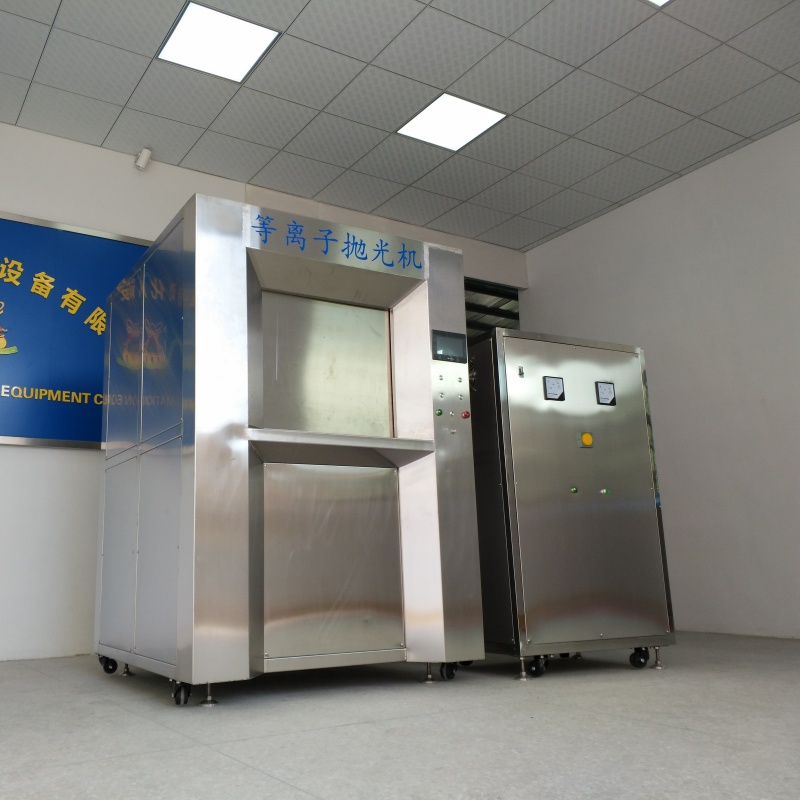
Chapter 1: Why Cross-Hole Burrs Are Difficult to Remove in Valve Body Manufacturing
1.1 Complex Internal Structures Create New Deburring Challenges
Valve bodies are precision components that require multiple holes and channels to control hydraulic fluid movement. During machining, when different holes intersect with each other, cutting tools create burrs around the connection points.
These burrs are usually located in hidden areas and cannot be easily removed using conventional polishing tools. The more complicated the internal structure becomes, the more difficult it is to achieve complete and uniform deburring.
Typical difficult areas include:
● Cross-hole intersections
● Deep narrow passages
● Internal corners
● Small-diameter holes
● Threaded channels
For traditional metal deburring machines, reaching these areas without damaging the workpiece is extremely challenging. Excessive mechanical force may enlarge hole dimensions or damage precision surfaces.
A modern deburring machine for metal must not only remove burrs but also protect the original structure, accuracy, and performance of the component.
1.2 Limitations of Traditional Metal Deburring Methods
Traditional deburring methods have been widely used for many years, but they have limitations when dealing with advanced precision components.
Manual Deburring
Manual grinding is flexible but has several disadvantages:
● Low production efficiency
● High labor cost
● Inconsistent results
● Difficult quality control
For mass production, manual processing cannot provide stable and repeatable results.
Mechanical Deburring
Mechanical tools such as brushes, grinding wheels, and cutters can remove visible burrs, but they struggle with internal cross holes and complex cavities.
Problems include:
● Limited accessibility
● Secondary scratches
● Surface damage
● Dimensional variation
● Chemical Deburring
Chemical methods can reach complex areas, but they require chemical management and may create environmental challenges.
For these reasons, manufacturers are increasingly looking for a cleaner, more precise, and more efficient solution.
Chapter 2: How Plasma Deburring Machine Technology Solves Internal Burr Problems
2.1 What Is a Plasma Deburring Machine?
A Plasma Deburring Machine is an advanced metal finishing system based on electrolytic plasma technology. Instead of using physical cutting tools, it creates a high-energy plasma environment around the workpiece.
During processing, the electric field activates the electrolyte solution and creates plasma discharge around the metal surface. The concentrated energy selectively removes microscopic burrs from high-edge areas while keeping the main material unchanged.
The process provides several functions in one operation:
● Burr removal
● Surface smoothing
● Internal edge treatment
● Cleaning
● Passivation improvement
Compared with traditional mechanical processes, plasma deburring is a non-contact technology that avoids mechanical stress and deformation.
2.2 How Plasma Technology Reaches Cross Holes and Blind Holes Without Dead Zones
One of the biggest advantages of plasma deburring technology is its ability to process complex internal structures.
For valve bodies, traditional tools often cannot reach the intersection points between different holes. However, the electrolyte used in plasma processing can flow into:
● Cross-connected holes
● Deep cavities
● Small channels
● Internal threads
Bayi’s pulse plasma deburring equipment uses a high-frequency pulse power supply combined with a large-flow temperature-controlled circulation system. This design allows stable electrolyte movement and uniform plasma energy distribution throughout the workpiece.
As a result, difficult internal burrs can be removed without creating uneven processing areas.
2.3 Micron-Level Material Removal Without Changing Valve Dimensions
Precision valve components require extremely strict dimensional control. Excessive material removal may affect sealing performance, assembly accuracy, and product reliability.
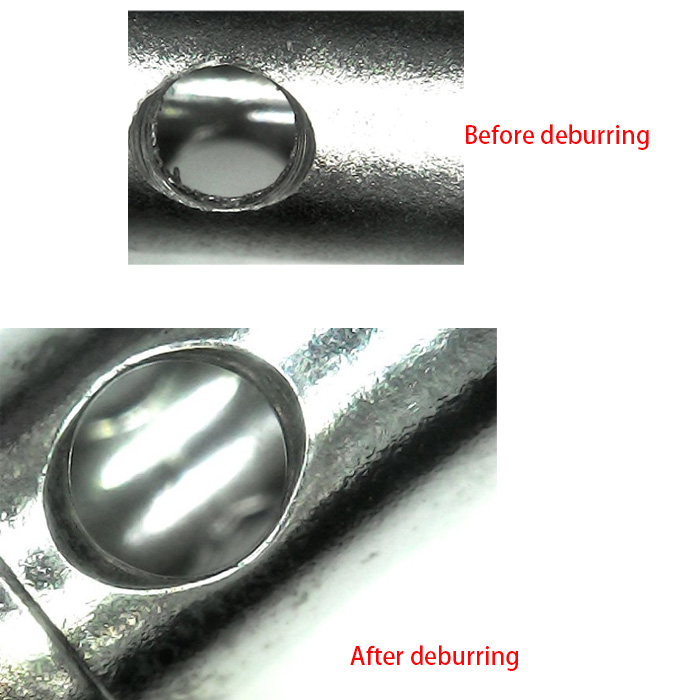
Plasma deburring technology provides controlled material removal, typically within a micron-level range. Bayi equipment can control single-side removal approximately within 1-6 μm, selectively removing burrs while protecting the original dimensions.
The process can:
● Remove sharp burr edges
● Maintain hole diameter accuracy
● Protect thread profiles
● Avoid deformation
This makes plasma technology especially suitable for hydraulic valve blocks and precision metal components requiring high tolerance control.
Chapter 3: Key Advantages of Plasma Deburring Machine for Valve Body Applications
3.1 Complete Burr Removal from Complex Internal Structures
The biggest challenge in valve manufacturing is not removing visible burrs but eliminating hidden burrs inside complicated structures.
A professional surface deburring machine based on plasma technology can provide uniform treatment across the entire metal surface, including areas that traditional tools cannot reach.
Advantages include:
● No blind zones
● Uniform finishing quality
● Improved internal cleanliness
● Reduced contamination risks
This is especially important for hydraulic systems where even small particles can affect system reliability.
3.2 Combining Deburring, Cleaning, and Surface Finishing in One Process
Modern manufacturers need solutions that improve both efficiency and product quality.
Unlike traditional processes requiring multiple steps, plasma deburring can combine:
● Deburring
● Surface polishing
● Oil residue removal
● Oxidation cleaning
● Passivation improvement
The workpiece can achieve better surface performance through a single processing stage.
For manufacturers, this means:
● Shorter production cycles
● Lower labor requirements
● Reduced equipment investment
3.3 Protecting Precision Parts Without Mechanical Damage
Because plasma deburring is a non-contact process, it does not apply physical pressure to the workpiece.
This provides important advantages for:
● Thin-wall components
● Precision valves
● Medical metal parts
● Titanium alloy components
The technology prevents:
● Surface scratches
● Mechanical deformation
● Edge damage
while maintaining excellent finishing quality.
Chapter 4: Applications of Plasma Deburring Technology in Precision Manufacturing
4.1 Hydraulic Valve Blocks and Fluid Control Components
Hydraulic valve blocks are one of the most important applications for plasma deburring technology.
These components usually contain:
● Multiple oil channels
● Cross holes
● Precision sealing surfaces
Any remaining burr can affect oil flow and system stability.
A Plasma Deburring Machine helps manufacturers achieve:
● Cleaner internal channels
● Improved fluid performance
● Reduced failure rates
● Higher assembly reliability
4.2 Automotive Fuel System and Engine Components
Automotive components require high cleanliness and precision because they directly influence vehicle performance.
Plasma deburring technology is suitable for:
● Fuel connectors
● Injection components
● Transmission parts
● Precision metal fittings
By removing internal burrs and improving surface quality, manufacturers can increase component reliability and reduce production defects.
4.3 Medical and Aerospace Precision Metal Parts
Medical and aerospace industries require extremely high standards for surface quality and cleanliness.
Plasma technology can process materials such as:
● Stainless steel
● Titanium alloy
● Copper alloy
● Special conductive metals
Applications include:
● Medical micro tubes
● Aerospace precision parts
● High-performance alloy components
The technology provides consistent quality while protecting delicate structures.