

1. Introduction to High-Precision Deburring Challenges
In modern high-precision engineering and advanced manufacturing, deburring stainless steel stands out as one of the most critical yet highly challenging post-machining phases. Stainless steel is universally valued across global industries for its exceptional toughness, corrosion resistance, and structural integrity. However, these identical material properties introduce severe complications during CNC milling, stamping, laser cutting, and welding processes, leading to stubborn, highly ductile burrs that resist conventional removal methods. For mission-critical components—such as medical valves, automotive fuel injectors, and aerospace fittings—even a microscopic burr can compromise assembly tolerances, cause system blockages, or present catastrophic operational risks. Achieving consistent, high-yield stainless steel deburring without altering the geometric profile or damaging the dimensional accuracy of the workpiece requires transitioning from legacy, manual-dependent methods to highly predictable, automated, and scientifically verified workflows.
2. The Mechanics of Plasma Deburring and Polishing Technology
An advanced plasma deburring machine operates on a highly specialized, non-contact electrochemical plasma principle, representing a paradigm shift from abrasive contact finishing. During this automated process, the stainless steel workpiece is completely submerged into an environmentally secure, low-concentration neutral salt electrolyte formulation. When precisely regulated high-voltage electrical currents are introduced into the system, a dense, uniform, and continuous gaseous plasma envelope forms around the exact boundary layers of the metal substrate. According to the laws of electrodynamics, the electric field naturally concentrates at sharp micro-protrusions, such as burrs, flash edges, welding ridges, and surface roughness peaks. This localized energy concentration induces rapid, targeted micro-anodic dissolution. This highly controlled action vaporizes the burr peaks instantly while leaving the flat structural surfaces and critical dimensional datums completely untouched, enabling simultaneous precision deburring and nano-scale surface smoothing.
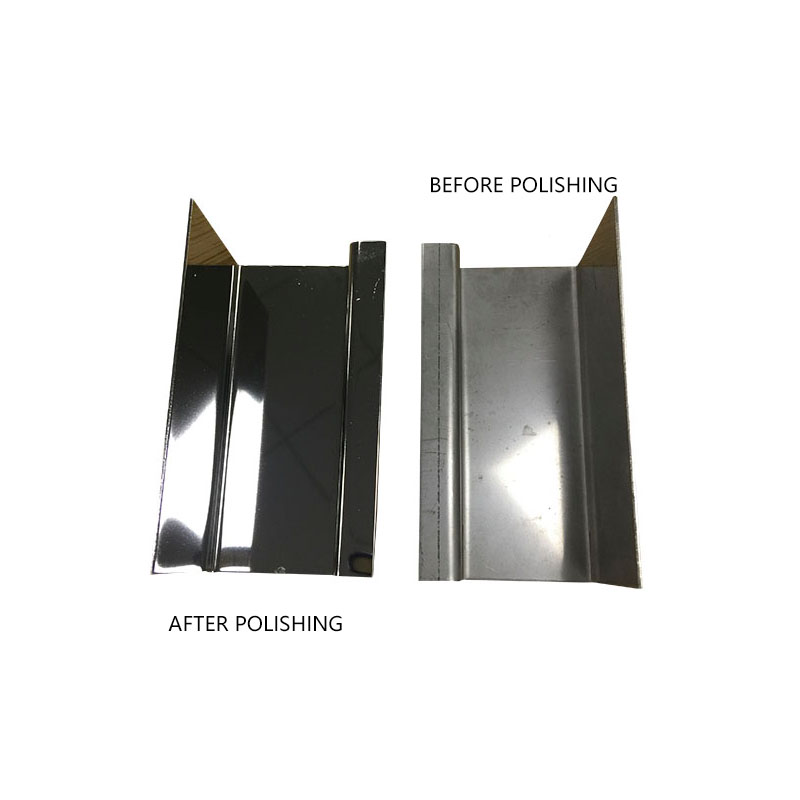
3. Comprehensive Applications Across High-End Industrial Sectors
A high-performance stainless steel deburring machine features exceptional adaptability, making it an indispensable asset on the production floors of top-tier global deburring machine manufacturers. Today’s industrial landscape demands automated solutions capable of handling massive volume scale-ups while maintaining absolute parts consistency. This advanced technology has become the mainstream production standard across several highly demanding sectors:
● Hydraulic & Automotive Valves: Flawlessly clears complex cross-drilled internal oil channels, interlocking fluid intersections, and delicate block assemblies where traditional steel brushes or thermal deburring fail, without widening sensitive bore measurements or scratching honed surfaces.
● Medical Devices & Surgical Instruments: Processes high-grade stainless scalpels, biopsy forceps, vascular expansion stents, and dental implants, securing a completely burr-free, biologically inert surface that meets rigorous healthcare sanitation criteria.
● Kitchenware & Sanitary Hardware: Enhances the internal and external surfaces of premium faucets, angle valves, vacuum flasks, and drainage components, providing sleek cosmetics and preventing early limescale adhesion.
● Precision Tubing & Welded Assemblies: Smooths the inner walls of capillary stainless tubes, threaded adapters, and seamless joints while completely removing dark heat-affected oxides, scale, and weld flash in a single operational cycle.
4. Core Technical Capabilities and Dimensional Precision Analysis
Procuring machinery from a world-class deburring machine factory unlocks elite engineering capabilities meticulously tailored to guarantee that stainless steel deburring does not deform the original design profiles:
● 360-Degree Omnidirectional Non-Blind Finishing: The gaseous plasma field completely flows into intricate blind holes, micro-threads, and internal cross-drilled intersections. It clears burrs from areas that mechanical grinding stones or abrasive nylon filaments cannot physically reach.
● Precise Micron-Level Stock Removal: Controlled single-sided metal removal is restricted to an ultra-precise range of 1 to 7μm. The system rounds only the sharp, protruding burr tips without rounding off flat datum lines or affecting strict engineering tolerances.
● Zero Mechanical Stress & No Deformation: The process features a complete absence of mechanical impacts, tool pressure, or kinetic friction. It is perfect for processing ultra-thin 0.08mm stainless steel gaskets, micro-washers, and delicate 3C electronic frames without warpage, micro-cracks, or edge collapsing.
● Multi-Functional Surface Enhancement: In addition to micro-deburring, it simultaneously removes CNC tool marks, eliminates heat-treatment discoloration, and generates a dense, chromium-rich passive film on the stainless steel surface, significantly upgrading salt-spray rust-prevention performance.
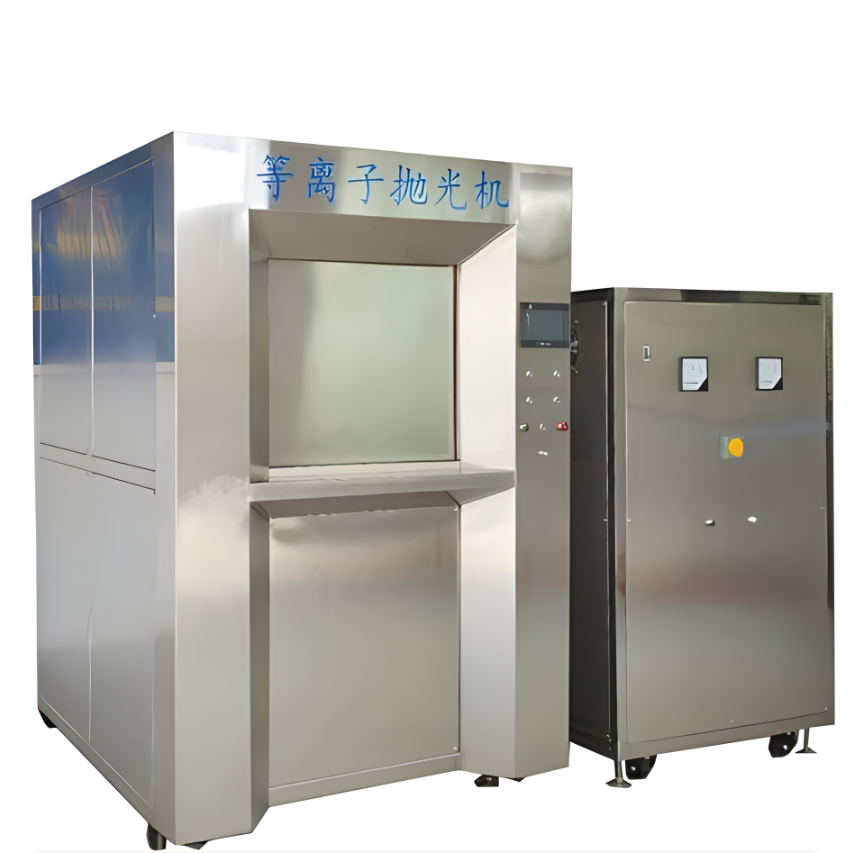
5. Comparative Matrix: Advanced Plasma vs. Legacy Deburring Methods
To fully comprehend the operational efficiencies gained through modern automation, engineering teams must evaluate a technical comparison between advanced plasma systems and legacy material finishing equipment.
| Process Characteristic | Advanced Plasma System | Vibratory Grinding | Manual Buffing Wheel | Traditional Acid Electrolysis | CNC Robotic Grinding |
| Internal Bore Capability | Flawless 360° internal cleaning | Fails in deep recesses; traps media | Completely impossible | Prone to over-etching at entries | Limited depth; impossible for small holes |
| Thin-Walled Safety | Zero mechanical force; no bending | High risk of distortion & scratches | High risk of manual edge distortion | High risk of destroying sharp edges | Moderate risk of structural distortion |
| Surface Uniformity | Process-locked automation; uniform luster | Inconsistent; variable batch results | Dependent on operator fatigue | Varied based on localized fluid movement | Consistent on flats; poor on curves |
| Environmental Impact | Eco-safe; neutral salt formula | Generates high volume of toxic sludge | Heavy metal dust & extreme noise | Corrosive acid vapors; hazardous waste | Clean but highly energy consumptive |
6. The All-in-One Mirror Polishing and Buffing Solution by Bayi
As an established pioneer in metal surface treatment technology, Bayi Automation recognizes that global manufacturers require a holistic, high-efficiency production strategy. For industries that demand both pristine cosmetic appearance and rigid dimensional compliance, we deliver a fully integrated solution pairing our advanced plasma finishing with elite stainless steel polishing machine technology. Our specialized stainless steel mirror polishing machine systems achieve phenomenal, non-directional reflectivity (with surface roughness reduced to Ra < 0.02μm), easily turning ordinary raw stamped or milled metals into luxury, high-end components.
Whether your manufacturing setup requires a high-load stainless steel buffing machine for rapid bulk prep, an inline industrial stainless steel polishing equipment network, or a compact standalone stainless polishing machine unit, Bayi's engineering team crafts a perfectly customized technical ecosystem. Our workflow elegantly bridges the gap between raw deburring and beautiful cosmetic buffing, optimizing floor space, cutting down manual labor dependencies by up to 85%, and assuring that every single production run reflects absolute manufacturing excellence.