

Introduction: What is a Plasma Deburring Machine?
In the modern manufacturing and precision machining industry, achieving a flawless surface finish and removing microscopic burrs is critical for component performance. A plasma deburring machine—often referred to in the industry as an ion deburring machine—is a specialized industrial equipment designed specifically for conductive metals. It relies on a high-voltage electric field to excite an electrolyte, generating a localized plasma layer. By utilizing a dual action of electrochemistry and plasma micro-discharge, it precisely removes burrs and levels metal surfaces without mechanical contact.
For industries requiring high-precision components, such as automotive parts, medical devices, jewelry, and new energy hardware, this non-contact precision surface treatment ensures that parts remain undeformed while achieving superior consistency.
How Does a Metal Deburring Machine Work?
Understanding the science behind a metal deburring machine reveals why it is vastly superior to traditional mechanical methods. The plasma deburring process operates on a sophisticated electrochemical and physical principle:
● The Setup: The metal workpiece is connected to the positive electrode (anode), while the custom-designed plates inside the processing tank serve as the negative electrode (cathode). The entire component is submerged in a specialized, neutral electrolyte solution.
● Vapor Film Generation: Once the system is powered on and the voltage is ramped up, a rapid chemical reaction occurs on the surface of the workpiece, creating a microscopic layer of water vapor film.
● Plasma Formation: The high-voltage current breaks through this thin water film, triggering a stable, highly energetic plasma gas shield around the metal piece.
● The Tip Electric Field Effect: Electricity naturally concentrates at sharp points. Because of this electric field concentration, the plasma discharge and electrochemical erosion attack the burrs, sharp corners, and micro-protrusions at a rate far faster than the flat, baseline surfaces.
● Micro-Etching Precision: The machine performs a uniform, micron-level etching. It selectively dissolves and shaves off the unwanted burrs while preserving the structural integrity and original dimensions of the core workpiece.
Basic Composition of the Equipment
A high-performance plasma deburring machine relies on an integrated network of advanced industrial hardware to maintain precision, speed, and safety. The standard configuration consists of the following core systems:
● High-Frequency Pulse DC Power Supply: The powerhouse of the machine, responsible for delivering stable, high-voltage pulse currents required to break down the vapor barrier and ignite the plasma field.
● Anti-Corrosion Constant Temperature Tank: Crafted from specialized industrial materials, this tank safely houses the electrolyte, resists corrosion, and maintains an optimal thermal environment.
● Titanium Alloy Cathode Plates: Selected for their excellent conductivity and extreme resistance to chemical wear, ensuring longevity and stable current distribution.
● Electrolyte Circulation and Filtration System: Keeps the fluid moving constantly, filtering out dissolved metal particles and maintaining a clean, uniform chemical balance for repeatable results.
● Temperature Control Heating Unit: Regulates the exact temperature of the electrolyte, as consistency in liquid temperature directly dictates the precision of the micro-discharge action.
● Custom Tooling and Fixtures: Specially engineered jigs that secure the workpieces, ensuring excellent electrical connectivity and optimal positioning within the electrical field.
Main Processing Functions
A deburring machine utilizing plasma technology does far more than simply eliminate rough edges. It acts as a multi-functional surface finishing solution that completes several processing stages in a single cycle:
● Blind Hole and Dead Zone Deburring: It seamlessly removes internal and external burrs resulting from CNC machining, stamping, die-casting, and welding. This includes incredibly difficult areas like cross-holes, blind holes, tight crevices, and internal thread geometry where mechanical tools cannot reach.
● Oxide and Scale Removal: The dual electrochemical and plasma action instantly strips away stubborn oxide scales, heat-treatment blackening layers, and residual oil-derived oxide films.
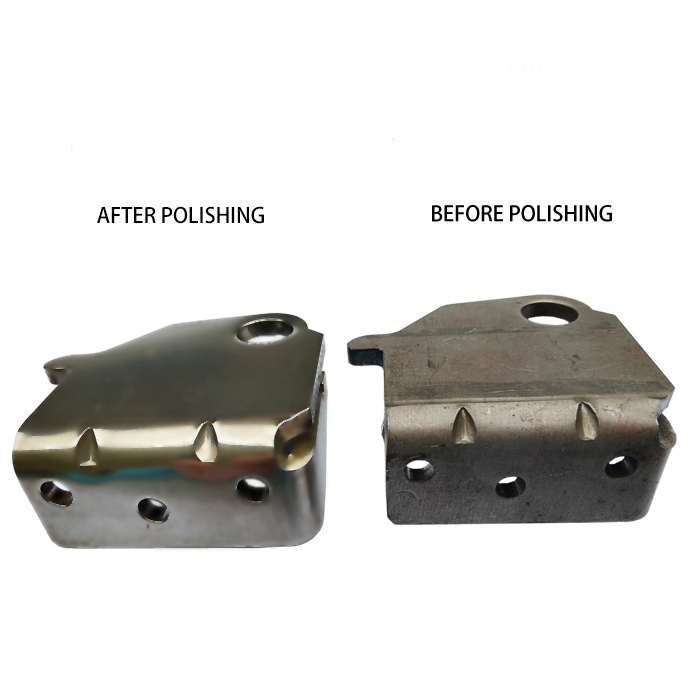
● Surface Leveling and Micro-Scratch Erasing: It flattens CNC tool marks, micro-scratches, and surface imperfections. Depending on the cycle parameters, it can achieve finishes ranging from an elegant matte to a brilliant mirror polish.
● Anti-Corrosion Passivation: Simultaneously with the deburring process, it stimulates the formation of a dense, micro-passivation layer on the metal's surface. This dramatically upgrades the rust resistance and salt-spray test endurance of stainless steel, titanium, and copper components.
Key Characteristics and Advantages
When evaluating a metal deburring machine, manufacturers look for solutions that reduce labor costs, eliminate scrap rates, and boost productivity. The plasma method delivers several unique technical benefits:
● Zero Mechanical Stress and Deformation: Unlike vibratory tumblers, buffing wheels, or robotic grinding systems, there is zero physical impact or compression. It processes ultra-thin parts (down to 0.08mm) and micro-sized medical/electronic components without causing a trace of geometric distortion.
● 360-Degree Total Coverage: Because the electric field wraps completely around the component, the electrolyte ensures there are zero processing blind spots. Intricate inner cavities receive the exact same level of deburring as external edges.
● Ultra-Precise Dimensional Control: The material removal rate is extremely stable and predictable, generally removing between 1 to 8μm of material per side. This micro-level removal means you can eliminate burrs without ruining critical tolerances or losing positioning datums.
● Pristine, Residue-Free Cleaning: No abrasives, grinding compounds, or polishing waxes are embedded into the metal. The treated parts are chemically clean, making this process perfectly suited for high-cleanliness medical devices, food equipment, and pre-electroplating preparation.
● Eco-Friendly and Safer Workplace: By utilizing neutral, non-toxic electrolytes instead of aggressive strong acids, the factory floor remains free of toxic acid mists. Wastewater treatment is remarkably straightforward, aligning with global green manufacturing standards.
The Complete Solution: Partnering with Leading Deburring Machine Manufacturers and Factory
When implementing a high-tech finishing cell, sourcing equipment from reputable, expert deburring machine manufacturers is essential. This is where a customized, full-scale production solution becomes the game-changer for your factory.
The Bayi Company Advantage: Precision Metal Polishing
Among world-class suppliers, Bayi Company stands out as an expert provider. Their deburring machine lineup is specially engineered for high-precision metal polishing. By employing advanced plasma polishing technology, Bayi's systems do not just cut away burrs—they seamlessly transition into a finishing cycle that achieves mirror-like metal polishing. This eliminates the need for a secondary polishing line, giving factories a major competitive edge in turnaround times and labor savings.
What to Look for in a Deburring Machine Factory
To secure a total solution for your production floor, your chosen deburring machine factory must offer a full-lifecycle engineering approach:
1. Custom Fixture Engineering: The factory should design bespoke titanium fixtures to guarantee optimal current density for your specific part geometries.
2. Tailored Electrolyte Formulation: Custom chemical blending according to your specific alloy composition to optimize speed and shine.
3. Automated Integration: The ability to scale from manually operated units to fully automated robotic arm lines for high-volume mass production.