

Introduction: The Quest for the Perfect Reflection
In modern manufacturing, achieving a flawless, reflective surface on metal components is no longer just about aesthetics—it is about enhancing both the premium appearance and the functional performance of the product. For decades, factories relied on labor-intensive manual buffing to get that coveted "mirror look." However, as production scales, consistency becomes a nightmare. Enter plasma technology. As a leading polishing machine manufacturer, we frequently encounter a critical question from engineers and procurement managers worldwide: Can plasma polishing truly achieve a mirror finish? The short answer is yes. But understanding how to achieve it stably in a mass-production environment is the secret to transforming your factory's output.
1. Understanding Plasma Polishing: How Does a Professional Polishing Machine Work?
To understand the results, we must first look at the science. A professional polishing machine utilizing plasma technology does not rely on abrasive wheels or harsh, toxic acids. Instead, it operates through a specialized electrochemical process. When a metal part is immersed in a eco-friendly electrolyte bath under high voltage and specific currents, a dense, controlled plasma gas layer forms around the workpiece.
This plasma layer acts with micro-precision. It concentrates energy on the microscopic peaks (roughness) of the metal surface, rapidly dissolving them while leaving the microscopic valleys untouched. Developed by our advanced polishing machine factory, this method effectively strips away burrs, sharp edges, and surface irregularities at a molecular level, laying the foundational smoothness required for high-end reflectivity.
2. Can Plasma Polishing Achieve a True Mirror Finish?
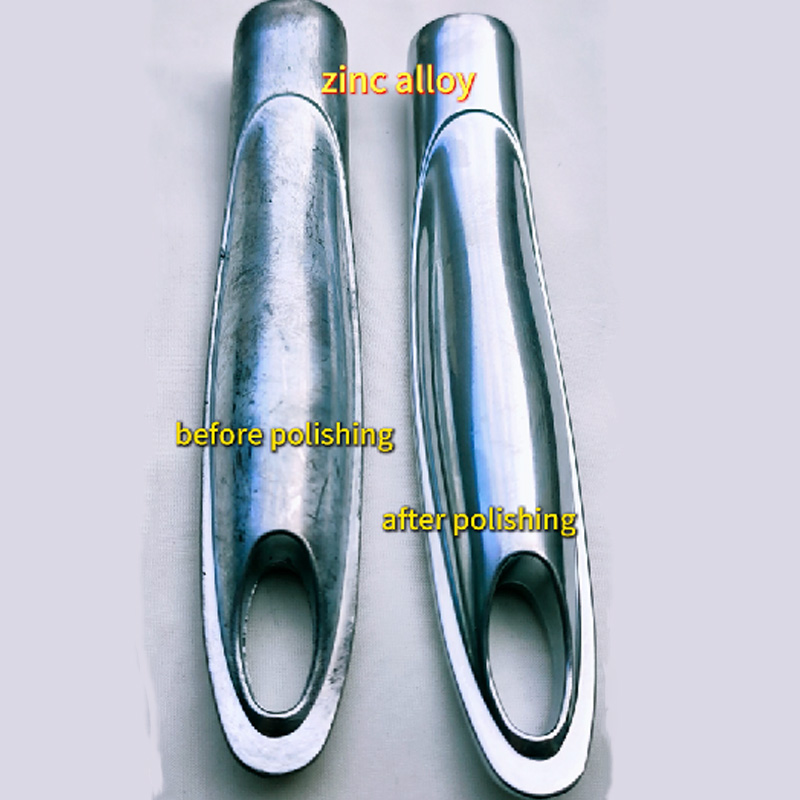
The answer is a definitive yes. A high-quality metal polishing machine powered by plasma technology can consistently produce a high-gloss, crystal-clear mirror finish that rivals or even surpasses traditional mechanical buffing and standard electropolishing.
However, it is vital to distinguish between a commercial high-gloss mirror finish and a specialized optical-grade ultra-mirror finish. For decorative hardware, consumer electronics, automotive trim, and medical instruments, plasma polishing provides an exceptionally brilliant, clear, and unclouded reflection. It eliminates the foggy appearance often left by improper chemical treatments, delivering a uniform, brilliant gloss across the entire geometry of the component.
3. The Blueprint for Success: Critical Conditions Required for a Plasma Mirror Finish
Achieving a flawless reflection is not accidental; it requires a precise harmony between machinery, materials, and preparatory steps. Here is the exact checklist required to unlock top-tier mirror finishes using a polishing machine:
● The Blueprint Foundation (Raw Workpiece Quality): Plasma polishing excels at smoothing micro-roughness, but it cannot remove deep tool marks, severe scratches, or heavy mill scale in a single step. If the raw workpiece has deep machining grooves, it must undergo brief vibratory tumbling, pre-grinding, or mechanical leveling beforehand.
● Optimized Process Parameters: Achieving a mirror surface requires fine-tuning the equipment. Operators must increase the voltage, logically extend the polishing cycle duration, and strictly stabilize the electrolyte temperature. When paired with our proprietary mirror-specific electrolyte, the micro-peaks are perfectly leveled.
● Impeccable Pre-Cleaning: The metal surface must be absolutely pristine before entering the plasma tank. Any traces of stamping oils, heavy oxides, or fingerprints will disrupt the plasma barrier, resulting in haze, cloudiness, or mottled spots. Cleanliness is the prerequisite for clarity.
4. Material Performance: How Different Metals React to Mirror Polishing
Different alloys exhibit unique characteristics when processed inside a stainless steel polishing machine or specialized multi-metal units. Here is what factories can expect across various metals:
| Metal Material | Mirror Finish Performance | Target Applications |
| 304 / 316 Stainless Steel | Most stable, highest brightness, highly mature for mass production. | Sanitary ware, kitchenware, automotive trim. |
| Titanium & TC4 Alloys | Delivers a delicate, soft, high-brightness luster without blinding glare. | Medical implants, high-end consumer tech, aerospace. |
| Copper, Brass & Beryllium Copper | Extremely uniform, bright gloss; requires post-polish anti-oxidation sealing. | Electrical contacts, luxury hardware, decorative arts. |
| K-Gold & 925 Sterling Silver | Perfect mirror finish with exceptionally low metal weight loss. | Luxury jewelry, premium fashion accessories. |
| Mold Steel & 45# Steel | Achieves a smooth mirror surface, though slightly softer in brightness than stainless steel. | Precision industrial molds, mechanical components. |
5. Head-to-Head Comparison: Plasma Polishing vs. Traditional Wheel Buffing
When deciding whether to upgrade your facility with an advanced stainless steel mirror polishing machine, evaluating the trade-offs against traditional manual methods is essential.
The Advantages (Why Factories Upgrade)
● Flawless Uniformity: Unlike manual operators who may apply uneven pressure, plasma treats the entire batch simultaneously. Every single piece inside the batch achieves identical brightness and color consistency.
● Unparalleled Cleanliness: Manual buffing leaves behind wheel lines, microscopic scratches, and stubborn polishing paste residues. Plasma polishing leaves zero residue, resulting in a clinically clean surface.
● Intricate Geometry Mastery: A manual buffing wheel cannot penetrate complex internal holes, narrow blind slots, or the insides of bent tubes. Plasma flows freely, polishing internal cavities and external surfaces concurrently.
● Superior Corrosion Resistance: The plasma process naturally forms a highly dense, uniform passivation layer on the metal surface. This provides significantly better rust and corrosion resistance compared to mechanical buffing.
The Limitations
● No Heavy Material Removal: As stated, it cannot erase deep machining gouges or massive burrs in one step. It is a refining process, not a coarse grinding process.
● Not Ultra-Optical Grade: For highly specialized optical lenses or ultra-mirror applications requiring sub-nanometer flatness, plasma is usually paired with electrochemical or chemical mechanical planarization (CMP), rather than acting as a standalone single step.
6. The Complete Factory Solution: Choosing the Right Polishing Machine Manufacturer
Moving from manual, messy buffing rooms to an automated environment requires more than just buying a piece of hardware—it requires an ecosystem solution. If your factory handles thousands of stainless steel, titanium, or brass parts daily, upgrading to a high-capacity mirror polishing machine represents the ultimate solution to labor shortages, soaring regulatory environmental costs, and high scrap rates.
As an experienced polishing machine manufacturer, Bayi offers custom-tailored automation setups. Our machinery handles deburring and mirror polishing simultaneously, ensuring that your parts exit the line pristine, passivated, and perfectly reflective. By partnering with a dedicated polishing machine factory, you gain access to customized electrolyte formulations tailored specifically to your specific alloy grades, comprehensive training, and automated fixtures designed to max out your daily ROI.