

1. Rethinking the “Difficulty” of Titanium Alloy Plasma Polishing
In surface engineering, titanium alloy is often labeled as a “difficult material” for plasma polishing. However, this perception is not entirely accurate. The real issue is not difficulty itself, but the extremely narrow process window required by plasma polishing technology.
Unlike traditional machine polishing or buffing polisher machine processes, titanium does not respond linearly to energy input. Instead, its surface reacts dynamically under plasma conditions, meaning small parameter changes can dramatically alter the result.
When using a plasma polishing machine, operators often find that standard settings used for stainless steel or aluminum fail completely on titanium. The surface may appear dull, uneven, or even slightly oxidized. This leads many to assume titanium is “hard to polish,” while in reality, it simply requires a different logic.
Modern metal polishing machines are designed around stable material behavior. Titanium breaks that assumption. It forces engineers to rethink polishing as a controlled micro-reaction process rather than a mechanical abrasion method.
Once this mindset shift happens, titanium plasma polishing is no longer a “difficult task,” but a precision-controlled surface transformation process.
2. Why Titanium Behaves Uniquely in Plasma Polishing Technology
Titanium alloy behaves fundamentally differently from most engineering metals in plasma polishing technology. The reason lies in its surface chemistry and thermal response characteristics, which directly affect how a plasma polishing machine interacts with the workpiece.
First, titanium naturally forms a dense and stable oxide layer. During plasma polish processing, this passive film continuously regenerates. Instead of being removed in a straightforward way, it enters a cycle of destruction and reformation. This makes the surface reaction highly sensitive to energy density and electrolyte conditions.
Second, titanium has low thermal conductivity. In a polisher machine or any metal polishing machine, heat is usually distributed and stabilized quickly. However, titanium retains localized heat, which can easily lead to discoloration such as yellowing or blue oxidation if parameters are not controlled precisely.
Third, titanium is widely used in aerospace and medical industries, where tolerances are extremely strict. This means that even minor surface defects caused by improper machine polisher settings are unacceptable.
Because of these factors, titanium cannot simply reuse stainless steel or copper polishing parameters. It requires a dedicated combination of electrolyte chemistry and controlled energy curves inside modern polishing machines.
3. The Hidden Process Window: The Real Core of Plasma Polishing
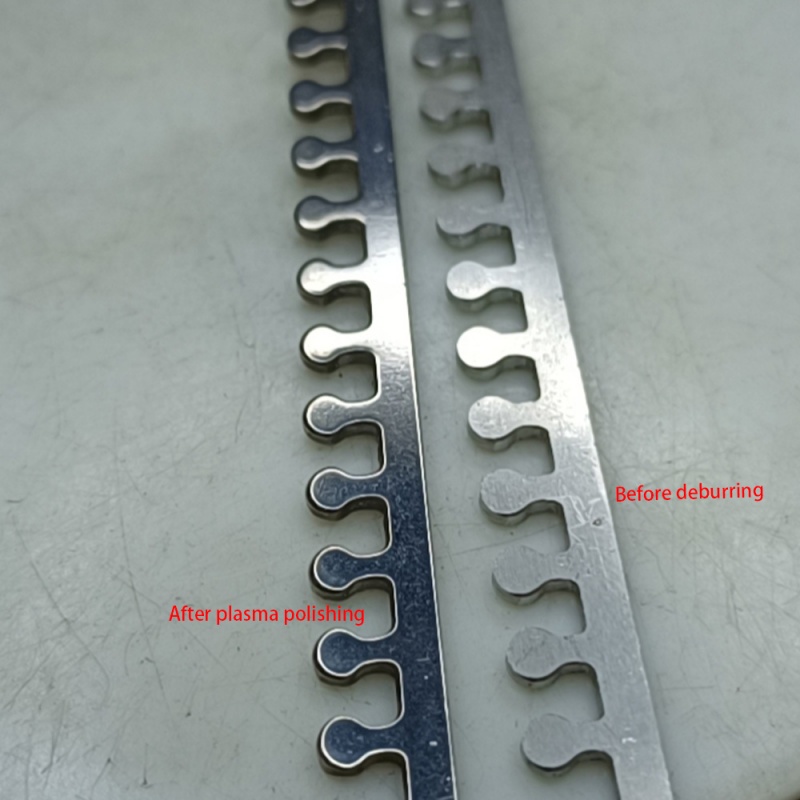
The real challenge in titanium processing is not the material itself, but the extremely narrow “process window” inside plasma polishing technology. This refers to the precise balance between electrical energy, electrolyte composition, and thermal stability inside a plasma polishing machine.
Unlike traditional machine polishing, where operators can adjust pressure or speed intuitively, plasma polishing requires parameter control at a micro-reaction level.
Key factors include:
● Electrolyte composition sensitivity: even slight variation changes ion activity
● Voltage-current curve control: determines plasma intensity and stability
● Time exposure accuracy: defines surface leveling depth
● Thermal equilibrium: prevents oxidation and discoloration
In modern metal polishing machines, titanium processing is not about “more power” or “longer time.” It is about maintaining a stable micro-discharge environment.
This is why experienced polishing machine manufacturers emphasize repeatability testing rather than single-parameter optimization.
4. Plasma Polishing Machine Engineering Challenges for Titanium
Designing a plasma polishing machine for titanium is significantly more complex than for conventional metals. The equipment must ensure absolute stability in energy delivery and chemical interaction.
Key engineering requirements include:
● High-precision power modulation systems
● Real-time thermal feedback control
● Corrosion-resistant chamber design
● Stable electrolyte circulation system
Unlike a standard polisher machine, titanium systems cannot tolerate fluctuations. Even minor instability can result in uneven surface brightness or localized oxidation.
Modern metal polishing machine manufacturers are increasingly integrating digital control systems, allowing automated adjustment of voltage and frequency in real time.
This shift transforms polishing from a manual craft into an engineered surface science process.
5. From Trial-and-Error to Process Mapping
Early titanium polishing often relied on trial-and-error, especially when using generic polishing machines or buffing polisher machines. This approach was inefficient and inconsistent.
Modern plasma polishing technology replaces this with process mapping—defining stable parameter zones through data.
Instead of manually adjusting a machine polisher, engineers now build parameter databases that define:
● Stable voltage ranges
● Optimal electrolyte ratios
● Temperature safety bands
● Material-specific reaction curves
Advanced polishing machine China manufacturers are now using digital simulation to predict surface outcomes before production.
This evolution significantly reduces scrap rates and improves consistency in high-value titanium components.
6. Industrial Reality: Aerospace, Medical, and Precision Components
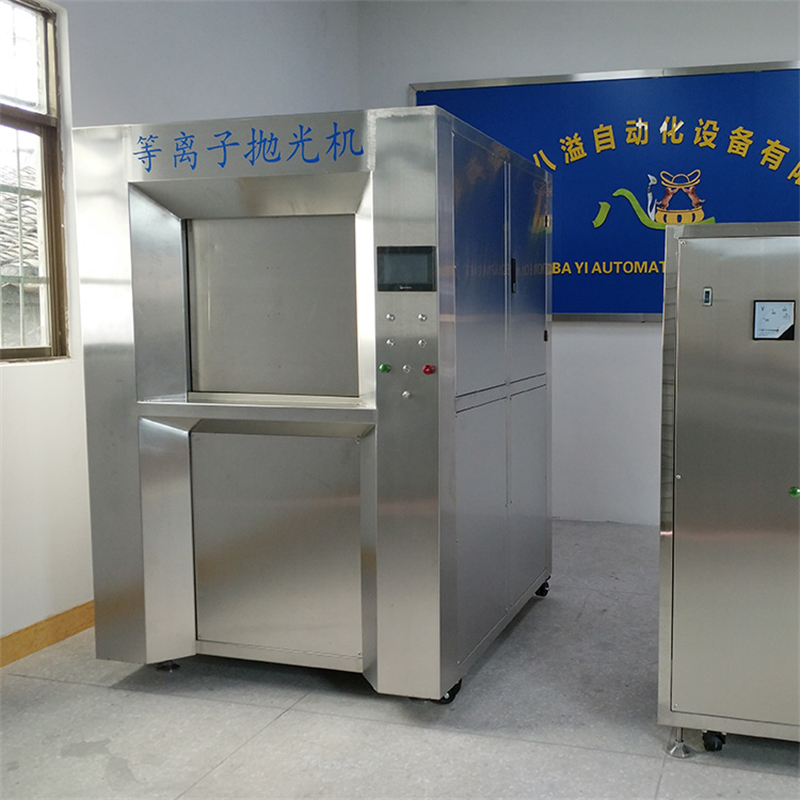
Titanium plasma polishing is most widely used in aerospace, medical implants, and precision engineering.
In aerospace, components must withstand extreme stress while maintaining flawless surface integrity. Any micro-defect from a metal polishing machine process can lead to fatigue failure.
In medical applications, implants require biocompatible surfaces. Plasma polishing machine processes improve corrosion resistance and reduce bacterial adhesion.
Precision engineering components, such as microfluidic devices, rely on ultra-smooth surfaces that traditional machine polishing cannot achieve.
This makes plasma polishing not just an option, but a requirement in advanced manufacturing.
7. When Titanium Plasma Polishing Becomes Easy
Despite its reputation, titanium plasma polishing becomes surprisingly stable once the process window is correctly established.
At this stage:
● Batch consistency becomes extremely high
● Surface finish is uniform across all parts
● No mechanical stress is introduced
● Complex geometries are easily processed
Unlike a machine polisher, which struggles with internal cavities, a plasma polishing machine can process blind holes, microchannels, and hollow structures in a single cycle.
This is where titanium transitions from “difficult” to “highly efficient.”
8. Comparison with Traditional Polishing Methods
Compared with traditional buffing polisher machines and mechanical polishing systems, plasma polishing offers significant advantages:
● No abrasive contact → no deformation
● Uniform micro-level material removal
● Better corrosion resistance
● Higher repeatability in production
Mechanical polishing machines rely on physical force, which is unsuitable for titanium’s sensitivity. In contrast, plasma polishing technology works through controlled electrochemical reactions.
Even high-end polishing machine manufacturers are gradually shifting toward hybrid plasma systems for titanium applications.
9. China Manufacturing Advantage in Polishing Equipment
The global market for polishing machine China manufacturing has grown rapidly, especially in high-precision surface engineering.
Chinese polishing machine manufacturers are focusing on:
● Cost-efficient plasma systems
● Stable mass production capability
● Integration of automation and AI
● Customization for titanium applications
This makes China a major supplier of modern metal polishing machines, especially for aerospace and medical-grade equipment.
10. Future of Plasma Polishing Technology
The future of plasma polishing technology is moving toward intelligent and fully automated systems.
Next-generation plasma polishing machines will include:
● AI-driven parameter optimization
● Self-adjusting energy curves
● Real-time surface monitoring
● Fully automated production lines
Traditional machine polishing will gradually be replaced in high-end industries, especially for titanium and other advanced alloys.
The evolution of machine polishing systems marks a shift from manual craftsmanship to intelligent surface engineering.
FAQ
Q1: Is titanium really harder to polish than stainless steel?
Yes, due to its reactive surface and narrow process window in plasma polishing.
Q2: Can plasma polishing damage titanium parts?
Only if parameters are unstable; controlled systems prevent damage.
Q3: What is the difference between plasma polish and mechanical polishing?
Plasma polishing uses electrochemical reactions instead of physical abrasion.
Q4: Why do polishing machine manufacturers avoid titanium?
Because it requires specialized equipment and strict process control.