

1. Introduction: Why Titanium Polishing Matters More Than You Think
Titanium is no longer a niche material reserved for aerospace experiments—it has become essential in industries ranging from medical implants to high-performance engineering components. However, what truly determines the success of a titanium part is not just its composition, but its surface condition.
In the world of titanium polishing, surface finishing directly influences fatigue strength, corrosion resistance, biocompatibility, and even product lifespan. This is why manufacturers constantly seek better ways to polish titanium efficiently and consistently.
Traditionally, mechanical methods have dominated the field. But with the rise of advanced technologies like the plasma polishing machine, the industry is undergoing a quiet revolution. The question is no longer whether plasma polishing works—but whether it outperforms mechanical polishing in real-world applications.
This article explores that question from a fresh, engineering-driven perspective—moving beyond surface-level comparisons to uncover what truly matters in modern metal polish for titanium processes.
2. Understanding Titanium Surface Challenges
Titanium presents a paradox: it is both highly desirable and notoriously difficult to finish. Its unique properties—high strength-to-weight ratio, chemical reactivity, and low thermal conductivity—make polishing titanium a technically demanding task.
Unlike softer metals, titanium tends to gall and smear during mechanical processing. Heat generated during polishing cannot dissipate quickly, increasing the risk of surface burns and microstructural changes. These issues often result in inconsistent finishes, even when using advanced abrasive systems.
Moreover, titanium's reactivity means that any contamination introduced during polishing—such as embedded abrasives—can compromise corrosion resistance and long-term performance.
These challenges explain why traditional metal polish for titanium methods often struggle to meet the stringent requirements of medical and aerospace industries. It also sets the stage for why alternative technologies, like plasma-based solutions, are gaining traction.
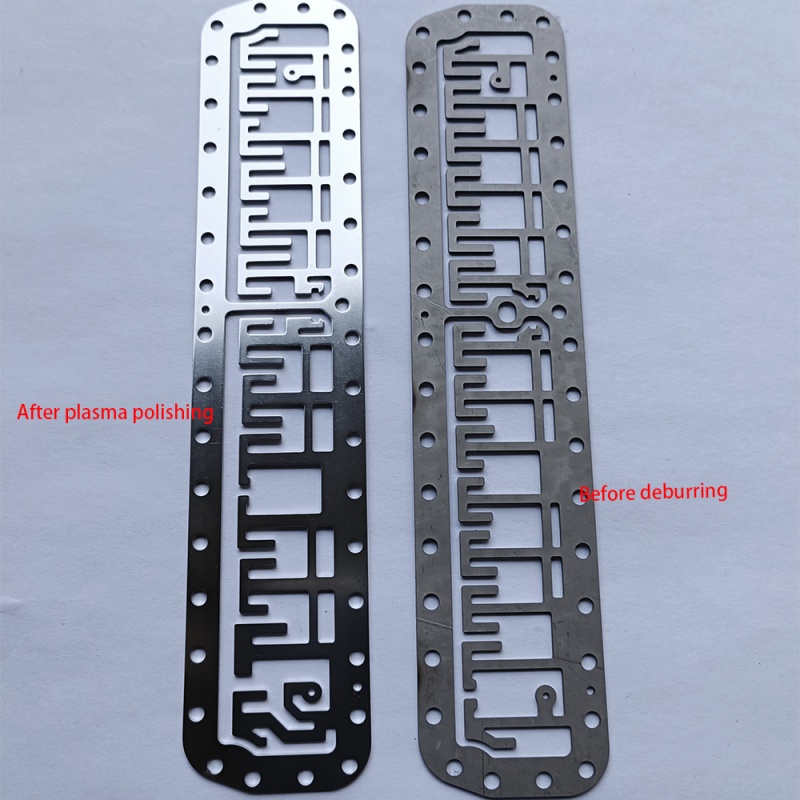
3. How Mechanical Polishing Works for Titanium
Mechanical polishing is often seen as the “default” method for finishing metal surfaces. It relies on abrasives—wheels, pastes, or belts—to physically remove material and smooth the surface.
For titanium, however, this approach behaves differently than expected. Instead of clean material removal, the process often leads to smearing, dragging, and localized overheating. Even highly skilled operators struggle to maintain uniformity across parts.
In practical terms, polishing titanium mechanically often produces:
● Directional scratch patterns
● Uneven brightness
● Micro-deformation layers
While it remains widely used, mechanical polishing is fundamentally limited when applied to high-performance metal polish for titanium applications.
4. How Plasma Polishing Technology Transforms Titanium Surfaces
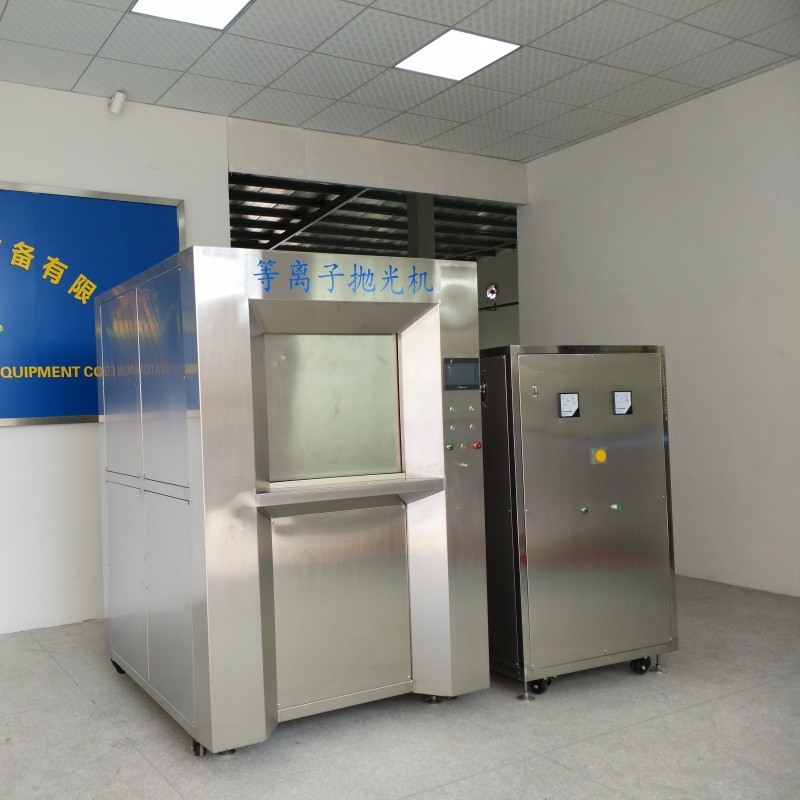
A plasma polishing machine does not rely on physical contact. Instead, it uses a combination of electrochemical reactions and plasma discharge to remove microscopic surface peaks.
This creates a fundamentally different finishing logic:
● No mechanical force
● No abrasive contact
● No directional bias
Rather than “grinding” the surface, plasma polishing selectively dissolves high points, naturally leveling the surface into a uniform state.
This is why titanium polishing using plasma technology achieves results that are not just better—but structurally different from traditional methods.
5. Surface Quality Comparison: Not Just Better, But More Consistent
Most comparisons between mechanical and plasma polishing focus on “which is smoother.” But the real difference lies in consistency.
Mechanical polishing can occasionally achieve high gloss—but rarely across every surface, especially on complex geometries.
Plasma polishing, on the other hand, produces:
● Fully uniform polished titanium surfaces
● No scratches or streaks
● No color variation
The key insight: plasma polishing eliminates variability, not just defects.
6. Complex Geometries: The Hidden Battleground
The real test of any polishing method is not flat surfaces—but complex geometries.
Titanium components used in medical and aerospace fields often include:
● Deep holes
● Internal cavities
● Micro-channels
Mechanical polishing tools simply cannot reach these areas effectively.
A plasma polishing machine, however, works uniformly across all exposed surfaces—inside and out. This makes it uniquely suited for advanced titanium polishing applications.
7. Deburring and Edge Rounding: Integration vs Fragmentation
Traditional workflows treat deburring and polishing as separate steps. This increases time, cost, and variability.
Plasma polishing integrates:
● Deburring
● Surface smoothing
● Edge rounding
into a single process.
This is particularly critical in applications where sharp edges pose risks—such as surgical implants.
8. Material Integrity: The Invisible Advantage
Mechanical polishing introduces stress into the material—sometimes invisible, but always impactful.
This includes:
● Residual stress
● Work hardening
● Microstructural changes
Plasma polishing avoids all of these by being a non-contact process.
For aerospace and implant-grade polish titanium applications, this difference is not optional—it is essential.
9. Cleanliness & Corrosion Resistance: Beyond Appearance
Surface cleanliness is often overlooked—but it directly impacts corrosion resistance.
Mechanical polishing may leave behind embedded abrasives, which act as corrosion initiation points.
Plasma polishing creates:
● Clean, residue-free surfaces
● Dense and stable passive layers
● Improved corrosion resistance
This is why it is widely preferred for medical-grade titanium polishing.
10. Consistency in Mass Production
Mechanical polishing depends heavily on human skill. This makes consistency difficult in large-scale production.
A modern polishing machine factory using plasma systems can deliver:
● Batch-level consistency
● Repeatable results
● Reduced labor dependency
This is a major advantage for manufacturers scaling up production.
11. When Mechanical Polishing Still Makes Sense
Despite its limitations, mechanical polishing is not obsolete.
It still performs well in:
● Large flat surfaces
● Simple geometries
● Ultra-high gloss optical finishes
However, these advantages often come with higher cost and lower efficiency.
12. Choosing the Right Partner: Manufacturer Matters
Technology alone is not enough—the capability of your polishing machine manufacturer determines real-world success.
A reliable supplier offers:
● Process optimization
● Custom solutions
● Long-term technical support
A strong polishing machine factory can transform your production efficiency and product quality.
13. Conclusion: A Shift in Manufacturing Logic
The debate between mechanical and plasma polishing is not just about finishing—it reflects a shift in manufacturing philosophy.
Mechanical polishing modifies surfaces.
Plasma polishing engineers them.
For high-performance polished titanium, plasma technology is no longer an alternative—it is becoming the new standard.
FAQ Section
Q1: Is plasma polishing suitable for all titanium grades?
Yes, most titanium alloys can be processed effectively.
Q2: Can plasma polishing replace mechanical polishing?
In high-end applications, largely yes—but hybrid processes still exist.
Q3: Which industries benefit the most?
Medical, aerospace, and precision manufacturing.
Q4: How to choose a plasma polishing machine?
Focus on supplier experience, customization, and technical support.
Q5: Is plasma polishing expensive?
Initial investment is higher, but long-term ROI is significantly better.