

Zinc and zinc alloys (particularly Zamak series) are among the most frequently used die-cast metals thanks to their low melting point, excellent moldability, dimensional stability, and cost efficiency. However, raw zinc castings typically exhibit surface defects such as micro-burrs, casting porosity, flow marks, and uneven oxide layers.
This brings up the key questions:
✔ Can zinc be polished?
✔ Is zinc suitable for plasma polishing?
The answer is—Absolutely yes.
Zinc can achieve excellent functional finishing through multiple routes — including mechanical, chemical, electrochemical, and more recently, plasma polishing.
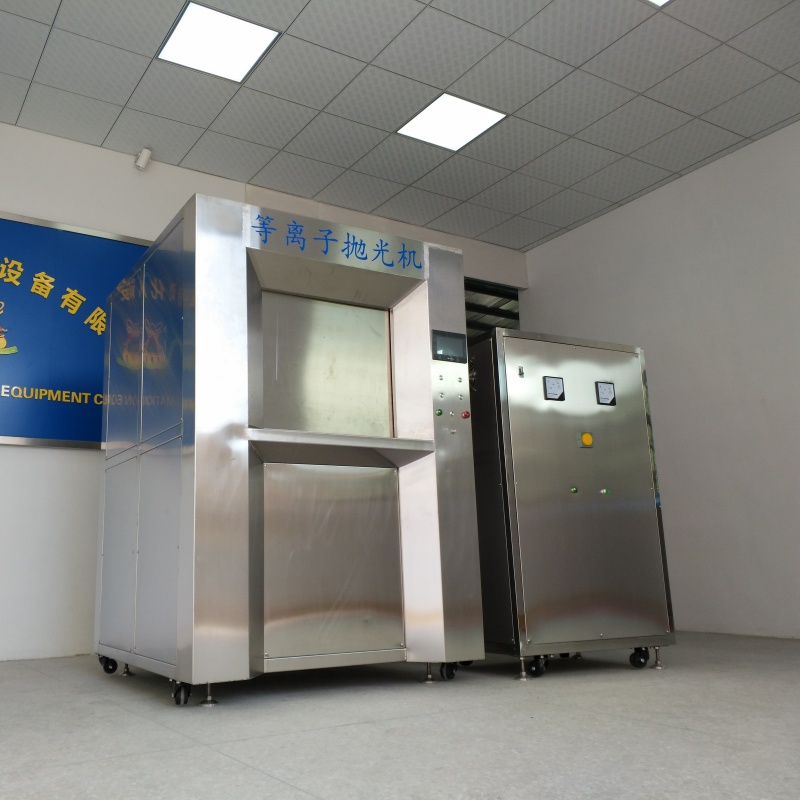
Among all options, the plasma polishing machine stands out due to its high precision, controllable deburring capability, strong brightness enhancement, and eco-friendly process.
This article provides a deep technical insight into zinc polishing, from material-science fundamentals to industrial plasma finishing applications.
1. Can Zinc Be Polished?
Yes, zinc and zinc alloys can be polished.
However, because zinc is relatively soft, has a low melting point, and is susceptible to scratches and deformation, traditional mechanical polishing struggles to achieve a uniform, high-quality finish. It also faces the following challenges:
| Traditional Mechanical Polishing Issues for Zinc | Description |
|---|---|
| Plastic deformation | Soft zinc surface easily dents |
| High scratch risk | Abrasives may leave scratches |
| Uneven surface | Inconsistent material removal |
| Contamination | Residue from polishing media |
| Poor compatibility with complex geometry | Difficult to process holes, edges, and inner cavities |
Therefore, a more advanced, precise, and environmentally friendly method is preferred — plasma polishing becomes an ideal solution.
2. What Is Plasma Polishing?
Plasma polishing is a modern surface-finishing technology that removes micro-protrusions from metal surfaces using high-energy micro-plasma.
Working Principle:
1. Workpiece connected to anode
2. Immersed in weak-salt electrolyte
3. Voltage applied → micro-plasma film forms on surface
4. Micro-peaks dissolve preferentially → smooth surface
5. No mechanical damage, minimal thermal influence
It is a physical-electrochemical process without mechanical grinding.
3. Why Is Zinc Especially Suitable for Plasma Polishing?
Unlike traditional mechanical polishing, plasma polishing eliminates mechanical stress and prevents surface deformation—making it ideal for soft metals, high-precision parts, and microstructures.
✔ No mechanical abrasion → no dents or deformation
✔ Uniform removal → very consistent surface finish
✔ Works on complex geometries (holes, gaps, chamfers)
✔ Keeps edges sharp, avoids rounding
✔ Eco-friendly, no abrasive contamination

4. Key Advantages of Plasma Polishing for Zinc
| Technical Advantages | Description |
|---|---|
| High-precision surface finishing | Achieves mirror-like surface (Ra < 0.05 μm) |
| Non-destructive | Does not alter geometry or cause distortion |
| Efficient deburring | Removes micron-level burrs |
| Suitable for complex geometry | Processes areas mechanical tools cannot reach |
| Low corrosion | Uses environmentally friendly electrolytes |
| Excellent consistency | Supports standardized mass production |
| Low cost & low energy | Long equipment life, low operating cost |
| Improves plating/coating adhesion | Cleaner + smoother surface |
Ideal for zinc die-cast or machined parts.
5. Comparison With Traditional Polishing Methods
| Category | Mechanical Polishing | Chemical Polishing | Plasma Polishing |
|---|---|---|---|
| Zinc applicable | ✔ | ✔ | ✔ |
| Consistency | ★☆☆ | ★★☆ | ★★★ |
| Complex structure | ★☆☆ | ★★☆ | ★★★ |
| Deformation risk | High | Medium | Very Low |
| Environmental friendliness | Poor | Poor | Excellent |
| Surface roughness | Medium | Good | Excellent |
| Deburring | Limited | Limited | Excellent |
| Production efficiency | Low | High | High |
| Equipment cost | Medium | Medium | Medium |
| Operational difficulty | High | Medium | Low |
Overall, plasma polishing offers superior efficiency, quality, and environmental performance.
6. Typical Applications of Plasma Polishing for Zinc
✔ Precision die-cast parts
✔ Connector housings
✔ Electronic structural parts
✔ Instrument housings
✔ Architectural hardware
✔ Small metal accessories
✔ OEM precision components
Particularly suitable for small, complex, and high-surface-quality parts.
7. Performance Results
After plasma polishing, zinc parts typically demonstrate:
● Clean, bright surface finish
● Complete removal of burrs
● Sharp edges without secondary damage
● Stable dimensional accuracy
● No scratches under microscopic inspection
● Uniform oxide layer
● Better plating preparation (Ni, Cr, etc.)
Ideal for high-precision structural components.
8. Zinc Materials Suitable for Plasma Polishing
| Material Type | Recommended |
|---|---|
| Pure Zinc | ✔ |
| Zamak 3 | ✔ |
| Zamak 5 | ✔ |
| Zamak 2 | ✔ |
| Zamak 7 | ✔ |
| Zinc-plated surfaces (needs testing) | ✓ |
Zamak alloys are widely used in consumer electronics, decorative hardware, and automotive components. Plasma polishing improves surface quality and performance.
Conclusion
Zinc can definitely be polished, but traditional mechanical and chemical processes tend to cause surface damage, deformation, and contamination.
A Plasma Polishing Machine provides:
✔ High consistency
✔ High efficiency
✔ Non-destructive processing
✔ Eco-friendly operation
✔ Micron-level deburring
✔ Highly smooth surfaces
Therefore, plasma polishing has become one of the best solutions for zinc components in precision manufacturing, electronics, electrical systems, automotive industries, and hardware.
FAQs
1. Is zinc suitable for plasma polishing?
Yes. Plasma polishing is especially friendly to soft metals like zinc.
2. Will plasma polishing change the dimensions?
Only minimal micro-surface removal occurs; dimensional change is negligible.
3. Is deburring effective?
Yes, it removes micron-level burrs extremely well.
4. Can it process complex shapes?
Yes—holes, chamfers, and through-holes are easily treated.
5. Does the process damage the surface?
No—there is no mechanical stress.
6. Suitable for mass production?
Yes, it supports automated batch processing.
7. Can it be used before electroplating?
Yes—improves plating adhesion and uniformity.