

In the world of advanced surface finishing, plasma polishing has become a breakthrough technology that delivers unmatched smoothness, shine, and durability. Unlike conventional polishing techniques, plasma polishing combines electrochemical reactions with plasma phenomena to refine metal surfaces at a microscopic level. With the help of a plasma polishing machine, manufacturers can achieve superior surface quality, reduce environmental impact, and increase production efficiency. This innovative process is widely adopted in industries such as medical device manufacturing, aerospace, automotive, and luxury goods.
What is Plasma Polishing?
Plasma polishing is a modern surface finishing process that uses electrochemical reactions in a plasma environment to smooth and refine metal surfaces. Unlike traditional mechanical polishing, which relies on abrasives, or chemical polishing, which often uses aggressive chemicals, plasma polishing uses a controlled electrical field and electrolyte solution to achieve a uniform finish.
The process is especially effective on stainless steel, titanium, cobalt-chrome alloys, and other high-performance metals. These materials, commonly used in medical instruments, aerospace components, and luxury goods, benefit from the precision and consistency that plasma polishing provides. By removing microscopic peaks from the surface, the process achieves mirror-like results that improve both aesthetics and functionality.

Advantages of Plasma Polishing
Plasma polishing offers a wide range of advantages compared to traditional surface finishing methods, making it a preferred choice in many industries.
1. Superior Surface Smoothness and Mirror-Like Finish
The process removes microscopic surface irregularities, creating a highly reflective, smooth surface. Unlike mechanical polishing, which may leave scratches or uneven textures, plasma polishing delivers consistent, flawless results.
2. Enhanced Corrosion Resistance
By smoothing the metal at a microscopic level, plasma polishing reduces areas where corrosion can start. This makes it especially valuable for medical devices, surgical instruments, and food-processing equipment, where hygiene and durability are critical.
3. High Efficiency and Speed
Plasma polishing works much faster than conventional methods. Complex shapes and components that would normally require multiple steps can be finished in a single process, saving time and labor.
4. Environmentally Friendly
Traditional chemical polishing often involves harsh acids and toxic waste. In contrast, plasma polishing uses eco-friendly electrolytes that are safer for both operators and the environment, significantly reducing chemical pollution.
5. Gentle on Delicate Components
Because the process relies on plasma and controlled electrochemical reactions, there is minimal mechanical stress on the workpiece. This makes it ideal for thin, fragile, or intricately shaped parts that could be damaged by abrasive polishing.
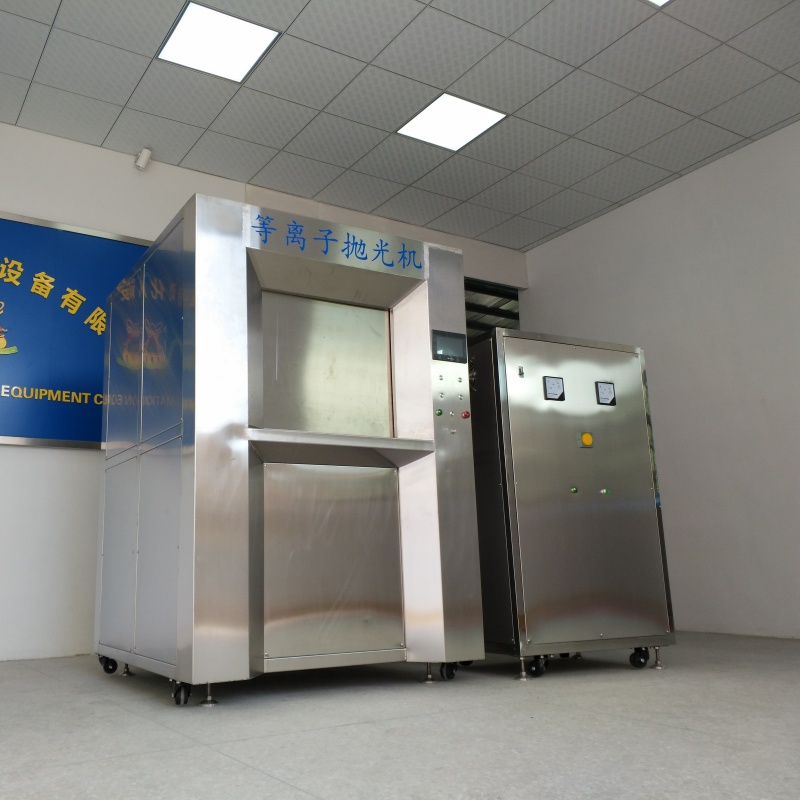
Plasma Polishing Machine: How It Works
Plasma polishing machine combines advanced electrochemical technology with industrial automation to deliver consistent and efficient results. Understanding its main components and workflow helps explain why it is becoming a standard in precision finishing.
1. Key Components of a Plasma Polishing Machine
Power Supply: Provides the high voltage necessary to create the plasma layer around the workpiece.
Electrolyte Tank: Contains the special electrolyte solution where the polishing takes place.
Workpiece Holder/Fixture: Secures the parts to ensure even polishing.
Control System: Allows operators to adjust voltage, time, and other parameters for different materials and surface requirements.
Cooling and Rinsing Units: Help regulate temperature and clean the workpiece after polishing.
2. Workflow of Plasma Polishing
Preparation: The workpiece is cleaned and placed into the fixture.
Polishing Process: Once immersed in the electrolyte and connected to the power supply, plasma forms on the surface, and microscopic peaks are dissolved.
Rinsing: After polishing, the workpiece is rinsed with water to remove electrolyte residues.
Finishing: The result is a mirror-like, smooth, and corrosion-resistant surface.
3. Automation and Scalability
Modern plasma polishing machines can be fully automated, making them suitable for both small-scale laboratories and large-scale industrial production. With programmable settings, manufacturers can polish multiple components with consistent quality and reduced human error.