

1. Introduction to Automatic Stainless Steel Polishing Machine
In modern manufacturing, surface finishing plays a crucial role in determining product quality, aesthetics, and performance. The automatic stainless steel polishing machine has become an essential solution for manufacturers seeking high efficiency, consistent quality, and reduced labor costs.
Compared with traditional manual polishing, an automatic polishing machine for stainless steel offers stable performance, precise control, and scalable production capabilities. This makes it widely used across industries such as automotive, kitchenware, medical devices, and construction materials.
As global demand for high-quality stainless steel products continues to grow, investing in advanced stainless steel polishing equipment is no longer optional—it is a competitive necessity.
2. What Is an Automatic Buffing Machine Stainless Steel?
An automatic buffing machine stainless steel is a specialized system designed to polish and finish stainless steel surfaces using rotating buffing wheels, abrasives, and automated control systems. It eliminates the inconsistencies associated with manual polishing.
Unlike manual polishing, where results depend heavily on operator skill, a buffing machine stainless steel ensures uniform surface finish across all products. This is especially important for mass production environments.
Modern ss buffing machine systems can be integrated with conveyors, robotic arms, and CNC controls, enabling fully automated polishing lines.
3. Key Components of Stainless Steel Polishing Equipment
A high-quality stainless steel polishing machine consists of several critical components that work together to achieve optimal finishing results.
The polishing heads and buffing wheels are responsible for direct contact with the workpiece. Different materials and shapes require different wheel types and abrasives.
Automation systems, including PLC and sensors, ensure precise control over speed, pressure, and polishing time. This guarantees consistent results in every cycle.
Additionally, modern stainless steel polishing equipment often includes dust collection systems to improve workplace safety and environmental compliance.
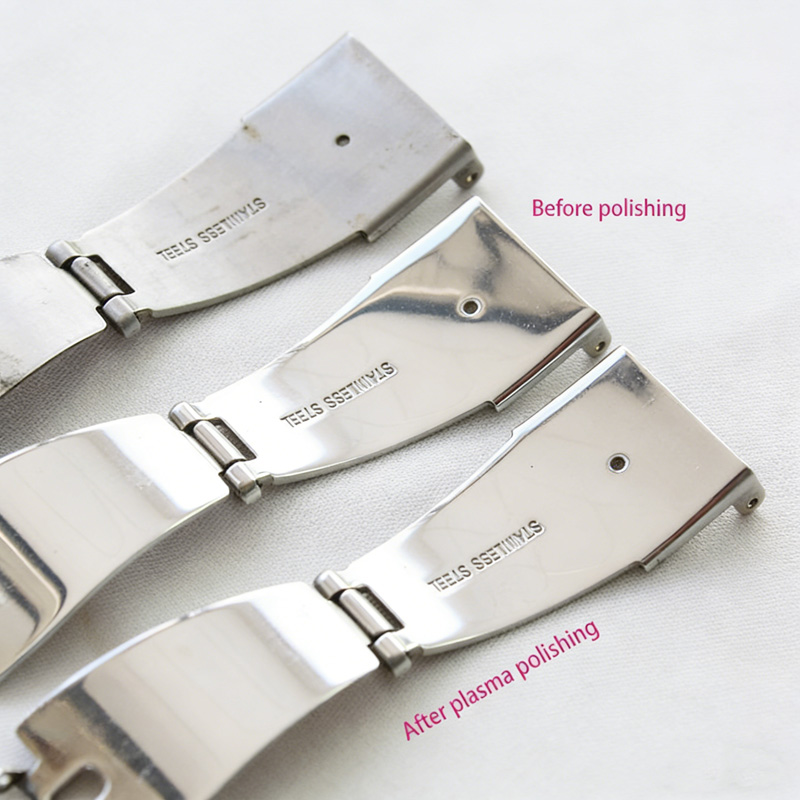
4. Types of Stainless Steel Polishing Machines
There are various types of stainless steel polishing machines, each designed for specific applications and product geometries. Choosing the right type of automatic stainless steel polishing machine is essential for achieving optimal efficiency and surface quality.
Flat surface polishing machines are widely used for sheets, plates, and panels. Tube polishing machines are ideal for round or cylindrical products such as pipes and rods.
For complex geometries, robotic automatic buffing machine stainless steel systems provide flexibility and precision. These machines can handle irregular shapes and high-end finishing requirements.
Fully automated polishing lines integrate multiple machines and processes, enabling continuous production with minimal human intervention.
5. Working Principle of Automatic Polishing Machine for Stainless Steel
The working principle of an automatic polishing machine for stainless steel involves controlled material removal through friction between the polishing wheel and the workpiece surface.
The process typically includes grinding, pre-polishing, and fine polishing stages. Each stage uses different abrasives and polishing compounds to gradually improve surface smoothness.
Key parameters such as rotation speed, pressure, and feed rate are carefully controlled by the machine to ensure consistent finishing results.
6. Advantages of Using SS Buffing Machine
One of the biggest advantages of using an ss buffing machine is the significant improvement in production efficiency. Automated systems can operate continuously without fatigue, unlike manual labor.
Consistency is another major benefit. A buffing machine stainless steel ensures uniform surface finishes across all products, which is critical for brand reputation and quality control.
In addition, automation reduces labor costs, minimizes human error, and improves workplace safety by reducing direct operator involvement.
7. Applications of Stainless Steel Polishing Machine
Stainless steel polishing machines are widely used across multiple industries due to their versatility and efficiency.
In the kitchenware industry, these machines are used to polish sinks, cookware, and appliances. In the automotive sector, they are applied to exhaust systems, trims, and decorative components.
Medical and precision industries rely on automatic polishing machine for stainless steel for high-precision components that require ultra-smooth surfaces.
Architectural and decorative stainless steel products also benefit from high-quality polishing to achieve mirror or brushed finishes.
8. How to Choose the Right Stainless Steel Polishing Equipment
Selecting the right stainless steel polishing equipment requires careful evaluation of your production needs and product characteristics.
First, consider the shape and size of your workpieces. Different machines are designed for flat, round, or complex geometries.
Second, evaluate your production volume. High-volume manufacturing may require fully automated lines, while smaller operations can use semi-automatic machines.
Finally, choose a reliable supplier that offers durable machines, technical support, and customization capabilities.
9. Maintenance and Operation Tips for Buffing Machine Stainless Steel
Proper maintenance is essential to ensure the long-term performance of a buffing machine stainless steel. Regular inspection and cleaning can prevent unexpected downtime.
Operators should routinely check polishing wheels, lubrication systems, and electrical components. Replacing worn-out parts in time helps maintain consistent quality.
Training operators on proper machine usage also plays a key role in maximizing efficiency and safety.
10. Future Trends in Automatic Stainless Steel Polishing Technology
The future of automatic stainless steel polishing machine technology lies in smart automation and digital integration.
AI-powered systems and sensors are being used to optimize polishing parameters in real time, improving efficiency and reducing waste.
Energy-efficient designs and environmentally friendly polishing processes are also becoming industry standards.
Fully automated, unmanned polishing production lines will dominate high-end manufacturing in the coming years.