

What is a Stainless Steel Polishing Machine?
A stainless steel polishing machine is a specialized piece of equipment designed to refine and smooth the surface of stainless steel components. The purpose is to remove imperfections, such as burrs, weld marks, oxidation, or rough textures, and enhance the material’s appearance, hygiene, and performance.
Core Functions
• Surface Finishing: Achieves a uniform shine, from matte to mirror finish.
• Deburring: Removes tiny protrusions or edges left from machining or cutting.
• Cleaning: Eliminates surface contaminants, oxidation layers, and residues.
These machines are commonly found in production lines across industries such as:
• Medical Devices: Surgical instruments, implants
• Food Processing Equipment: Pipes, tanks, trays
• Automotive & Aerospace: Precision parts, exhaust components
• Consumer Goods: Jewelry, watches, kitchenware
⚙️ Categories of Stainless Polishing Equipment
• Mechanical Polishing Machines: Use abrasives or brushes; often leave micro-scratches and require extensive labor.
• Electrolytic Polishing Equipment: Chemical bath + electricity; suitable for internal surfaces but often slow and waste-intensive.
• Plasma Stainless Steel Polishing Machines (Focus of this blog): Use high-voltage ion discharge in electrolyte solution; delivers superior surface quality, faster speed, and lower environmental impact.
This next-generation stainless steel polishing equipment doesn't rely on abrasive contact. Instead, it uses plasma technology to achieve results that traditional machines cannot match—especially on complex geometries or delicate components.
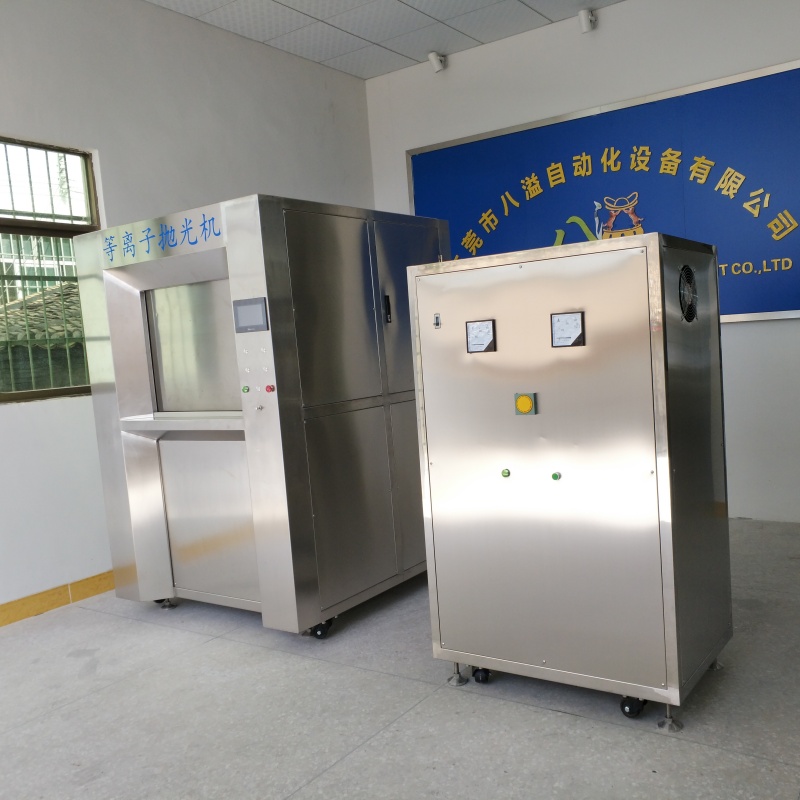
Introduction to Plasma Polishing Technology
Plasma polishing is a revolutionary surface treatment method that leverages high-voltage ion discharge to achieve ultra-smooth finishes on metal surfaces, particularly stainless steel. Unlike traditional polishing techniques, plasma polishing is non-contact, non-abrasive, and highly precise.
How Plasma Polishing Works
At its core, plasma polishing involves the interaction of a conductive electrolyte, a high-voltage power source, and the stainless steel workpiece. Here's a simplified step-by-step overview:
• Setup: The stainless steel part is submerged in a specially formulated polishing electrolyte (often a salt solution).
• Voltage Application: A high-frequency, high-voltage current (typically 200–400V) is applied between the workpiece (anode) and a cathode.
• Plasma Generation: At a certain voltage threshold, a thin layer of gas around the metal surface ionizes into plasma.
• Surface Reaction: This localized plasma discharge causes micro-removal of surface peaks and oxide layers, smoothing the metal without mechanical contact.
⚡ Why Plasma is Ideal for Stainless Steel
• High corrosion resistance: Stainless steel reacts well under controlled plasma, allowing for precise material removal without damage.
• Passivation effect: The plasma process simultaneously reinforces the passive oxide layer, improving corrosion resistance.
• No heat distortion: Since only a microlayer is removed and there's no physical friction, there's no thermal warping or surface stress.
Key Characteristics of Plasma-Based Stainless Polishing Equipment
• Non-mechanical: No brushes, belts, or abrasives involved.
• Self-limiting: Only high points are targeted, preserving dimensional accuracy.
• Uniform treatment: Ensures consistent polishing across flat, curved, or irregular surfaces.
This innovative method is what powers the latest generation of stainless steel polishing machines, enabling them to deliver high gloss, burr-free finishes in a fraction of the time—and with far fewer environmental side effects—than traditional methods.
Key Benefits of Plasma-Based Stainless Steel Polishing Equipment
Choosing plasma-based stainless steel polishing machines means stepping into a new era of surface treatment—one defined by efficiency, precision, and sustainability. Below are the core advantages that make plasma polishing the top choice across industries requiring high-quality stainless steel finishing.
1. Superior Surface Finish
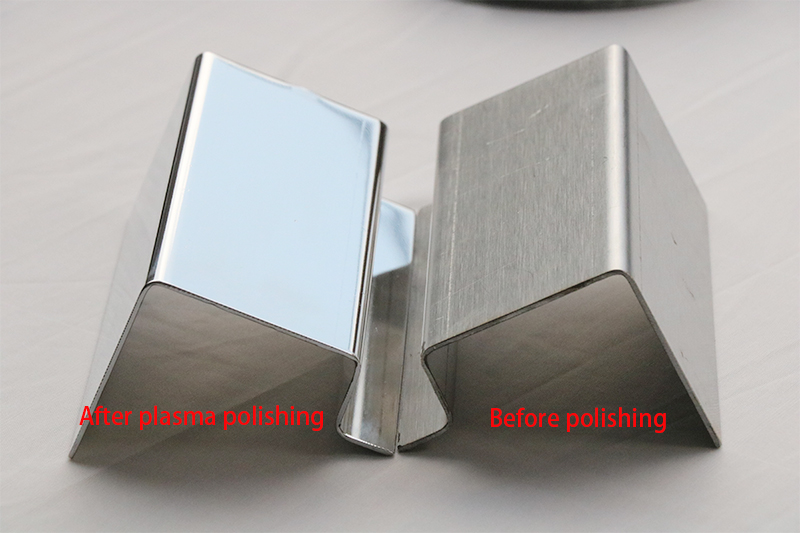
Plasma polishing creates a uniform, high-gloss surface that is virtually impossible to achieve with mechanical or chemical polishing methods.
• Mirror-like clarity: Achieves reflective finishes without micro-scratches.
• Microscopic precision: Removes only microns of material, preserving detail.
No swirl marks or uneven textures: Perfect for high-end visual or functional applications.
2. Non-Destructive and Eco-Friendly
Unlike abrasive polishing or chemical etching, plasma technology is gentle on the material and the environment.
• No mechanical stress: There’s no surface deformation, warping, or stress cracking.
• Low chemical use: Uses eco-friendly electrolyte solutions instead of toxic acids.
• No hazardous emissions: Clean process with minimal waste and byproducts.
This makes plasma stainless polishing equipment ideal for industries with strict environmental or health compliance standards.
3. Fast and Efficient
Speed is one of plasma polishing’s biggest strengths—especially for batch processing.
• High throughput: Polishes hundreds to thousands of small parts per hour.
• Consistent results: Automated operation reduces human error.
• Minimal post-processing: No need for rework or secondary polishing steps.
4. Versatile Application Range
Plasma-based stainless polishing machines can handle an impressive range of part sizes, shapes, and surface complexities.
• Suitable for internal cavities, narrow gaps, and complex geometries.
• Compatible with all stainless steel grades, including 304, 316, and surgical-grade alloys.
• Effective on irregular or delicate parts where mechanical polishing is risky.
5. Lower Long-Term Operating Costs
Although the initial investment in plasma polishing equipment may be higher, the long-term savings are significant.
• Reduced labor costs thanks to automation
• Minimal consumables (no abrasive pads or frequent chemical replenishment)
• Lower rejection rates due to consistent quality
These advantages make plasma-based stainless steel polishing machines a future-ready solution for companies that prioritize both performance and sustainability in surface finishing.